
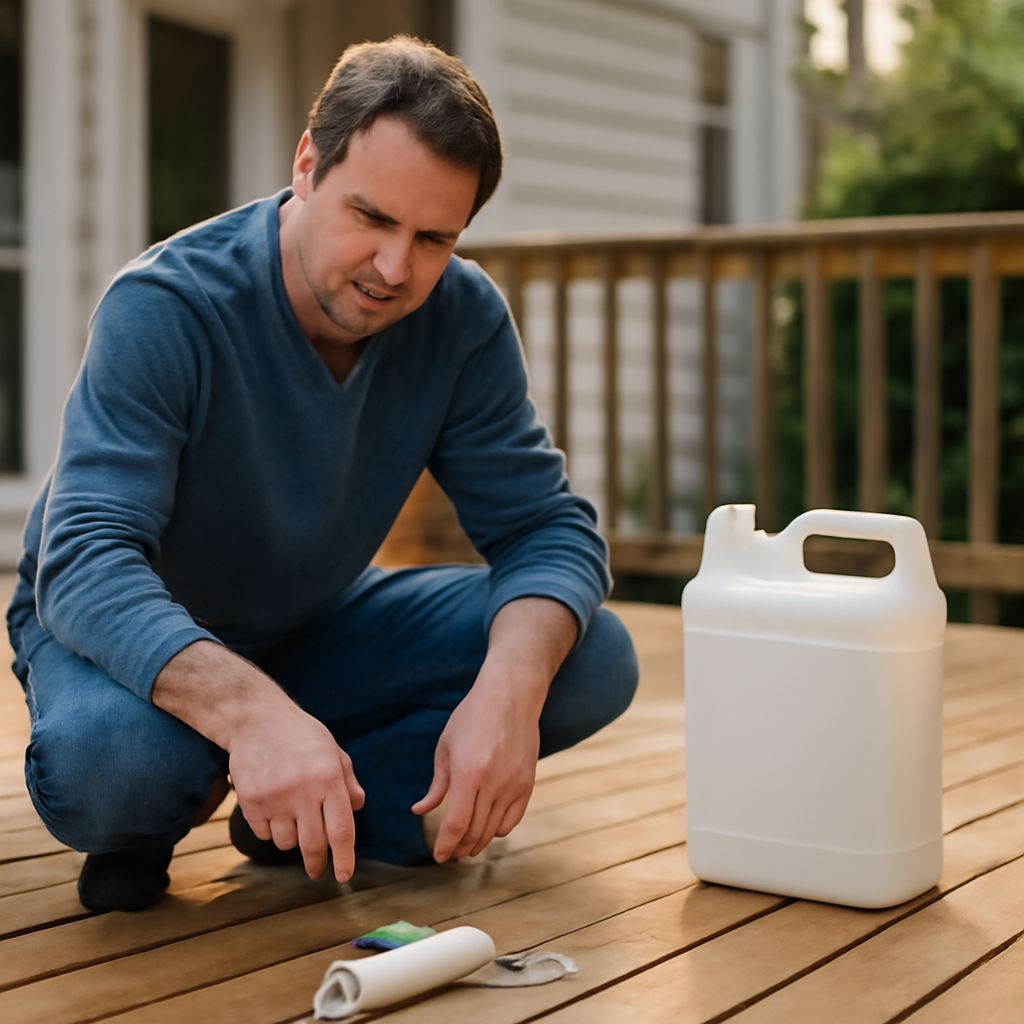
A wood deck cleaner is a cleaning product made to remove dirt, pollen, mildew, gray weathering, and surface stains from wooden deck boards. It is formulated to clean wood safely without stripping too much material or damaging the grain when used as directed.
In practical terms, a wood deck cleaner is the best first step before sealing, staining, or simply refreshing a tired deck. It is designed for bare, stained, or weathered wood, and it usually works better on wood than general-purpose patio cleaners.
Wood Deck Cleaner: Direct Answer
A wood deck cleaner is a cleaner made specifically for exterior wood surfaces like pine, cedar, redwood, and pressure-treated lumber. It lifts embedded grime and surface discoloration so the deck looks cleaner and absorbs stain or sealer more evenly.
Most deck cleaners for wood fall into one of two groups: oxygen-based formulas and detergent-based formulas. Oxygen-based products are common for weathered decks because they help break down organic buildup. Detergent-based products are better for routine washing, light dirt, and fresh spills.
If your deck has visible mildew, dark patches, or a dull gray cast, a wood deck cleaner is usually the right product. If the surface only needs a light wash, a milder cleaner may be enough.
How It Works
Most wood deck cleaner products work by loosening the film that sits on the board surface. That film often includes dirt, algae, mildew residue, tree sap, and old finishes breaking down from sun and rain.
The cleaner is applied, left to dwell for a short time, then scrubbed or rinsed away. During that time, the formula breaks the bond between grime and wood fibers. That makes it easier to wash away buildup without heavy sanding.
Some formulas also brighten the wood. These are useful when deck boards have turned gray from UV exposure. They do not change the wood itself, but they can improve the appearance before refinishing.
For best results, the surface should be swept first. Loose debris can block contact between the cleaner and the wood. A soft brush helps the cleaner reach grooves and seams where dirt collects.
How It Differs From Other Deck Cleaners
Not every cleaner labeled for outdoor use is the same. The main difference is how strongly the product treats the wood and what kind of buildup it targets.
- Wood deck cleaner: made for wooden boards and safer for regular deck maintenance.
- Composite deck cleaner: designed for synthetic decking, which can tolerate different chemicals and cleaning methods.
- Heavy-duty deck cleaner: may remove tougher stains, but can be more aggressive on soft wood.
- General outdoor cleaner: useful for surfaces like siding or patios, but not always ideal for wood grain.
A deck wood cleaner is especially useful before staining because it prepares the surface more evenly than soap and water alone. That said, if the deck has old flaking stain or rough fibers, cleaning may need to be followed by light sanding.
When choosing among deck cleaners, match the formula to the deck’s condition. Light dirt needs a mild product. Heavy mildew or weathered gray boards usually need a stronger cleaner with a longer dwell time.
How to Choose and Use One
Choose a wood deck cleaner based on the deck material, the stain level, and whether you plan to refinish the wood. Read the label for surfaces it is approved to clean. Some products are safe for all wood types, while others are made for specific finishes or cleaning goals.
Use it in this order:
- Sweep away leaves, grit, and loose dirt.
- Wet nearby plants if the label recommends pre-rinsing protection.
- Apply the cleaner evenly to the deck boards.
- Let it sit for the label’s recommended dwell time.
- Scrub with a soft-bristle brush where needed.
- Rinse thoroughly with a hose or low-pressure wash.
- Allow the deck to dry completely before staining or sealing.
The surface should look cleaner and more uniform after rinsing. If dark spots remain, they may need a second application or targeted scrubbing. If the wood feels fuzzy afterward, the cleaner may have raised the grain, which can happen on older decks and may require light sanding.
For ongoing upkeep, use deck cleaners before seasonal sealing or after long wet periods when mildew tends to return. That keeps the wood easier to maintain and helps protect the finish you apply next.