
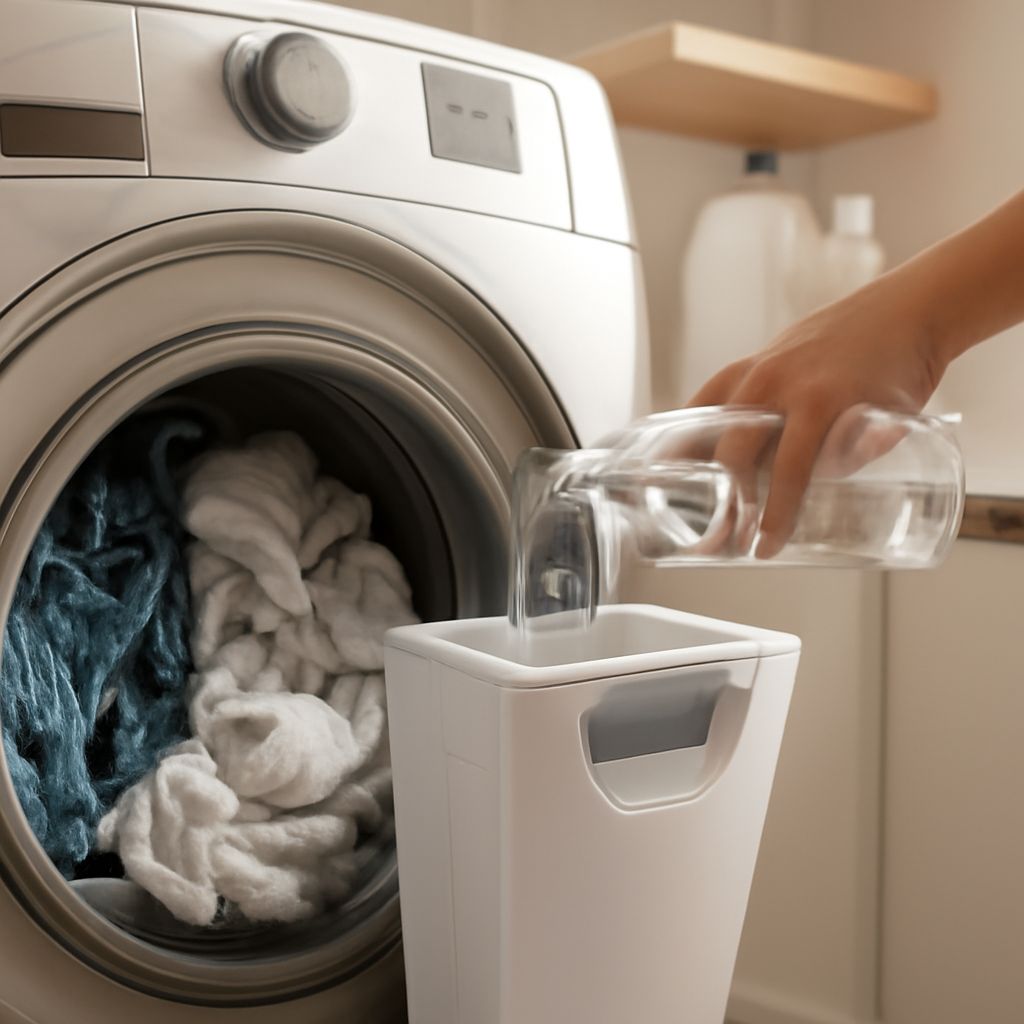
White vinegar in laundry can reduce some odors, mineral deposits, and detergent residue, but it does not replace laundry detergent. Use distilled white vinegar at a measured, diluted amount during the rinse stage, not as the main cleaning agent.
Vinegar usually does not stain washable clothing when diluted correctly. However, concentrated vinegar, unstable dyes, delicate fibers, and incompatible washing machines create avoidable risks. Test uncertain garments and check the machine manual before making it part of every load.
What White Vinegar in Laundry Can—and Cannot—Do
Distilled white vinegar contains acetic acid, usually at about 5% acidity. In a rinse, that mild acidity can help loosen alkaline detergent residue and mineral deposits left by hard water. It may also reduce some musty or detergent-related odors.
Vinegar does not clean clothes in the same way detergent does. Detergent surfactants lift body oils, grease, soil, and many stains so they can be rinsed away. Vinegar has little ability to remove those materials by itself. For normally dirty clothing, use the recommended amount of detergent and treat vinegar as an optional rinse additive.
- Useful for: reducing residue, easing stiffness caused by mineral buildup, and freshening some lightly odorous laundry.
- Not a substitute for: detergent, stain remover, oxygen bleach, or a properly labeled laundry sanitizer.
- Not a broad disinfectant: vinegar does not reliably kill every bacteria, virus, or fungus that may be present in clothing.
Never combine vinegar with chlorine bleach. The mixture can release irritating chlorine gas. Keep vinegar separate from bleach products, and do not assume that adding both at different points is safe unless the machine fully drains between stages.
Will Vinegar Stain Clothes? Color, Concentration, and Rinse
Will vinegar stain clothes? Diluted distilled white vinegar generally does not leave a colored stain. Unlike red wine vinegar, balsamic vinegar, malt vinegar, or flavored vinegar, it contains no dark pigments intended to color food. Use only plain distilled white vinegar for this purpose.
That does not make every vinegar product interchangeable. Cleaning vinegar may have a higher acidity, and some products contain fragrances or other additives. Colored, flavored, pickling, and specialty vinegars can leave residues or pigments. Read the label rather than substituting one product for another.
Concentration and contact time matter. Pouring undiluted vinegar directly onto dry fabric can create a temporarily darker wet spot and may affect sensitive dyes or finishes. A strong solution left on fabric for a long time can also stress some fibers. Dispensing it into the rinse water provides more dilution and even distribution.
Use extra caution with garments that have:
- Unstable or hand-dyed colors, especially dark reds, blues, and blacks.
- Decorative finishes, metallic details, or specialty coatings.
- Silk, wool, acetate, leather, or other delicate materials.
- Elastic components, including some garments containing elastane or spandex.
If a load comes out with a sharp vinegar smell, use less next time and confirm that the machine is completing its rinse. A lingering smell usually indicates too much product, poor dilution, or inadequate rinsing rather than a permanent stain.
How to Use Vinegar to Wash Clothes: Amount, Timing, and Dispenser
For a standard load, begin with ¼ cup (60 mL) of 5% distilled white vinegar. You can use up to ½ cup (120 mL) for a large, heavily mineralized load if the care label and machine manual allow it. More is not automatically more effective.
- Measure the vinegar instead of pouring by guesswork.
- Put it in the washing machine’s fabric-softener or rinse-additive dispenser, if the manual permits vinegar there.
- Run the normal wash with detergent in its usual compartment.
- Allow the dispenser to release vinegar during the final rinse, away from the detergent stage.
- Check the finished laundry for odor, residue, color change, and fabric feel before increasing the amount.
On a top-loading machine without a suitable dispenser, add the measured vinegar only when the washer reaches its rinse stage and has filled with rinse water. Do not pour it directly onto a dry garment. Diluting it first in a container of water can provide additional protection for sensitive fabrics, but do not exceed the total measured amount.
For a small load, reduce the quantity rather than using a full-load dose. A practical starting point is 2 tablespoons (30 mL) for a small load, ¼ cup for a medium load, and ½ cup for a large load. The correct dose still depends on the product strength, water hardness, washer design, and manufacturer instructions.
Do not add vinegar to the detergent compartment at the beginning of the cycle. Its acidity can reduce the effectiveness of alkaline detergent when the two meet in concentrated form. Never use vinegar in the same dispenser at the same time as bleach.
Washing Clothes with Vinegar: Fiber and Dye Tests
Before washing clothes with vinegar, test an inconspicuous area when the color, fiber, or finish is uncertain. Mix one part 5% distilled white vinegar with three parts water. Dab a small amount onto an inside seam, hem, or spare fabric swatch.
Press the area with a clean white cloth for 30 to 60 seconds. Check both the garment and cloth for color transfer. Allow the test area to dry, then look for fading, rings, stiffness, texture changes, or damage to a coating. If any change appears, skip vinegar for that item.
Follow the garment care label first. Do not soak delicate clothing in vinegar or use it as a substitute for professional cleaning. For wool, silk, acetate, leather, heavily embellished clothing, and garments with fragile elastic, a suitable specialty wash or professional cleaner is safer.
For ordinary cotton, linen, polyester, and colorfast blends, a diluted rinse dose is generally less risky than direct application. Even then, wash a new dark or hand-dyed item separately until you know the dye is stable.
Vinegar Wash: Detergent, Disinfection, and Machine Limits
A vinegar wash is not a complete cleaning method when it contains vinegar without detergent. It may freshen a lightly worn item, but it will not reliably remove skin oils, grease, ground-in soil, or many stains. For those loads, use detergent and the warmest care-label-approved water setting.
Vinegar also should not be treated as a universal laundry disinfectant. If infection control is important, use a laundry sanitizer or other product specifically labeled for that purpose, following its dilution, temperature, and contact-time instructions. Detergent, adequate washing, and thorough drying can support routine hygiene, but vinegar alone is not a validated replacement for those steps.
Machine compatibility varies. Some manufacturers permit diluted vinegar in the rinse dispenser; others warn against regular use because repeated acid exposure may affect rubber seals, hoses, coatings, or dispenser parts over time. These components are not chemically identical across brands and models.
Check the owner’s manual before repeated use, particularly with a high-efficiency front loader. If the manual prohibits vinegar, follow that instruction. If it permits occasional use, clean the dispenser afterward and stop if you notice swelling, cracking, leaks, discoloration, or a persistent odor. Never use concentrated cleaning vinegar unless the manufacturer specifically approves that product and strength.