
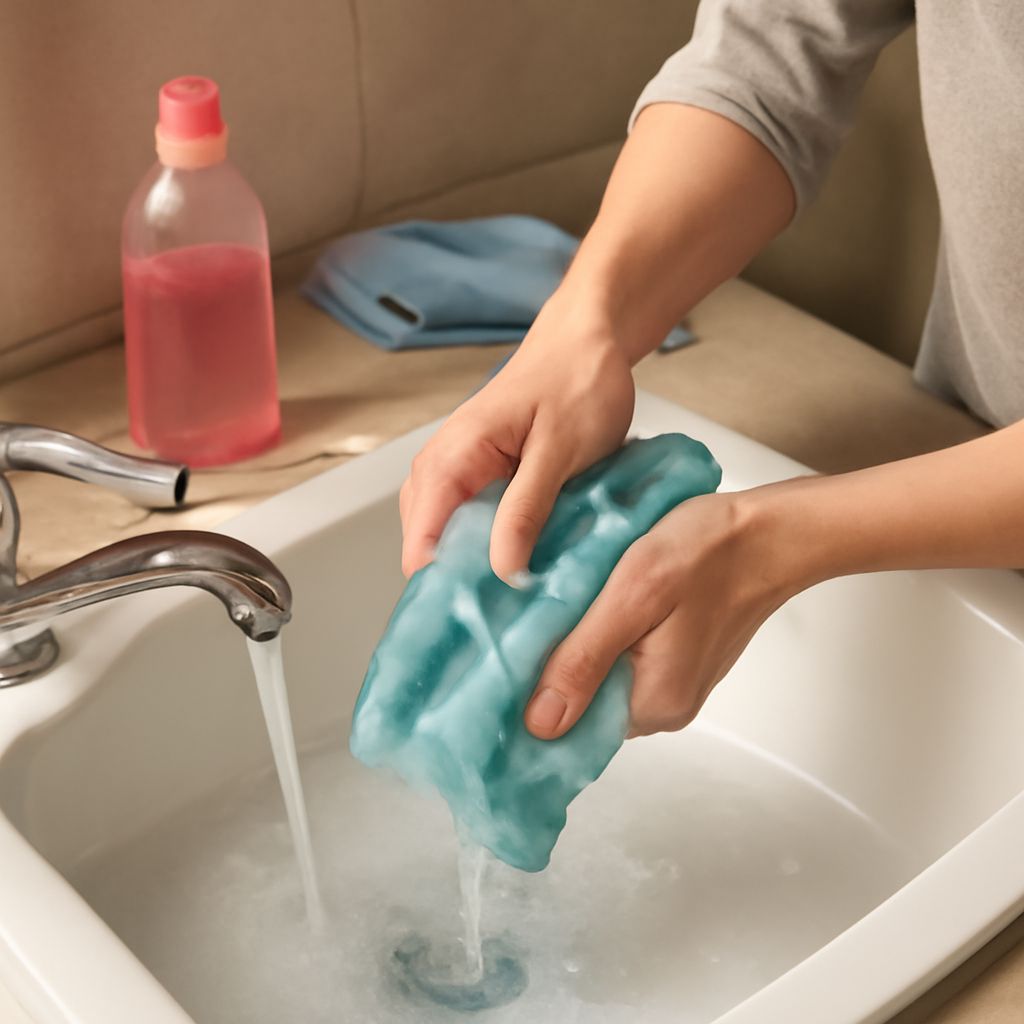
Washing microfiber towels correctly protects their split fibers, absorbency, and streak-free performance. Sort them before washing, use a small amount of detergent, skip fabric softener, and dry them with little or no heat.
This routine works for household, detailing, glass, and heavily soiled towels. The main rule is simple: keep lint, oils, chemicals, and incompatible tasks in separate loads.
Washing Microfiber Towels Starts With Sorting by Color, Task, Lint, and Soil
Separate towels by both color and use. New dark towels can release dye, so wash them apart from white or pale microfiber until they stop bleeding. Color separation matters less after several washes, but it still helps prevent accidental transfer.
- Glass towels: Keep these separate from all-purpose and greasy cloths. Even a small amount of oil can cause streaks.
- Household towels: Group dusting, bathroom, and general cleaning towels together when they have similar soil.
- Detailing towels: Separate paint-care towels from wheel, engine, and interior towels. Wheel and engine cloths can hold abrasive grit or oily residue.
- Heavily soiled towels: Set aside cloths with grease, wax, polish, tar, or strong chemical residue for a dedicated load.
Never wash microfiber with lint-shedding cotton towels, terry cloth, fleece, or other fabrics that leave loose fibers. Lint can lodge in the split fibers and transfer onto glass, paint, and polished surfaces. Shake out sand and loose debris outdoors, then check pockets and labels before loading the machine.
How to Clean Microfiber Towels With Detergent, No Softener, and an Extra Rinse
- Pretreat first. Rinse visible dirt under cool or lukewarm water. For oily spots, work a small amount of liquid laundry detergent into the stain and let it sit for 10 to 15 minutes. Do not mix cleaning chemicals during pretreatment.
- Load loosely. Fill the washer no more than about two-thirds full. The towels need room to move through the water, or soil and detergent can remain trapped.
- Measure detergent carefully. Use a low-sudsing liquid detergent, usually 1 to 2 tablespoons (15 to 30 mL) for a full standard load. Use less for a small load and follow the detergent and washer instructions. Excess detergent leaves a coating that reduces absorbency.
- Choose the temperature. Use warm water, typically about 40°C (104°F), unless the care label specifies otherwise. Cooler water is suitable for lightly soiled towels. Hotter water can help with grease only when the towel label permits it.
- Run an extra rinse. Select a normal or synthetic-fabric cycle followed by an extra rinse. The rinse is important because leftover detergent attracts soil and can make fibers feel stiff.
Do not use fabric softener. It coats microfiber and blocks the tiny spaces that make the towel absorbent. Avoid dryer sheets for the same reason. Chlorine bleach can weaken or discolor fibers, so use it only if the manufacturer specifically approves it.
Wash Microfiber Towels in Separate Loads for Grease, Chemicals, and Heavy Soil
Greasy detailing towels need their own load. Remove excess grease with paper towels or a disposable scraper, then pretreat the worst areas. Wash these cloths separately with warm water and the recommended small detergent dose. If they still smell oily after washing, run a second dedicated cycle rather than combining them with clean microfiber.
Keep towels exposed to wheel cleaner, solvent, polish, wax, disinfectant, or other chemicals away from household and glass towels. Rinse chemical residue according to the product label before laundering, and never combine incompatible chemicals in the washer. If the substance is unknown, hazardous, or strongly persistent, follow its disposal instructions instead of washing it with ordinary laundry.
Do not add a contaminated towel to a load simply because it looks clean. Oil, wax, and chemical residue can spread through the entire load and reduce every towel’s performance.
Dry Microfiber Towels in a Clean Dryer on Low Heat or Air
Clean the dryer lint screen and check the drum for lint, pet hair, and residue before drying. A dryer used for cotton laundry can transfer debris back onto microfiber. Do not use dryer sheets.
Choose low heat or air drying. High heat can melt, flatten, or damage the split fibers, especially when towels are left tumbling after they are dry. Remove the load promptly, shake out each towel, and hang it loosely or fold it only after it has cooled.
Air drying is the safest option when the towels are thin, delicate, chemically treated, or labeled for low temperatures only. Avoid radiators and very hot direct sunlight, which can stiffen some fibers and fade darker colors.
Check Absorbency Before Reusing, Downgrading, or Discarding
Test each towel after it is completely dry. Place a few drops of clean water on the surface. A useful microfiber towel should spread the water into the fibers and absorb it quickly. If the water beads, rolls away, or leaves an oily ring, wash the towel again in a separate load.
For glass towels, wipe a clean mirror or window. Keep the towel in service only if it leaves no lint, haze, oily film, or streaks. For detailing towels, inspect for trapped grit, hardened polish, rough patches, and pulled loops that could scratch a finish.
- Pass: The towel absorbs quickly, feels clean, and leaves no lint or residue.
- Downgrade: Use a towel with mild staining, reduced softness, or slight loss of absorbency for floors, wheels, workshops, or other low-risk tasks.
- Discard: Retire cloths that remain greasy, chemically contaminated, gritty, foul-smelling, or permanently nonabsorbent after separate washing. Do not return them to glass, paint, kitchen, or personal-care use.