
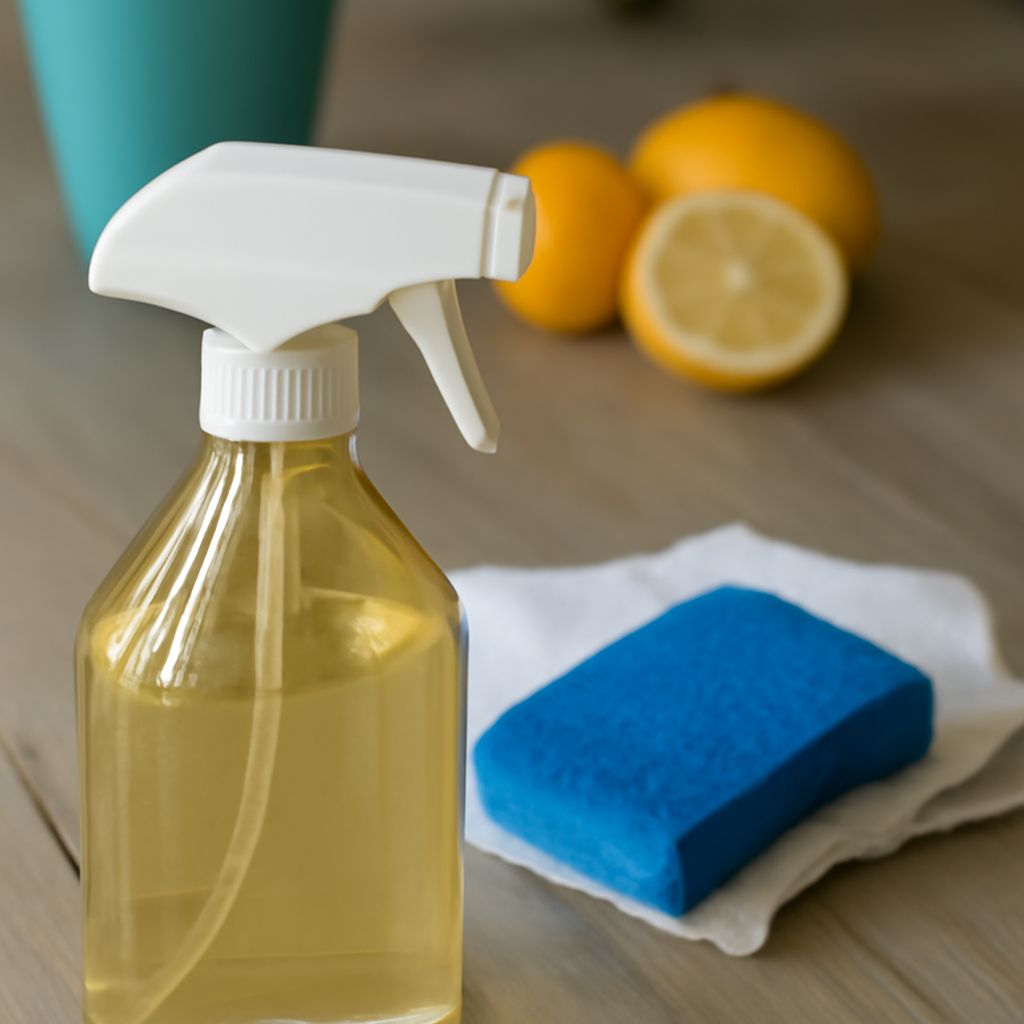
This vinegar cleaner recipe makes a 16-ounce spray using equal parts 5% distilled white vinegar and water. It suits glass, some sealed counters, and compatible bathroom surfaces with mineral film.
Vinegar provides acidity, not detergent action. It can loosen mineral deposits and routine soil, but it will not replace a detergent for greasy or oily messes.
Vinegar Cleaner Recipe: 8 Ounces of 5% Vinegar Plus 8 Ounces of Water
Ingredients and supplies:
- 8 ounces distilled white vinegar at 5% acetic acid
- 8 ounces cool water
- One clean, chemical-resistant 16-ounce plastic spray bottle
- A waterproof label and marker
Pour the water and vinegar into the bottle, leaving a little headspace. Close the sprayer and gently invert the bottle several times. Do not use a metal container or add bleach, ammonia, or other cleaners.
This recipe yields 16 ounces. The equal-parts ratio is easy to scale, but a small batch is preferable because it stays fresh and is easier to label and use correctly.
DIY Vinegar Cleaner: Where Acidity Helps—and Where Detergent Is Needed
Use the solution on glass, mirrors, and compatible glazed bathroom surfaces. It can loosen water spots, light soap residue, and mineral film on non-stone fixtures. It also works on some sealed countertops after a hidden-area test.
For a routine cleaning job, spray lightly, wipe, and dry. For mineral film, keep the surface wet for up to five minutes, then wipe before the solution dries. A second application is safer than leaving a stronger solution on the surface.
Vinegar does not emulsify grease as a detergent does. Use a suitable detergent cleaner for oily fingerprints, cooking residue, heavy soap scum, or soil that remains after wiping. This mixture is a cleaner, not a guaranteed disinfectant.
Surfaces to Exclude or Test: Calcite Stone, Grout, Wood, Cast Iron, Screens, and Rubber
Acid-sensitive materials need special handling:
- Natural stone: Do not use vinegar on calcite stone, including marble, limestone, and travertine. Acidity can etch or dull the surface.
- Sealed counters: Test an inconspicuous spot first. A seal does not make every countertop finish vinegar-safe.
- Grout: Avoid routine vinegar use on unsealed or cement-based grout. Even sealed grout may require a manufacturer-approved cleaner. Epoxy grout still needs a compatibility check.
- Wood: Finishes differ. Test a hidden area, apply sparingly to a cloth rather than soaking the wood, and dry immediately. Do not assume every wood finish is compatible.
- Cast iron: Keep vinegar away from seasoned cookware. Acid can strip seasoning and encourage rust.
- Screens: Do not spray phones, televisions, monitors, or other screens. Follow the device maker’s cleaning instructions and use an approved barely damp cloth if permitted.
- Rubber components: Avoid repeated or prolonged contact with gaskets and seals. Wipe any accidental spray away and follow the component maker’s guidance.
How to Make Vinegar Cleaner: Bottle, Label, and 30-Day Storage
Use the bottle only after it is clean and completely free of other chemicals. A trigger sprayer helps control application, but spraying a cloth is safer for delicate finishes and vertical surfaces.
Label the bottle with “5% white vinegar and water,” “not for natural stone,” the intended use, and the mixing date. Store it upright in a cool, dark cabinet, away from children and pets. Make a fresh batch after 30 days, or sooner if it becomes cloudy, develops an unusual odor, or the sprayer malfunctions.
Apply, Wipe, Rinse, and Dry: Grout and Maker-Specific Appliances
- Remove loose grit first. Test the cleaner in a hidden spot and let the area dry to check for dullness, discoloration, tackiness, or finish damage.
- Apply a light spray to the surface or a cloth. Allow about one minute for routine soil and up to five minutes for compatible mineral film. Never let the solution dry in place.
- Wipe with a clean microfiber cloth. If residue or mineral film remains, repeat once rather than scrubbing aggressively.
- Rinse when cleaning a food-contact counter, removing visible residue, or working on a bathroom surface where loosened minerals may remain. Rinsing is usually unnecessary on clean glass if the wipe leaves no streaks.
Dry every cleaned surface with a fresh cloth. For grout, keep contact brief, rinse thoroughly, and stop if the grout lightens, powders, or feels rough. For appliances, use vinegar only where the appliance maker specifically permits it. Descaling a coffee maker, kettle, humidifier, or other reservoir requires its exact instructions; do not pour this mixture into an appliance or spray electronic controls unless approved.