
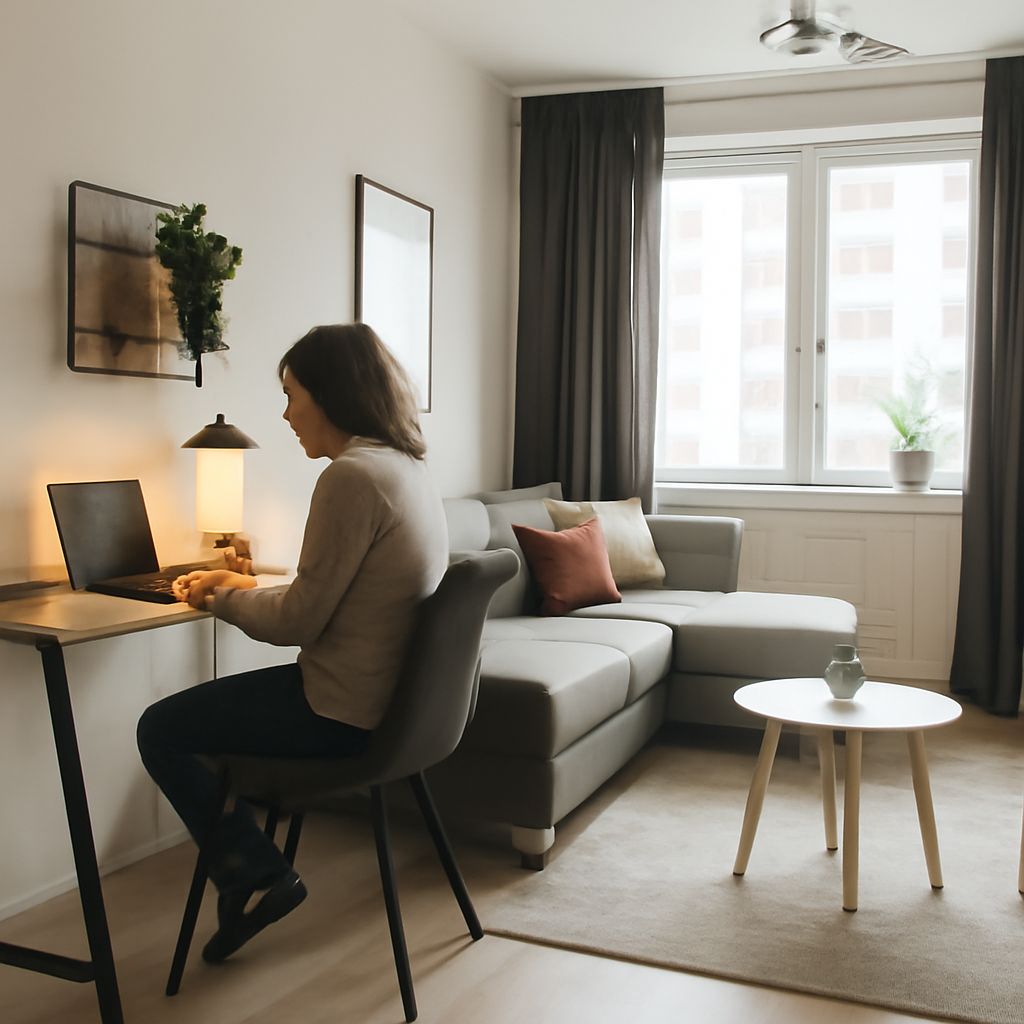
Studio apartment storage ideas work best when every item supports a defined function. Map sleep, living, work, dining, entry, kitchen, and storage before buying anything, then use furniture to separate activities without blocking light or movement.
Start with a rough floor plan and measure wall lengths, door swings, windows, heaters, outlets, and the clear walking route. Aim for about 30 inches of circulation wherever possible, especially between the entry, bathroom, kitchen, and bed.
Studio Apartment Storage Ideas: Map Functions, Measurements, and Circulation
Divide the room into zones based on daily movement rather than equal-sized sections. Place the bed in the quietest corner, the sofa near the main light source, and the desk where daylight supports work without creating screen glare.
- Entry: Reserve a narrow landing area for shoes, keys, bags, and coats.
- Sleep: Allow access to at least one long side of the bed, plus storage for clothing and linens.
- Living and media: Keep the sofa and television aligned without putting either across a door path.
- Work and dining: Combine these functions with a 36- to 48-inch desk or drop-leaf table.
- Kitchen overflow: Store cookware, pantry goods, and serving pieces close enough to the kitchen to avoid crossing the bed zone.
Measure furniture in place, including drawer and cabinet openings. Leave window access clear, and keep heaters uncovered so curtains, baskets, and wardrobes do not restrict airflow.
Create Zones Without Solid Walls: Furniture, Bookcases, Curtains, and Sightlines
Use the back of a sofa, a low console, or an open bookcase to suggest boundaries. A bookcase between the bed and living area provides storage while preserving light and partial sightlines. Choose one no taller than the point where it begins to block the room’s only bright path.
Open shelving works well for books, baskets, and attractive everyday items. Keep the lower shelves closed or boxed to reduce visual noise. A low cabinet behind the sofa can hold media equipment, games, and chargers while defining the living zone.
For more privacy, hang a ceiling-mounted curtain beside the bed. Select a lightweight, washable panel that can open fully during the day. Renters can also use tension rods, removable hooks, freestanding screens, or adhesive picture ledges instead of drilling into walls.
Keep dividers perpendicular to windows when possible. This preserves a clear line from the entrance to the brightest part of the room and makes the studio feel wider.
Apartment Storage Ideas for Entry, Clothing, Bed, Bath, and Kitchen Overflow
Make the entry useful with a slim shoe cabinet, wall hooks, and a small tray for keys. A bench with lift-up storage provides a place to sit and contains bags, umbrellas, or rarely used footwear.
For clothing, use a wardrobe with adjustable shelves, one hanging rail, and drawers or boxes for folded items. A wardrobe depth of about 24 inches is practical; keep it on a solid wall that does not interfere with the door swing. Store off-season clothing in labeled, under-bed containers and keep one accessible laundry hamper nearby.
Choose a bed with drawers, lift-up storage, or at least enough clearance for lidded bins. Use that space for bedding, luggage, and seasonal items rather than daily clothing. In the bathroom, add an over-toilet cabinet, narrow rolling cart, or door-mounted organizer, but keep plumbing access available.
For kitchen overflow, use a slim rolling cart, a wall-mounted rail, or stackable containers. Group extra pans, appliances, pantry staples, and entertaining pieces by frequency of use.
Storage Solutions for Small Apartments: Dual-Purpose, Vertical, and Hidden Storage
Prioritize furniture that performs two jobs. A storage ottoman can hold blankets and serve as seating. A drop-leaf table becomes a dining surface or desk, while nesting tables provide occasional workspace without permanent floor area.
Use vertical space carefully on walls that do not contain wiring or plumbing. Install renter-friendly pegboards, removable shelves, or narrow picture ledges for lightweight items. Place frequently used objects between waist and eye level; reserve high shelves for labeled, infrequently used boxes.
Hide cables inside a media cabinet or cable box, and use drawer dividers for chargers, stationery, and small tools. Select matching bins where possible. Consistent shapes and colors make open storage appear calmer, even when it contains many items.
Control Visible Inventory: Media, Work, Dining, Cleaning, Luggage, Seasonal Storage, and Reset
Assign each function a specific container. Keep remotes and game controllers in one media drawer, work supplies in a desktop caddy, and dining linens in a table-side basket. Store cleaning supplies together in a lidded bin under the sink or inside a narrow utility cabinet; keep chemicals upright and separate from food.
Use the highest wardrobe shelf or the back of a closet for suitcases, travel bags, holiday décor, and seasonal equipment. Put smaller items inside the largest case, then label the outside with its contents. Labels also help prevent duplicate purchases and make shared storage easier to maintain.
- Return clothing, dishes, tools, and media items to their assigned zones each evening.
- Clear the desk and dining surface completely.
- Put shoes, coats, and bags back at the entry.
- Check the floor and circulation route for temporary storage.
Once a week, remove anything that has migrated between zones. If a surface repeatedly collects clutter, add a container there or change the item’s storage location.