
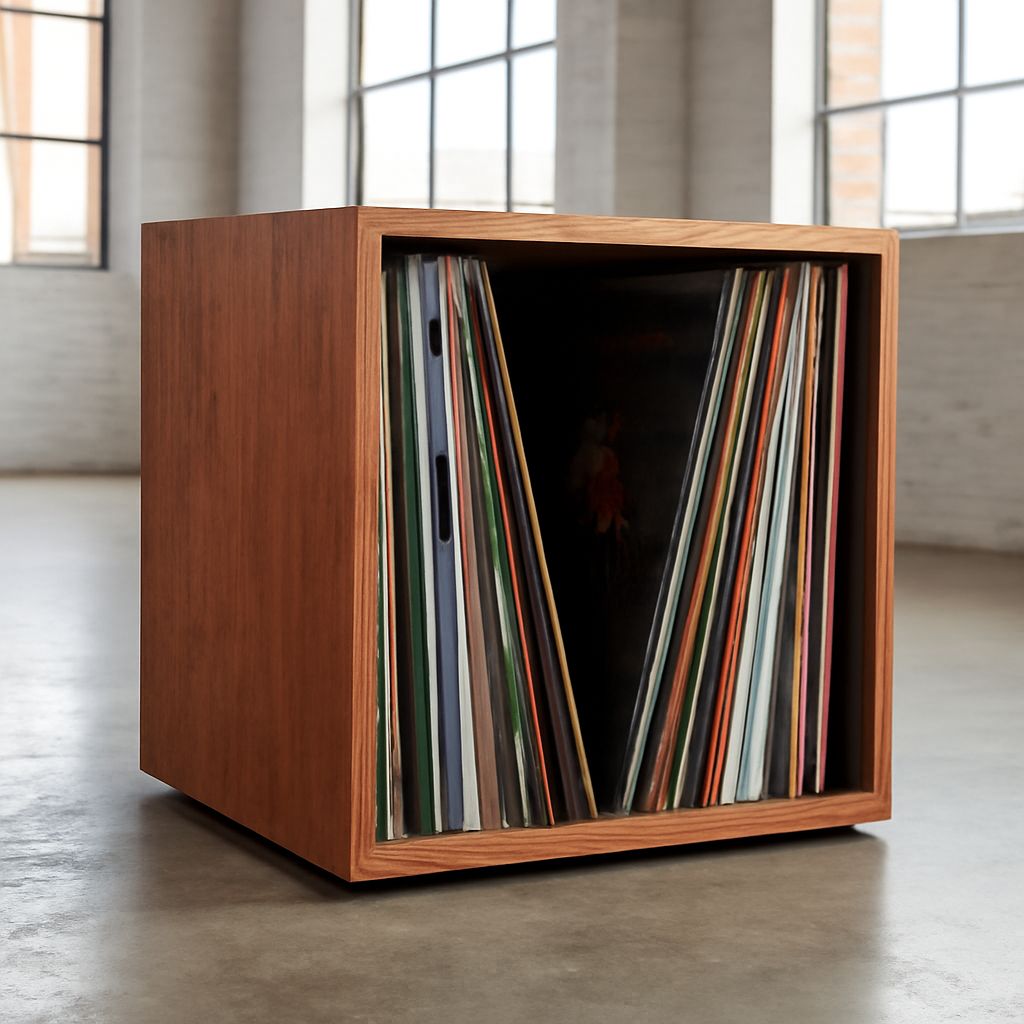
A record shelf should be sized for 12-inch jackets, not ordinary paperback books. Allow at least 13.5 inches of clear height, 13 to 14 inches of usable depth, and 1 to 2 inches of finger space above the jackets. For loading, plan on roughly 35 to 50 pounds per linear foot of shelf, depending on records, jackets, and box sets.
Measure the collection before choosing furniture. Pack a representative group upright, measure its width, divide by the number of records, and multiply that figure by your total count. Add 10 to 20 percent for future purchases. This gives a more reliable capacity estimate than counting only shelf openings.
Record shelf formats: cubes, cabinets, crates, and long shelves
Each storage format solves a different problem. Choose based on access, dust protection, available wall space, and how much weight each shelf can safely carry.
- Cubes: Cube compartments make compact, modular storage. Look for openings with at least 13.5 inches of clear height and 13 to 14 inches of clear depth. Individual bays limit sag and make useful dividers, but a 12-inch jacket can fit poorly in undersized cubes.
- Cabinets: A cabinet is the best option for dust control and a visually quiet room. Doors add depth, so check the usable interior rather than the outside measurement. Hinges and shelves must also clear the record jackets when the doors open.
- Crates: Wooden or plastic crates suit small collections, temporary storage, and flexible layouts. They are easy to move, but many have rough edges, limited capacity, or no restraint against tipping. Do not stack them high without securing the stack.
- Long shelves: A continuous shelf provides the easiest browsing experience. It also creates the highest concentrated load and the greatest risk of sag. Use intermediate supports instead of treating a long board as one unsupported span.
For full-record storage, records should stand vertically and remain reasonably full. An underfilled section allows jackets to lean, which can warp sleeves and make browsing awkward. Use removable vertical dividers when a section is not yet full.
Size a vinyl shelf for 12-inch jackets and finger clearance
A standard LP jacket is approximately 12.375 inches square, but gatefolds, protective sleeves, and oversized pressings need extra room. Treat 13.5 inches as a practical minimum clear opening height. Around 14 inches is more forgiving and makes removal easier.
Depth should be measured from the back stop to the front edge. A clear depth of 13 to 14 inches lets most jackets sit fully supported without projecting into the room. A shallow shelf may leave corners exposed, while excessive depth wastes space and makes titles harder to reach.
Finger clearance matters as much as the jacket dimensions. Leave 1 to 2 inches above the tallest record so you can pinch or tilt a jacket forward. If the shelf has a low overhead panel, test it with a thick gatefold before installation. A tight opening turns routine browsing into a process of pulling out several records.
Use this measurement plan before buying or cutting shelving:
- Measure the height and depth of your thickest jacket, including its protective sleeve.
- Measure a packed sample of at least 20 records to find average width.
- Multiply average width by the planned record count, then add 10 to 20 percent for growth.
- Divide the result into shelf bays that remain easy to browse and support.
- Check that doors, trim, baseboards, and back panels do not reduce the stated clear dimensions.
For example, if 100 records occupy 16 inches when packed, plan for about 19 inches of shelf width after adding growth space. Double albums and box sets may require a separate wider section.
Use a vinyl display shelf for selected covers and dust control
A vinyl display shelf is for front-facing covers, not dense vertical storage. It usually needs only 3 to 5 inches of depth, a front lip, and a slight angle or rear support. The ledge should support the lower edge of the jacket without covering its artwork.
Display ledges work well above a full-record cabinet or on a wall near a turntable. They keep a small selection visible while the main collection stays protected. Choose a front lip about 1 to 2 inches high, or use a groove that holds the jacket without hiding its title.
Front-facing covers collect more dust than records stored in a cabinet or closed shelf. Rotate displayed albums periodically, keep the ledge away from cooking areas and direct sunlight, and use an acrylic cover or shallow glass-front cabinet where dust is a concern. Avoid leaning several jackets together without a stop; the front cover can slide and the group can tip.
Because display covers project forward, secure the ledge to wall studs or suitable anchors. The load is lighter than full storage, but accidental impact is more likely. Leave enough space between neighboring ledges to lift a cover out without scraping the artwork.
Choose a vinyl bookshelf for full-record storage and collection growth
A vinyl bookshelf should prioritize vertical capacity, stable browsing, and easy expansion. Select a unit with shelves that can be repositioned or add matching sections later. Fixed shelves may look clean, but poorly spaced openings can waste height above the jackets.
Plan each full-storage bay around 25 to 35 inches of usable width when the shelf material and supports are properly rated. Narrower bays reduce the weight carried by each span and keep records upright. Wider bays can work with thicker shelves, metal supports, or a center divider.
Do not fill every bay to its theoretical maximum. Reserve one partly empty section for new purchases and unusual formats. A collection that grows into every gap becomes difficult to browse and encourages records to lean. Keep box sets, oversized gatefolds, and accessories in a separate bay rather than forcing them into standard spaces.
For browsing, place the most frequently played records between comfortable hand and eye level. Use lower compartments for heavier box sets and less-used titles. If children or pets share the room, avoid leaving valuable jackets on low open shelves.
Records should sit on their bottom edges, with jackets parallel to the shelf sides. Avoid storing them flat in tall piles. Horizontal stacks place pressure on the lower sleeves and make regular browsing unnecessarily disruptive.
Prevent sag with dividers, back stops, leveling, and wall restraint
Dense records create a concentrated load. Do not size a shelf by the load rating intended for paperback books. A shelf carrying 100 records may hold well over 50 pounds in a relatively short section, especially with heavy jackets and box sets.
Use these support measures:
- Limit unsupported spans: For a typical wood shelf, 24 to 30 inches is a conservative starting range. Longer spans need thicker material, a front stiffening edge, a center support, or a manufacturer’s rating that covers the actual load.
- Add vertical dividers: Dividers break a heavy run into smaller bays and stop records from leaning. Fix them securely or use tight-fitting removable dividers that cannot slide under load.
- Install a back stop: A rear stop keeps jackets from pushing through an open back or touching the wall. Leave enough front-to-back space for easy removal, and make sure the stop does not reduce the usable depth below the jacket size.
- Level the base: Check the floor with a level before loading. Shim the unit as needed, then recheck it after the records are installed. A tilted shelf increases leaning and transfers weight unevenly.
- Restrain tall furniture: Anchor cabinets, cubes, and tall shelves to wall studs or appropriate masonry anchors. Level first, then install the restraint so the unit cannot tip during browsing.
Load shelves from the bottom upward, placing the heaviest sections low. After loading, inspect every shelf for visible bowing and check that records remain upright. If a shelf sags, remove weight immediately and add support rather than waiting for the board or fasteners to fail.