
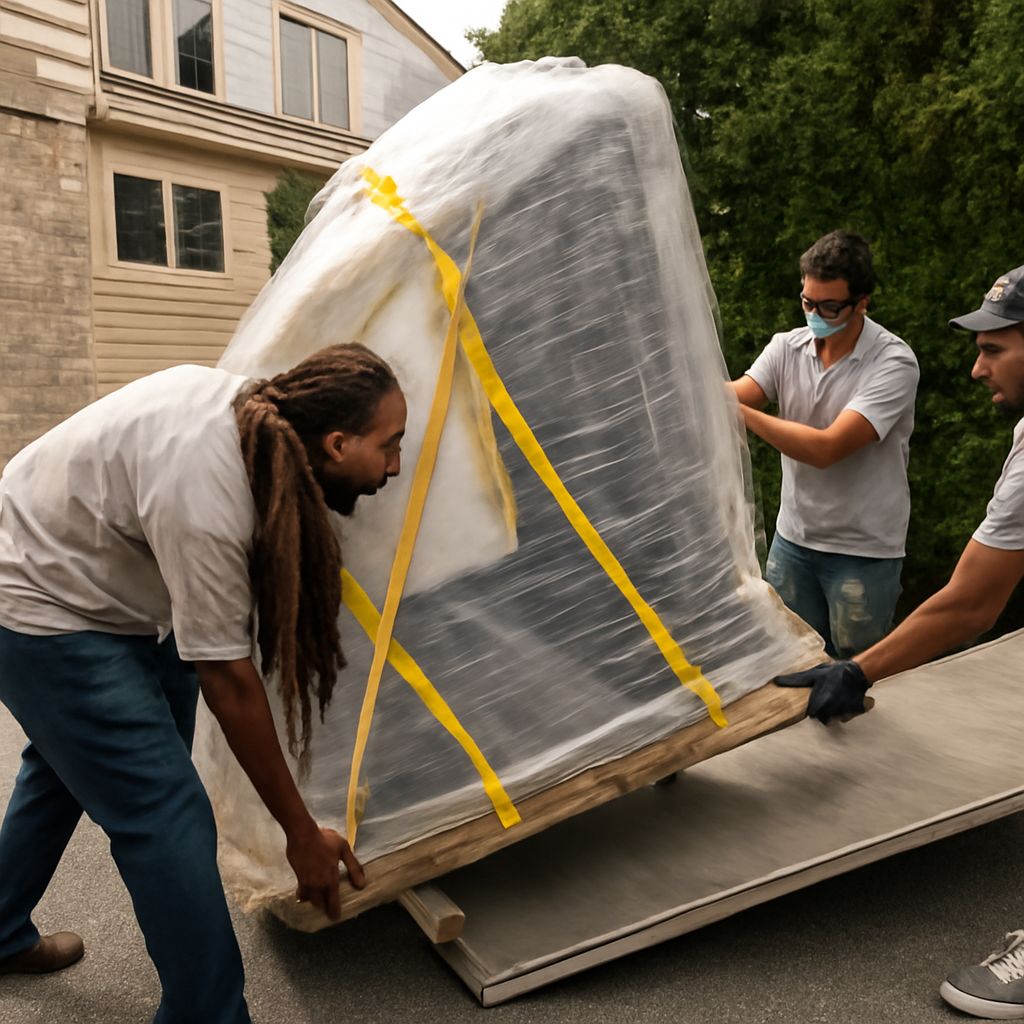
For most piano moving jobs, hire a qualified piano mover when the route includes stairs, tight turns, long carries, or a valuable instrument. Equipment rental can work for a short, straightforward ground-level move, but only with a capable crew, a suitable vehicle, and a documented lifting plan.
Assess the piano, route, and destination before choosing. A piano board helps distribute weight and stabilize the instrument; it does not replace trained labor, secure straps, padding, floor protection, or vehicle tie-downs.
Piano Moving: Assess the Instrument and Route
Identify the piano type, approximate weight, dimensions, and condition. Each design creates different handling demands:
- Upright: A tall case concentrates weight high above the floor. It may fit through standard doors, but stairs and thresholds can make it difficult to control.
- Studio: A studio piano is generally larger and heavier than a small upright. Measure its height, depth, and widest points before planning the carry.
- Baby grand: Its legs and pedals usually require removal or protection. The instrument may need to travel on its side, supported by a board and properly placed padding.
- Grand: A full-size grand demands more crew, wider clearances, careful disassembly, and a vehicle with enough length and securement points.
Inventory the entire route, not just the front door. Record every staircase, landing, elevator, corner, doorway, threshold, and ceiling restriction. Measure narrow points with trim, railings, and doors in their actual positions. Note hardwood, tile, carpet, gravel, grass, and uneven pavement, since each surface changes traction and protection needs.
Map the weather path between buildings. Rain, snow, wind, and wet leaves can make a short outdoor carry unsafe. Confirm the vehicle can reach the loading point and has interior height, length, ramp access, and anchor points for the secured instrument. Photograph tight areas and send measurements to anyone preparing the quote.
When to Hire a Piano Mover: Quote Checklist
Choose a professional piano mover when the instrument is heavy or valuable, the route includes stairs or sharp turns, or your crew lacks specialized experience. Professional service is also the better choice when disassembly, long carries, weather exposure, or a liftgate truck is involved.
Request a written quote that answers these questions:
- How many movers are assigned, and have they handled this piano type?
- Will the crew inspect the route, remove legs or other parts, and reassemble the instrument?
- What board size, straps, blankets, skid equipment, and dollies will they use?
- Are floor, wall, doorway, and stair protection included?
- What vehicle, ramp, liftgate, and interior tie-down system are planned?
- What arrival window allows enough time for preparation rather than a rushed carry?
- How will the piano be secured, covered, and protected from weather?
Before loading, take clear condition photos of the case, legs, pedals, keyboard, lid, and existing marks. Share them with the mover and retain copies. Confirm the pickup and delivery addresses, parking restrictions, elevator reservations, access codes, and contact person at both locations.
What Piano Board Rental Includes: Rental Checklist
A piano board rental typically provides a padded skid board or moving board, protective padding, straps, and sometimes a piano dolly. Packages vary, so confirm every item instead of assuming the board includes labor or transport.
- Ask for the board’s length, width, weight rating, padding, and compatibility with your upright, studio, baby grand, or grand.
- Confirm the number and working load of straps, plus whether they are designed to secure a piano to the board.
- Check whether moving blankets, corner protection, a four-wheel or three-wheel dolly, ramps, and floor runners are included.
- Verify pickup and return times, loading instructions, cleaning fees, deposits, and damage terms.
- Ask whether the provider offers assembly guidance or requires a trained crew for the package.
Do not treat a board as a complete moving system. You still need enough people to control the weight, a clear lifting plan, protected floors, a suitable truck, and interior securement that prevents shifting. Rental equipment is most practical for a ground-level move with wide doorways, minimal distance, and an experienced team. Stairs, tight turns, fragile finishes, and large grands favor professional service.
Prepare Both Locations, the Vehicle, and Destination
At pickup, clear furniture, rugs, toys, plants, and door stops from the route. Remove doors only when necessary and when they can be safely reinstalled. Protect thresholds, flooring, walls, and corners with appropriate padding or runners. Keep the piano closed, dry, and covered without trapping moisture against the finish.
Prepare the vehicle before the piano arrives. Use a truck with adequate interior space, a nonslip loading surface, ramps or a liftgate, and rated anchor points. Position the board and blankets first. After loading, secure the piano so it cannot slide, tip, or contact hard surfaces during braking and turns. Never rely on a loose blanket or a single strap.
At the destination, repeat the route inspection and protection setup. Reserve an elevator or parking space, unlock all access points, and keep the final room clear. Place the piano away from radiators, vents, direct sunlight, damp walls, and unstable flooring. After positioning, check for new damage, save final photos, and allow the instrument to settle before arranging tuning.