
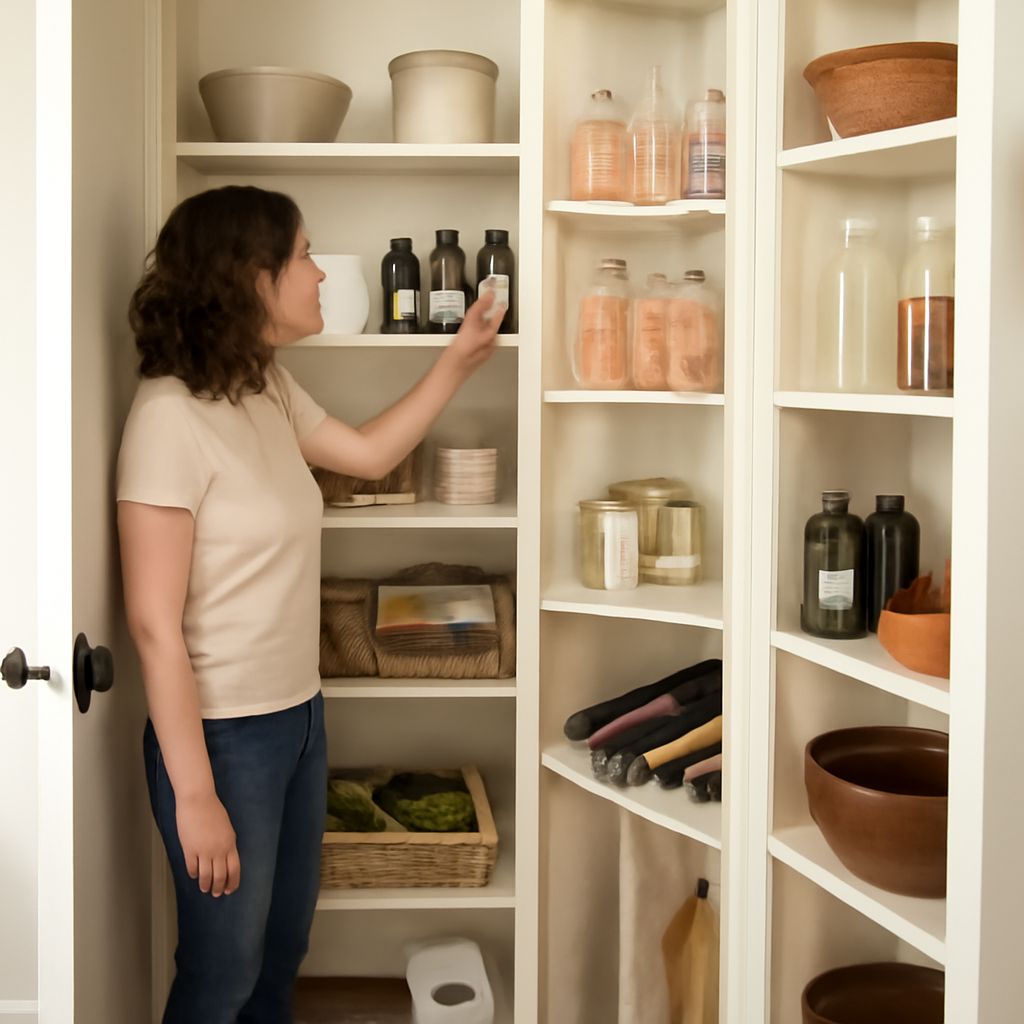
Open shelves in a kitchen work best when they hold items you use often and remain outside the dirtiest cooking zones. They make dishes easier to reach and can make a compact room feel less enclosed. However, they also expose clutter, collect dust, and demand stronger planning than standard wall cabinets.
Choose them if you are comfortable with visible storage and a regular wipe-down. Keep grease-prone cookware, rarely used appliances, and fragile pieces in closed storage. The most practical design usually combines one or two open shelves with cabinets or drawers below.
Where Open Shelves in a Kitchen Work Best
The wall beside a sink or dishwasher is a strong location for everyday dishes. Plates, bowls, glasses, and mugs can move directly from the dishwasher to the shelf. Leave enough room beside the faucet that splashing does not reach the shelf edge or stored items. A sealed finish is especially important on this wall.
Open shelving in a kitchen also works well on a short, underused wall, at the end of a cabinet run, or above a prep counter. These locations add storage without making the entire room feel like a display cabinet. A shelf near a coffee station can hold mugs, canisters, and tea supplies. A shelf near a breakfast area can hold bowls and frequently used serving pieces.
Use more caution near a range. Shelves directly above cooking surfaces collect grease, heat, and airborne residue quickly. They can also interfere with the hood’s capture area. Instead, place shelves on an adjacent wall or beyond the main splash and heat zone. Follow the range and hood manufacturer’s required clearances, and keep flammable or heat-sensitive items away from the cooking surface.
Consider visibility and reach before committing to a wall. Open shelves need enough front clearance for hands, dishes, and cabinet doors. They should not narrow a busy walkway or collide with an open refrigerator door. A 36-inch passage is a useful minimum for a walkway; a working aisle often needs about 42 inches for one cook and 48 inches for several people.
Choose Dimensions and Materials for Open Shelving in a Kitchen
For everyday dishes, a shelf depth of 10 to 12 inches is usually sufficient. It accommodates standard dinner plates while limiting visual bulk. Choose 12 to 14 inches for pantry jars, serving bowls, or small appliances. Cookware may need 14 to 16 inches, but deeper shelves can make items harder to reach and create more opportunity for clutter.
Set the lowest shelf about 18 to 24 inches above the countertop when it is mounted on a backsplash wall. Eighteen inches provides easy access; 24 inches leaves more room for tall appliances and food preparation. Allow roughly 12 to 15 inches of vertical space between shelves, then adjust for the tallest item in each group. Measure your actual plates, jars, and pitchers rather than relying only on standard dimensions.
Keep the highest frequently used shelf within comfortable reach. For many adults, that means placing it no higher than 60 to 72 inches from the floor, depending on ceiling height and the user’s reach. Decorative items can go higher, but avoid storing heavy dishes overhead.
Material affects both appearance and load capacity. Solid hardwood, sealed plywood, and metal are common choices. Hardwood gives a warm, furniture-like finish. Quality plywood is stable and can be painted or veneered. Metal suits industrial or minimalist kitchens, but it may transmit sound when dishes are set down.
Use a water-resistant finish near sinks. Several coats of polyurethane, a properly cured paint system, or a sealed laminate surface can protect wood from splashes. Seal every edge, including the underside and end grain. Avoid unfinished wood near a faucet. For shelves near a range, choose a finish that can tolerate frequent cleaning, and expect more maintenance than on a remote wall.
Limit the unsupported span according to the material and load. A 24- to 30-inch span is a cautious starting point for a wood shelf holding dishes. Longer shelves may sag unless they are thicker, reinforced, or supported at the center. A shelf that looks straight when empty can bow noticeably under stacks of plates, jars, and cookware.
Plan Support and Working Clearances for Kitchen Open Shelves
Dish loads are heavier than they appear. A stack of plates, bowls, and glasses can put substantial weight on a short shelf, while pantry jars concentrate weight in small areas. Check the shelf and hardware ratings together, not separately. Design for the full loaded shelf, with some margin for added items.
Bracket support is the straightforward option. Use brackets sized for the shelf depth, and space them closely enough to prevent sagging. For a heavily loaded dish shelf, brackets at each end plus one near the center are safer than relying on two widely spaced supports. Fasten brackets into wall studs or installed blocking whenever possible. Drywall anchors alone may not safely carry a dense dish load.
Concealed supports create a cleaner appearance but require more precise installation. These systems usually use steel rods that enter a thick shelf or a built-up back edge. The wall must hold the mounting plate securely, and the shelf must be strong enough around the rod holes. Follow the hardware manufacturer’s span and weight limits rather than treating concealed rods as unlimited support.
Install the shelf level and test it before loading it. Press gently on the front edge, check for movement, and inspect the fasteners after the first week. If the shelf flexes, bows, or pulls away from the wall, remove the contents and correct the support immediately.
Working clearance matters below and in front of the shelf. Keep the lowest shelf high enough that countertop work remains comfortable, and avoid placing it where a tall faucet handle will strike it. At corners, stop the shelf short of adjacent walls or use a rounded end to prevent shoulder and head collisions. If shelves project farther than nearby cabinets, recheck the aisle width with refrigerator and dishwasher doors open.
Organize Open Kitchen Shelving for Daily Use and Cleaning
Assign each shelf a job before filling it. Everyday dishes belong closest to the dishwasher or main prep area. Stack plates by size, group bowls together, and keep glasses or mugs on the shelf that requires the least reaching. Leave a little empty space so one item can be removed without disturbing the stack.
- Everyday dishes: Keep the most-used plates, bowls, cups, and glasses at chest-to-waist height near the dishwasher.
- Pantry items: Transfer flour, grains, snacks, and spices into matching, sealed containers. Use trays to group small jars and make them easier to remove.
- Cookware: Reserve the strongest, lowest shelves for skillets, Dutch ovens, and serving pots. Keep heavy pieces below shoulder height.
- Display pieces: Use upper shelves for a limited number of attractive bowls, pitchers, cookbooks, or serving platters. Keep decorative items away from the range.
Leave space around containers so the shelf does not become a solid wall of objects. Repeated shapes and a restrained color palette make open storage look orderly without requiring every item to match. If the arrangement constantly looks crowded, move infrequently used pieces into closed storage rather than adding another decorative layer.
A realistic cleaning routine is simple but regular. Wipe visible splashes the same day, especially near the sink. Once a week, remove the items from the busiest shelf, wipe the surface with a barely damp microfiber cloth and mild detergent, then dry it fully. Near a range, clean grease more often with a product suitable for the shelf finish; do not spray cleaner directly onto wood or stored dishes.
Monthly, check the shelf for swelling, finish damage, loose brackets, and sagging. Wash or wipe the bottoms of containers that sit near the sink. Rotate display pieces and pantry stock so dust does not remain hidden behind the front row. This routine keeps kitchen open shelves useful rather than turning them into a permanent dusting project.