
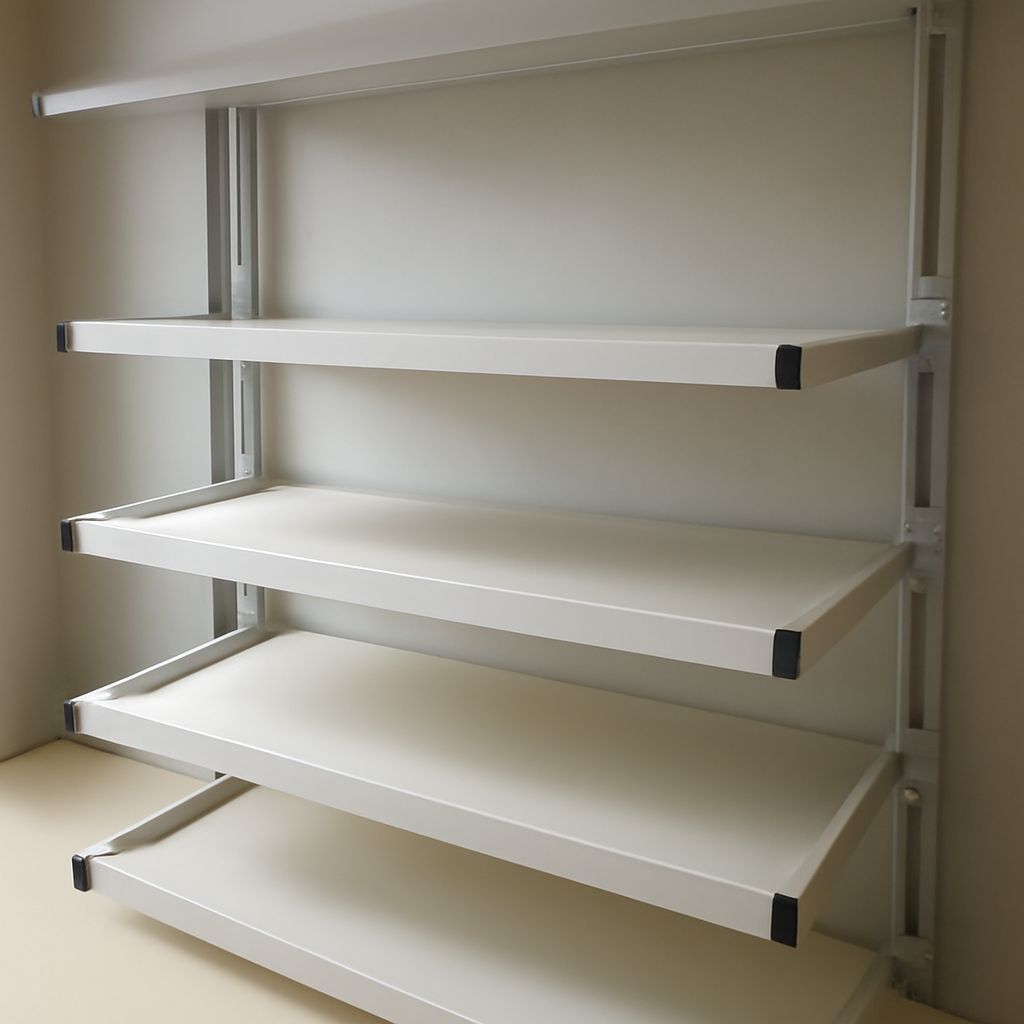
A metal shelving unit is affordable only when its usable capacity, construction, and stability match the job. Compare the shelf deck, frame gauge, connectors, dimensions, and per-shelf rating—not just the advertised total load.
For most homes, wire shelving offers the lowest cost and easiest cleaning. Boltless and rivet designs provide better solid storage and higher practical capacity, while light industrial shelves suit heavier, frequent-use loads. Use the checklist below to match the design to each room.
Metal Shelving Unit Types by Budget and Use
Wire, boltless, rivet, and light industrial designs
Wire shelving usually costs the least and assembles quickly with clip-on posts or sleeves. Open decks allow air circulation and make spills visible, which suits pantries, laundry rooms, and utility areas. However, narrow items may need shelf liners, and flexible wire decks can sag or feel unstable under concentrated loads.
Boltless shelving uses uprights with punched slots and beams that lock into place. It normally includes particleboard, MDF, or steel shelf decks. This design provides a solid surface at a moderate price and allows shelves to move without drilling. Check that the connectors seat fully; poorly engaged beams can reduce stability.
Rivet shelving uses rivet-style beam connectors that fit into keyhole slots. It is often faster to assemble than a bolted frame and can carry more than basic wire shelving. Rivet joints need a firm tap or properly seated connection during installation. A rubber mallet is often useful, while a steel hammer can damage the finish.
Light industrial shelving typically has thicker uprights, stronger beams, and more durable decks. It costs more initially but makes sense for a garage work area, tool storage, or a small stockroom. Choose it when shelves will hold dense boxes, parts, paint, or equipment regularly.
When a metal shelving rack is the better choice
A metal shelving rack is preferable when you need a freestanding frame with multiple adjustable levels and a clearly stated load rating. Select a rack with bracing or a rigid back when it will stand away from a wall. For occasional household storage, avoid paying for industrial capacity that the room and floor cannot safely support.
Compare Dimensions and Load Ratings
Usable size versus outside size
Manufacturers may list a shelf as 36 inches wide by 18 inches deep, but those measurements can describe the outside frame. The usable shelf surface may be narrower or shallower because uprights, beams, lips, and corner fittings occupy space.
Measure the shelf deck between the obstructions, then compare it with the items you plan to store. Leave clearance for removing containers. Also measure the assembled height, including leveling feet or top caps. Allow space above the unit for assembly and below nearby doors, windows, pipes, and ceiling fixtures.
Depth matters as much as width. An 18-inch-deep shelf may fit storage bins well, while a 12-inch model suits cans and folded supplies. Do not assume a deeper unit provides more useful capacity if items will be difficult to reach at the back.
Per-shelf capacity versus total capacity
Always find the per-shelf capacity first. A unit advertised as supporting 2,000 pounds might require five shelves carrying 400 pounds each under stated conditions. That total does not mean one shelf can hold 2,000 pounds.
Check whether the rating assumes an evenly distributed load, a fully assembled frame, a level floor, or specific deck materials. A box of books concentrates weight more than clothing spread across a shelf. Keep dense items on lower levels and stay below the published rating, especially when loads are uneven or frequently moved.
The total capacity is useful only after confirming every shelf rating. Add the intended loads across all levels, then compare that sum with the manufacturer’s total limit. The lower of the per-shelf and total limits controls your setup.
Shelf count, spacing, and deck material
More shelves do not always mean more usable storage. A five-shelf unit with fixed, closely spaced levels may waste space for tall containers. Adjustable shelves let you create one tall bay and several shorter bays, but each adjustment may affect the rated capacity.
Count the included shelves rather than assuming every visible level is supplied. Confirm the adjustment increment and the minimum and maximum spacing. Wire decks are useful for ventilation; steel decks resist dents; particleboard or MDF decks provide a flat surface for small packages but can swell after water exposure.
Affordable metal shelving by Room and Workload
Pantry, basement, and utility storage
For a pantry, choose wire or light boltless shelving with a 12- to 18-inch usable depth. A flat liner prevents jars and packets from tipping through wire openings. Adjustable shelves help separate short cans from tall appliances, but keep heavy canned goods on lower levels.
Basements need materials that tolerate dust and occasional moisture. Powder-coated steel is generally more practical than unfinished metal, while a raised design keeps the lowest deck away from minor floor dampness. Do not place any shelf where water can pool around its feet.
In a utility room, prioritize cleanable surfaces and enough clearance for detergent bottles, tools, or folded equipment. Wire works well when airflow matters. A solid deck is better for small hardware, cleaning supplies, and containers with unstable bases.
Garage and light stockroom storage
Garages benefit from deeper boltless, rivet, or light industrial units. Choose usable dimensions that fit storage totes without forcing them against the wall. Put the heaviest tools, fluids, and spare parts on the bottom shelf, and reserve upper levels for lighter items that are easy to handle.
For a light stockroom, rivet or light industrial construction is usually the better value. Confirm that the beams, decks, and uprights share the same rating system. Adjustable levels should accommodate cartons without leaving excessive unused height. If workers will access the unit often, smooth edges and a rigid frame matter as much as the nominal capacity.
Inspect an industrial metal shelf before you buy
Frame gauge, connectors, and finish
Gauge describes metal thickness, but gauge numbers can vary by material and manufacturer. Compare actual steel thickness when provided, and inspect the upright profile, beam depth, and presence of diagonal bracing. A thicker frame generally resists bending better, but it does not compensate for weak joints or an overloaded deck.
Examine the connector design closely. Bolted joints offer a tight connection but require tools and periodic checks. Rivet and boltless joints assemble faster, yet the beams must lock completely into the uprights. Look for locking pins, safety clips, or retaining tabs that prevent beams from lifting out.
Powder coating helps protect steel from scratches and ordinary humidity. Check for complete coverage at edges, welds, and connector openings. Galvanized finishes can be useful in damp areas, while bare steel is more vulnerable to rust. Finish quality does not make a unit suitable for outdoor exposure unless the manufacturer states that it is.
Assembly, leveling feet, and anti-tip stability
Assemble the frame on a level surface and follow the specified sequence. Confirm every connector is fully seated before loading shelves. Do not substitute bolts, clips, or deck panels unless the manufacturer approves them; small changes can alter the frame’s strength.
Leveling feet help compensate for uneven floors and reduce rocking. Adjust them after the unit is in its final position, then check that each foot contacts the floor. If the shelf has casters, use locking casters and observe their separate load rating.
Use wall anchors or an anti-tip strap when the unit is tall, narrow, heavily loaded, placed on an uneven floor, or accessible to children. Anchor it near the top without blocking required movement or damaging hidden utilities. Recheck the frame after loading: shelves should remain level, connectors should stay seated, and the unit should not sway when a container is removed.