
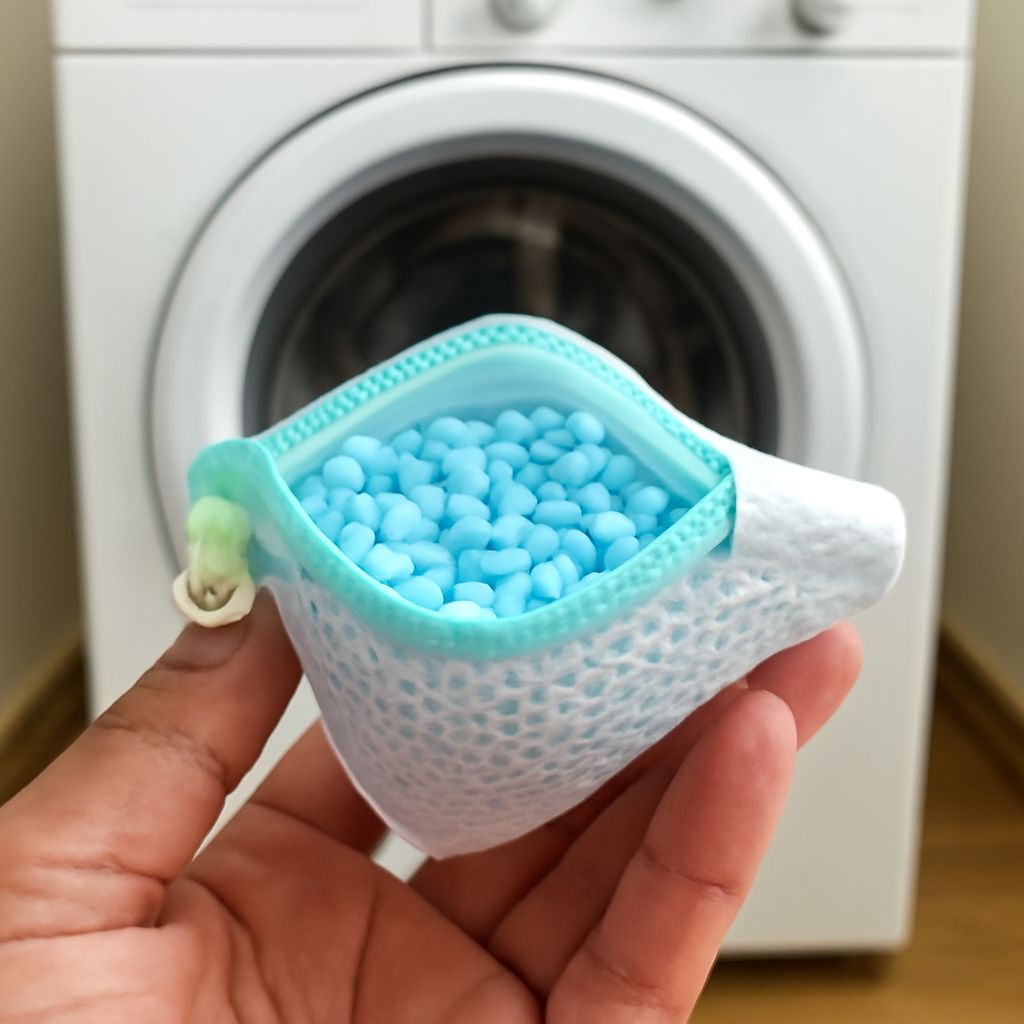
Mesh laundry bags protect delicate fabrics, small items, and garment shapes from snagging, stretching, tangling, and getting lost in the washer. The best choice depends on the item: fine mesh for hosiery, a medium bag for underwear, and a larger, sturdier bag for sweaters or household pieces.
Use the bag as a protective layer, not as a replacement for the garment’s care label. Select the correct size, leave room for movement, close every hook or zipper, separate colors, and choose a cycle that suits the fabric inside.
What Mesh Laundry Bags Protect: Small Items, Delicates, and Structured Garments
A wash bag creates space between vulnerable fabric and the washer drum, agitator, and other clothing. It also keeps pairs and small pieces together. However, it cannot prevent damage caused by an unsuitable water temperature, cycle, detergent, or dryer setting.
- Socks and small accessories: Use a small bag to keep socks, tights, baby items, hair bands, and reusable makeup pads together. A fine or medium mesh prevents small pieces from slipping out.
- Delicate underwear: Bras, lace underwear, camisoles, and silk-like garments benefit from fine mesh. It reduces rubbing and helps prevent straps from wrapping around other clothes.
- Structured garments: Molded-cup bras, padded swimwear, lightweight jackets, and garments with appliqués need a roomy bag that does not crush their shape. Check the care label first, since some structured pieces require hand washing.
- Knits and sweaters: A large, durable bag can reduce tangling and abrasion on washable knits. Choose one that allows the garment to lie relatively flat rather than forcing it into a tight bundle.
- Household pieces: Small cloths, washable mop heads, reusable cleaning pads, and delicate pillow covers can go into a large wash bag when their care instructions allow machine washing.
Do not put heavy shoes, sharp hooks, garments with exposed fasteners, or heavily soiled bulky items into the same bag as delicate laundry. They can snag the mesh, transfer dirt, or block water and detergent from reaching smaller pieces.
Choose Mesh Bags for Laundry by Fineness, Size, Closure, and Seams
Start with mesh fineness. Fine mesh offers more protection for hosiery, lace, thin straps, and small items. Medium mesh provides better water and detergent flow for underwear, shirts, and lightweight knits. Coarse mesh suits larger, sturdy pieces that need less shielding but more circulation.
Match the bag’s dimensions to the item, not simply to the amount of laundry. The item should sit inside without being tightly compressed. A useful range is:
- Small bags: Best for socks, tights, underwear, washable pads, and other compact pieces.
- Medium bags: Suitable for one or two bras, a camisole, a blouse, or several lightweight delicate items.
- Large bags: Designed for sweaters, dresses, pillow covers, and other larger pieces that need room to move.
One delicate garment per bag often gives the cleanest result, especially for bras, embellished clothing, and garments with molded cups. Several thin items may share a bag if they are similar in color, fabric weight, and care requirements. Leave at least a little open space around the contents. A packed bag cleans poorly because water and detergent cannot circulate through every layer, and the center may remain compressed and damp.
Closures matter as much as mesh. A zipper is quick and secure, but choose a model with a zipper guard or covered end. The guard keeps the slider from catching other clothing or scratching the washer. For a bag with fastening hooks, close every hook before washing. Unfastened hooks can snag the mesh or another garment.
Inspect the seams, zipper tape, hook attachments, and drawstring area before buying or using a bag. Double-stitched seams and reinforced edges are useful for frequent washing. Avoid bags with loose threads, stretched corners, broken teeth, or a closure that opens when gently pulled. A damaged mesh laundry bag can release its contents and create the problem it was meant to prevent.
Load a Mesh Laundry Bag Loosely, Separate Colors, and Choose the Cycle
- Read each care label. Confirm that the item is machine washable and note the required temperature, cycle, detergent, and drying method. If the label says hand wash or dry clean, follow that instruction instead of relying on the bag.
- Prepare the garments. Empty pockets, close regular garment zippers, fasten bra hooks, and remove detachable parts when the care label permits. Turn printed or embellished items inside out if directed by the garment’s construction and care instructions.
- Separate colors and fabrics. Keep dark, bright, and light items in separate loads when dye transfer is possible. Do not combine a lint-producing towel with a delicate blouse just because both fit in one bag.
- Place items inside loosely. Do not roll, compress, or stuff the bag. Leave room for the contents to shift during washing. Use separate bags for items with different colors, fabric weights, or washing requirements.
- Fasten the closure completely. Zip the bag to the covered end, secure all hooks, or tie the drawstring firmly. Check that no fabric is caught in the zipper or fastening point.
- Choose the gentlest suitable cycle. Select the water temperature and cycle named on the care label. Delicates commonly need a gentle or delicate cycle with low agitation, while washable household pieces may allow a regular cycle. Use an appropriate detergent amount rather than adding extra because the bag is closed.
- Remove the bag promptly. Take it from the washer when the cycle ends. Open it over a clean surface and remove every item so damp fabric does not sit in a closed bundle.
Do not overload the washer just because a bag makes sorting easier. The drum still needs enough space for the load to move. A bag that repeatedly floats as a tight, heavy lump is too full, too large for the item, or being used with an unsuitable load.
Clean, Inspect, Dry, and Store a Laundry Net Bag
Empty the laundry net bag after every wash and check the inside corners. Lint, hair, tissue fragments, and detergent residue can collect along the seams or zipper. Shake the bag out, then rinse it if residue remains. For routine cleaning, wash it according to its own care label, using a compatible load or hand washing it with mild detergent.
Inspect the bag after each use. Look for holes, pulled threads, split seams, bent zipper teeth, loose hooks, and stretched elastic. Small damage can become a large opening during the next spin cycle. Replace the bag when the closure no longer stays shut or the mesh cannot contain the item securely.
Dry the bag fully before storing it. Unzip or unfasten it, spread it open, and hang it in a well-ventilated place. Avoid storing a damp bag inside the washer, a closed hamper, or a drawer, where trapped moisture can create mildew odors. Once dry, fold it loosely and keep small and large bags together so the right size is easy to find.