
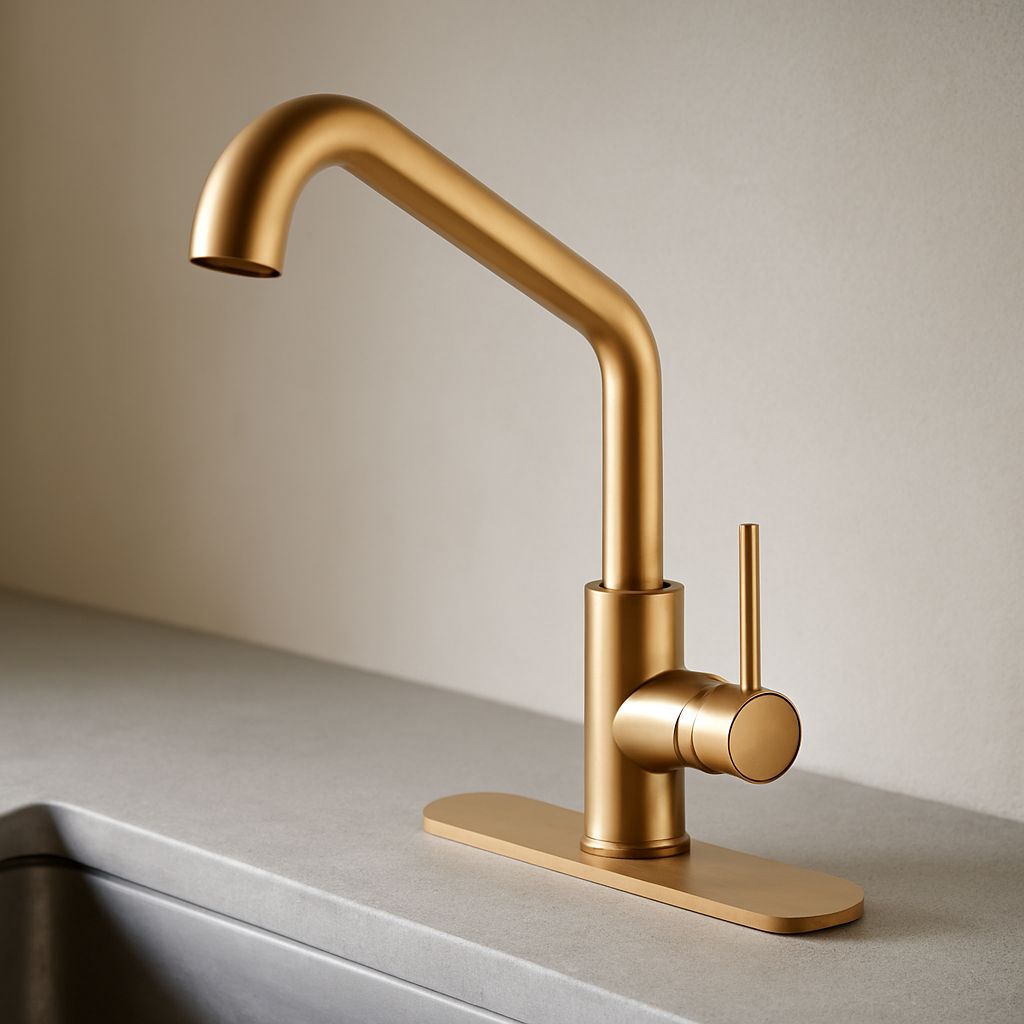
A laundry tub faucet should match the sink’s hole pattern, basin depth, plumbing connections, and everyday tasks. Measure the sink before shopping, then compare spout reach, height, handle clearance, and spray features.
The best laundry room faucets usually prioritize control and clearance over decorative details. A deep utility sink may need a taller spout for buckets, while a shallow basin needs shorter reach to limit splashing.
Laundry Tub Faucet Types: Deck, Wall, Centerset, Widespread, Bridge, Pull-Out, Hose-Thread, and Service-Sink Formats
Start by identifying how the faucet attaches to the sink or wall. The mounting format must match the existing holes or the plumbing plan.
- Deck-mounted faucets: These install through holes in the sink’s rear deck or countertop. They are common for plastic, stainless steel, and composite utility sinks.
- Wall-mounted faucets: These attach to plumbing outlets in the wall behind the basin. They keep the sink deck clear and work well with deep service sinks, but the wall connections must align with the faucet.
- Centerset faucets: These combine the spout and handles on one base, commonly using two outer holes about 4 inches apart. Confirm the actual center-to-center measurement before buying.
- Widespread faucets: These use separate spout and handle components. They require three holes and offer more flexibility in spacing, but need enough deck area for each component.
- Bridge faucets: These connect two handles to the spout through a visible bridge. They suit traditional or industrial utility-sink designs and typically need two supply holes with a compatible spacing pattern.
- Pull-out faucets: A pull-out spray head extends from the spout and improves control when rinsing clothes, cleaning the basin, or filling containers. Check that the hose retracts without striking the wall or backsplash.
- Hose-thread faucets: These include a threaded outlet for attaching a hose or accessory. Verify the thread type and size, and choose a model with a shutoff or diverter if you need to switch between the spout and hose.
- Service-sink faucets: These are rugged wall-mounted or deck-mounted models designed for deep basins, buckets, and frequent cleaning. Long spouts, integral stops, vacuum breakers, or hose connections may be useful features.
A faucet can combine categories. For example, a deck-mounted centerset model may have a pull-out spray head and hose-thread outlet. Match the mounting system first, then select the functions you need.
Laundry Tub Faucets: Measure Holes, Spacing, Setback, Landing Point, and Basin Depth
Remove the old faucet if possible, then measure from the top of the sink or counter. Record measurements in inches or millimeters, and compare them with the manufacturer’s specification sheet.
- Count the holes. Record whether the sink has one, two, or three faucet holes. Note unused accessory holes for a sprayer, soap dispenser, or separate side spray.
- Measure hole spacing. Measure from the center of one hole to the center of the next, not from the edges. For three-hole layouts, record the spacing between the spout and each handle. Do not assume a centerset or widespread pattern from appearance alone.
- Measure the wall setback. On a deck-mounted faucet, measure from the faucet holes to the backsplash or wall. The faucet body, handles, and supply lines need room behind and below the deck. For a wall-mounted faucet, measure from the wall face to the basin rim and confirm the outlet height.
- Locate the spout landing point. Estimate where the water should enter the basin. The stream should land near the drain or slightly forward of it, rather than against the rear wall or front rim. Compare this point with the faucet’s stated spout reach.
- Measure basin depth. Measure from the rim to the basin floor. A deep tub often benefits from a taller spout, while a shallow sink usually needs moderate height and reach to reduce splash.
- Check bucket height. Measure the tallest bucket, mop pail, or container you plan to place under the spout. Add clearance for the faucet aerator or spray head, then verify that the basin can still support the container safely.
Also measure the sink rim and backsplash height. A thick rim, raised rear ledge, or nearby shelf can prevent a handle from opening fully or stop a pull-out hose from returning smoothly.
Laundry Room Faucets: Choose Reach, Height, Spray, Handles, and Finish
Choose reach and height together. A long spout may reach the center of a wide tub, but excessive reach can direct water onto the front wall and create splash. A high-arc spout helps fill buckets, although its increased drop height can make water noisier in a shallow basin.
Use the sink measurements to select a practical landing point. For most utility tasks, the stream should fall inside the basin with enough room to maneuver clothing, brushes, or containers. A swiveling spout is useful when you need to move the stream between two sides of a large tub.
- Pull-out or side spray: Choose a spray when rinsing muddy items, cleaning the basin, or directing water into a bucket is important. Confirm the hose length and retraction path.
- Single handle: A lever handle is quick to operate and easier to use with one hand. Make sure it can move fully without hitting a wall, shelf, or backsplash.
- Two handles: Separate hot and cold handles provide familiar control and suit centerset, widespread, and bridge layouts. Allow enough space to turn each handle while holding a bucket or wet garment.
- Cross or lever controls: Lever handles generally need less twisting force. Cross handles can suit a traditional design but may require more wrist movement.
- Aerator and flow control: A removable aerator simplifies cleaning and can make the stream more useful for filling containers. A flow limiter may reduce splash, but avoid restricting flow if you regularly fill large buckets.
- Finish: Chrome, stainless, brushed nickel, and matte black are common choices. Select a finish that tolerates detergent, hard-water deposits, and frequent wiping; the finish does not replace routine cleaning.
For a sink used mainly for hand-washing clothes, a moderate-height spout and spray head may be enough. For mop buckets and large containers, prioritize vertical clearance, swivel range, and a long enough spout.
Plan Connections and Clearance: Supply Lines, Shutoffs, Bucket Filling, and Splash
Before installation, confirm the faucet’s connection type and the plumbing beneath or behind the sink. Deck-mounted models typically connect to hot and cold supply lines below the deck. Wall-mounted service-sink models must match the location and spacing of the wall outlets.
- Supply lines: Check whether the faucet includes flexible lines, threaded tails, or adapters. Match the connector size, thread type, and hot-cold orientation to the existing plumbing.
- Shutoffs: Locate both shutoff valves and confirm they remain reachable after the sink, cabinet, or washer is installed. Replace corroded valves before connecting a new faucet.
- Drain and basin access: Leave enough room below the deck to tighten mounting hardware and inspect connections. A deep cabinet or stored supplies should not block the valves.
- Handle clearance: Open every handle through its full range before final tightening. Check clearance from walls, backsplash panels, shelves, washer lids, and nearby appliances.
- Bucket clearance: Place the tallest intended container in the basin and measure from its rim to the faucet outlet. Include room to tilt the container into position without hitting the spout.
- Splash control: Test the planned landing point against the basin shape. Water that strikes a vertical rear wall, shallow corner, or container side can splash even when the faucet’s reach appears suitable.
- Hose movement: For pull-out or hose-thread models, allow the hose to extend, retract, and hang without kinking. Keep the hose away from sharp cabinet edges and stored chemicals.
Use this final installation check before ordering: match the mounting format, count and measure the holes, confirm wall setback, plot the spout landing point, measure basin and bucket height, verify supply and shutoff access, and test handle and spray clearance.