
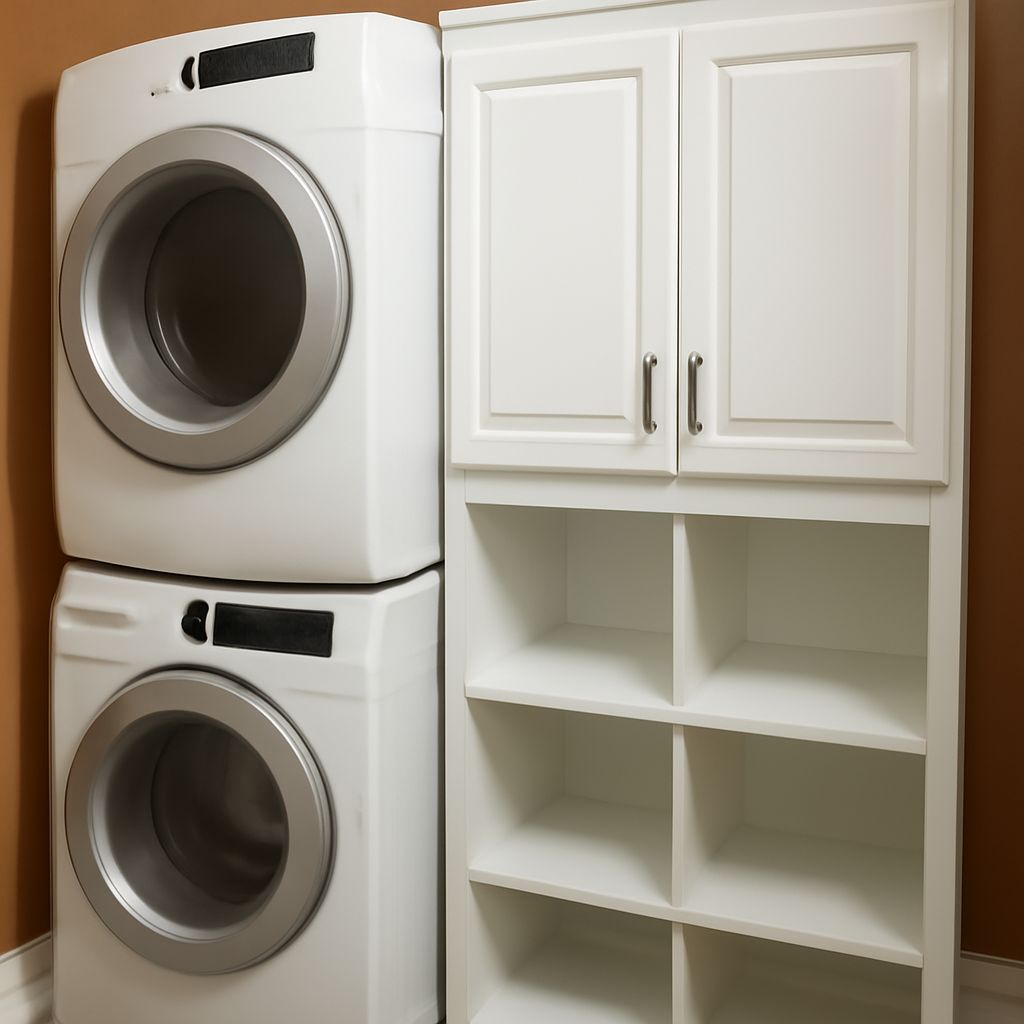
Laundry room shelving is storage installed in or above the laundry area to keep detergents, stain removers, baskets, linens, and tools organized and easy to reach. The right setup usually combines open shelves for quick access with other storage, such as cabinets for laundry room use, when you want items hidden or protected.
In practice, laundry room shelves help you use vertical space efficiently. They make a small room feel less crowded, reduce clutter around the washer and dryer, and keep everyday supplies grouped where you actually use them.
Laundry Room Shelving: Direct Answer
Laundry room shelving is any shelf system designed to store laundry supplies in a utility space. It can be floating shelves, wall-mounted metal shelves, built-in wood shelves, wire racks, or adjustable units above appliances. The purpose is simple: keep items visible, reachable, and off the floor.
The best laundry room shelves usually hold the supplies you reach for most often. That includes detergent, dryer sheets, stain treatments, clothespins, spare hangers, and a small basket for lost socks or lint tools. If the room is narrow, shelves above the washer and dryer often provide the most useful storage without reducing floor space.
Laundry shelving works best when it is planned around the room’s workflow. If you sort, wash, dry, fold, and store clothes in the same area, the shelves should support each step. A lower shelf may hold bulky baskets. A higher shelf may hold backup supplies you do not need every day.
How Laundry Room Shelving Varies
Laundry shelving comes in several forms, and each one serves a different need. Open shelving is the most common because it is easy to install and easy to use. It also keeps supplies visible, which helps prevent buying duplicates.
Wire shelves are practical in humid rooms because they allow air flow. They are often used in utility closets and budget-friendly laundry rooms. Solid wood or laminated shelves look cleaner and can make the space feel more finished, especially if the laundry area is part of a hallway or mudroom.
Floating shelves offer a lighter visual look and work well for small decorative storage. However, they are not always the best choice for heavy detergents or large baskets unless they are properly anchored. Adjustable shelving is useful if your storage needs change over time, since shelf spacing can be revised for tall bottles or folded towels.
Mounted shelving can also vary by depth. Shallow shelves are good for narrow rooms and small containers. Deeper shelves hold baskets and bulk refills, but they can become cluttered if everything is pushed to the back. A good rule is to match shelf depth to the size of the items you store most often.
Material choice matters, too. Metal shelving is durable and easy to clean. Wood shelving looks warmer and can be painted to match the room. Laminate is a strong middle ground for many homes because it is affordable and simple to wipe down.
Laundry Room Shelves vs. Cabinets
Laundry room shelves and cabinets for laundry room storage solve different problems. Shelves are best when you want quick access and easy visibility. Cabinets are better when you want to hide clutter, protect items from dust, or create a cleaner visual line.
Shelves make sense for detergent, stain removers, and baskets you use several times a week. Cabinets make more sense for backup supplies, cleaning chemicals, medications, or anything that should stay out of sight and out of reach. If children or pets use the home, enclosed storage can be a safer choice for certain items.
Many laundry rooms work best with both. For example, open shelves above the machines can hold daily-use products, while a base cabinet or tall cabinet stores extras, ironing tools, and cleaning backups. This mixed approach gives you the speed of shelves and the neatness of cabinets.
There is also a practical difference in maintenance. Shelves are faster to clean because everything is visible. Cabinets create a more polished look, but their contents can become forgotten. If you tend to lose track of products, open shelving may be the better starting point.
How to Choose the Right Setup
Start by measuring the wall space above and beside the washer and dryer. Leave enough clearance for machine lids, vent hoses, outlet access, and detergent pouring. If top-loading machines are installed, shelf placement matters even more because you need space to lift the lid fully.
Next, list what the shelves must hold. A setup for one person doing basic laundry can be simple. A family laundry room may need space for large bottles, multiple baskets, a folding stack, and stain treatment products. Choose laundry room shelving that fits the largest item first, then organize smaller items around it.
Think about load capacity before choosing a shelf style. Heavier items require secure mounting and stronger brackets. If you plan to store bulk detergent or stacked baskets, do not rely on lightweight decorative shelves. Check that the wall can support the system, especially on drywall or in older homes.
Use the room’s habits to guide the layout. If folding happens in the laundry area, include at least one shelf or ledge that can hold sorted clothes temporarily. If the room is mainly for washing, keep the shelves simple and focused on supplies. If the area doubles as a mudroom or utility closet, closed storage may be worth the extra cost.
Good spacing also improves usability. Leave enough room between shelves for tall bottles and easy hand access. Overcrowded shelving leads to tipping, spills, and mixed-up products. A little empty space makes the shelves work better and look cleaner.
If you want a low-maintenance option, choose materials that resist moisture and wipe clean easily. Laundry rooms are exposed to humidity, lint, and drips. That makes finishes and hardware more important than they might seem at first.
Practical Uses for Laundry Shelving
The most common use for laundry shelves is storing detergent and fabric softener within arm’s reach of the machines. A shelf above the washer can also hold stain removers, dryer balls, wrinkle spray, and mesh wash bags.
Laundry shelving is also useful for basket storage. One shelf can hold empty baskets, while another can separate clean folded laundry by family member or room. In small homes, shelves can even replace a folding table by creating zones: one for dirty laundry, one for clean laundry, and one for supplies.
Some homeowners use shelves for overflow storage. Extra paper products, light bulbs, cleaning cloths, and seasonal items can live in the laundry room if the shelves are sturdy enough. This is especially helpful when the laundry area is part of a larger utility space.
Open shelving can also support daily routines. A small tray or bin on one shelf keeps loose items together, such as clothespins, stain sticks, and lint rollers. That keeps the room from turning into a catchall while still making supplies easy to grab.
For a cleaner look, combine visible shelves with enclosed storage. Put the items you use every week on open laundry room shelves, and reserve cabinets for backup stock or less attractive supplies. That balance usually gives the best mix of convenience and order.
When laundry room shelving is sized well, mounted securely, and matched to your habits, it makes the whole room easier to use. It keeps essentials close, cuts clutter, and turns a small utility space into a more efficient part of the home.