
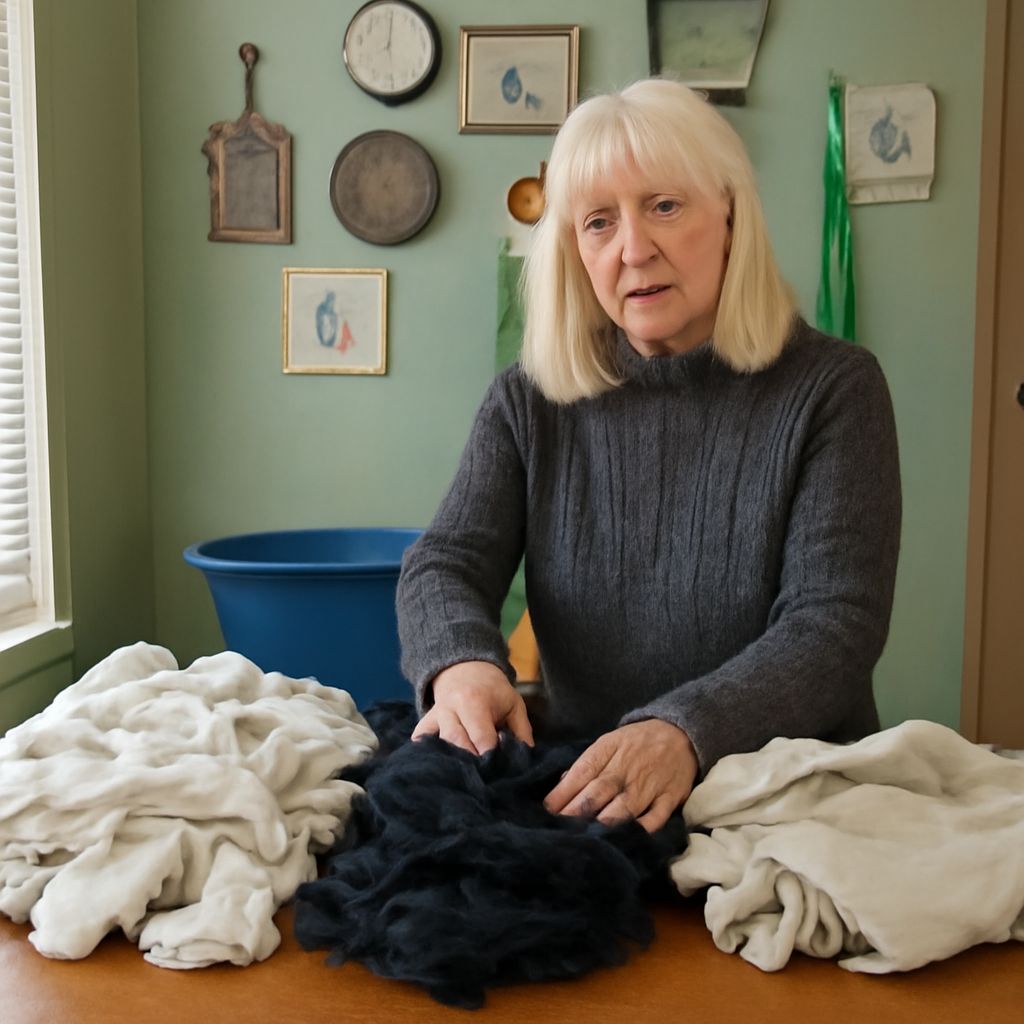
The safest way to learn how to sort laundry is to check care labels and color-transfer risk before grouping anything else. Then separate compatible items by fabric weight, lint behavior, soil level, temperature, and special construction.
For most everyday loads, use whites, lights, darks, and brights as a starting point. A stricter system prevents dye transfer and protects towels, delicates, stained clothing, and unusual fabrics.
How to Sort Laundry: Check Care Labels and Color-Transfer Risk
- Read the care labels. Set aside items marked hand-wash, dry-clean only, air-dry, or a specific temperature. The strictest label determines whether items can share a load.
- Identify transfer risks. Wash new dark jeans, red garments, and vivid brights separately for their first few washes. A damp white cloth rubbed on an inside seam can reveal loose dye.
- Check temperature and cycle needs. Group items only when their labels allow the same temperature and wash action. Cold water is a useful default for mixed colors, but it cannot make incompatible fabrics safe to combine.
Keep white cottons separate from darks and strong brights. White towels and sheets can share a load when their care labels, weight, and temperature match. Do not add delicate white garments simply because they have the same color.
Laundry Sorting: Group Whites, Lights, Darks, and Brights by Fabric Weight
After color, compare how heavy and bulky each item is. Heavy fabrics need more water movement and can abrade lightweight clothing.
- Whites: Wash sturdy white cottons together, including white towels and sheets, if they tolerate the same cycle. Keep delicate whites separate.
- Lights: Combine pale cottons, lightweight knits, and similar everyday pieces. Separate very light synthetics from rough or heavy items when possible.
- Darks: Group dark cottons, trousers, and stable synthetics. Wash denim with other heavy dark items, turning jeans inside out to reduce fading.
- Brights: Keep saturated colors together, but isolate new or visibly bleeding pieces. Avoid pairing a new bright red item with pale pinks or lights.
Heavy towels, robes, and denim usually belong together rather than with thin shirts. Sheets can be washed with other large, washable pieces, but do not overfill the drum or allow them to wrap tightly around smaller items.
How to Separate Laundry: Keep Lint Makers, Attractors, and Soil Apart
Lint is another important part of laundry sorting. Towels, fleece, chenille, and brushed cotton are common lint makers. Dark synthetics, leggings, corduroy, and smooth knitwear often act as lint attractors.
- Wash towels and fleece separately from black clothing, microfiber, and smooth synthetics.
- Keep lint-heavy items away from garments that are difficult to brush clean.
- Separate muddy, greasy, sweaty, or heavily stained items from lightly worn clothing.
- Pre-treat stains according to the fabric and product directions, then wash promptly.
Do not put a stained item in the dryer until the mark is gone. Heat can set many stains permanently. Soil level can also override color: a heavily soiled white work shirt may need its own sturdy load instead of joining lightly worn whites.
Handle Delicates, Stains, and Contaminated or Fuel-Soiled Items Separately
Delicates include lace, silk, hosiery, underwire garments, embellished clothing, and loosely knitted items. Wash them by label on a gentle cycle or by hand, use a mesh bag when appropriate, and keep them away from zippers, towels, and abrasive denim.
Fasten hooks, close zippers, empty pockets, and turn printed or dark garments inside out. These steps reduce snagging, friction, and fading without requiring a separate load for every garment.
Keep clothing contaminated with bodily fluids, chemicals, pesticides, paint, or fuel out of ordinary mixed laundry. Do not place fuel-soiled items in a washer or dryer. Keep them isolated, follow the care label and the product’s handling instructions, and use an appropriate professional or hazardous-material disposal service.
Build Efficient Wash Loads: Everyday vs. Strict Sorting and Load Size
For a simplified everyday system, create four groups: sturdy whites, lights, darks, and bright colors. Move towels, heavily soiled items, delicates, new dye-releasing garments, and special fabrics into separate loads when needed.
Use stricter laundry sorting when an item is new, likely to bleed, expensive, fragile, unusually bulky, or marked with special care instructions. The order is:
- Care label and contamination check.
- Color-transfer risk.
- Fabric weight and wash temperature.
- Lint and soil level.
- Special construction, such as lace, elastic, coatings, or embellishment.
- Final load-size check.
Fill the washer loosely to about two-thirds full, leaving enough space for items to move freely. A load is too large when clothes are tightly packed, sheets cannot circulate, or the detergent cannot reach the fabric. A balanced load contains compatible items with similar weight, soil, temperature, and cycle requirements.