
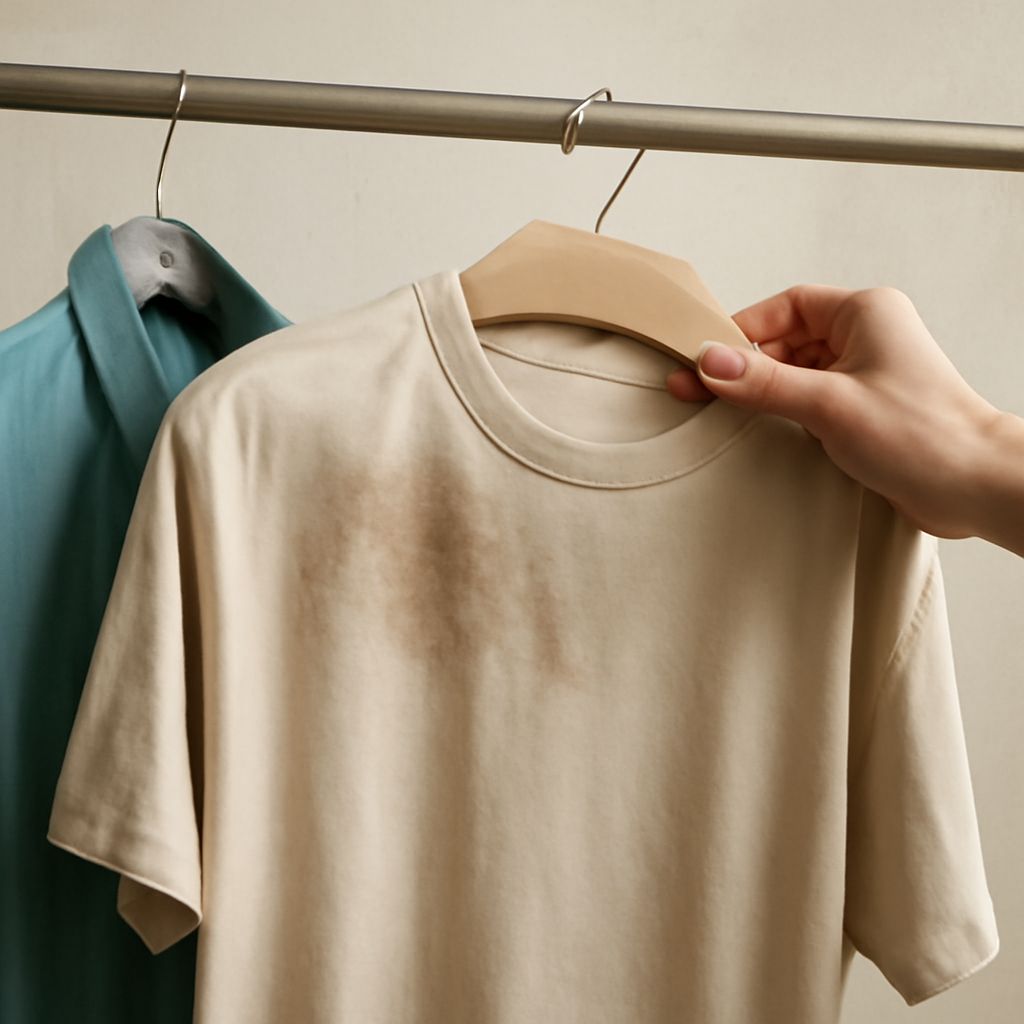
If you need to know how to get diesel out of clothes, keep the garment away from flames, sparks, and heat. Handle it outdoors or in a well-ventilated area, then remove free fuel before treating the oily stain and odor separately.
Do not put diesel-soiled clothing in a dryer. Heat can set remaining residue and intensify the smell. Heavily saturated clothing, or clothing that still has a strong fuel odor after careful treatment, may be unsuitable for household washing. Take it to a professional cleaner and disclose the diesel contamination.
How to Get Diesel Out of Clothes: Remove Excess Fuel
- Move the garment outside. Work on a washable surface with good airflow. Keep it away from cigarettes, pilot lights, heaters, and other ignition sources.
- Remove free liquid. If diesel is pooled or wet, gently blot it with disposable paper towels or clean rags. Press; do not rub, since rubbing spreads fuel through the fibers. Place used towels in a sealed container or bag away from heat.
- Apply an absorbent powder. Cover the affected area with baking soda, cornstarch, or plain talc. Leave it for at least 30 minutes, or longer if the fabric is very oily. The powder can draw out surface residue.
- Brush it away carefully. Shake or brush the powder outdoors, then inspect the fabric. If it still looks wet or feels heavily saturated, do not put it in your washer. A garment soaked through with diesel needs professional handling.
Check the care label before using any product. Test the pretreatment on an inconspicuous seam, especially on dark, delicate, coated, or specialty fabrics.
How to Get Diesel Fuel Out of Clothes: Pretreat the Oily Stain
Once free fuel is gone, treat the remaining oil. Use a liquid laundry detergent labeled for grease removal or a small amount of grease-cutting dish detergent. Do not use gasoline, solvents, bleach, or other flammable chemicals as substitutes.
- Apply enough detergent to cover the stain.
- Work it gently into both sides of the fabric with your fingers or a soft toothbrush.
- Let it sit for 10 to 15 minutes. Do not allow the detergent to dry on the garment.
- Rinse from the back of the stain with the warmest water allowed by the care label.
For a large stain, repeat this pretreatment once before washing. A persistent oily patch after two treatments is a reason to stop and use a professional cleaner rather than adding stronger chemicals.
How to Get Diesel Out of Clothing: Wash It Separately
Wash the garment alone, or only with other items contaminated by the same fuel. Diesel residue and odor can transfer to other laundry. Use the detergent amount recommended for the load and choose the warmest cycle permitted by the care label. If the label allows only cold water, follow the label rather than guessing.
Do not add the clothing to a full load or overload the washer. After the main cycle, run an extra rinse to remove loosened oil and detergent. When the cycle ends, smell the garment before moving it near a dryer, heater, or other heat source.
If the fabric still feels greasy, shows a dark stain, or smells strongly of diesel, repeat the detergent pretreatment and wash once more. If the odor remains after a second wash, stop household treatment and contact a professional cleaner. Persistent fuel odor means the clothing is not ready for heat.
Air-Dry and Inspect for Stains and Odor
Air-dry the garment outdoors or in a well-ventilated space, away from direct heat and ignition sources. Hang it where air can circulate, and let it dry completely. Do not machine-dry it while any diesel odor or oily residue remains.
When dry, inspect three separate outcomes:
- Free fuel: The fabric should not feel wet, slick, or saturated.
- Oily stain: Look for a dark or shiny patch under bright light.
- Odor: Smell the garment only after it is dry and in fresh air.
If all three checks are clear, the garment can return to normal laundry. If any check fails, repeat the detergent-and-wash process once, then air-dry and inspect again. Never use a dryer until the garment is free of both oily residue and diesel odor.