
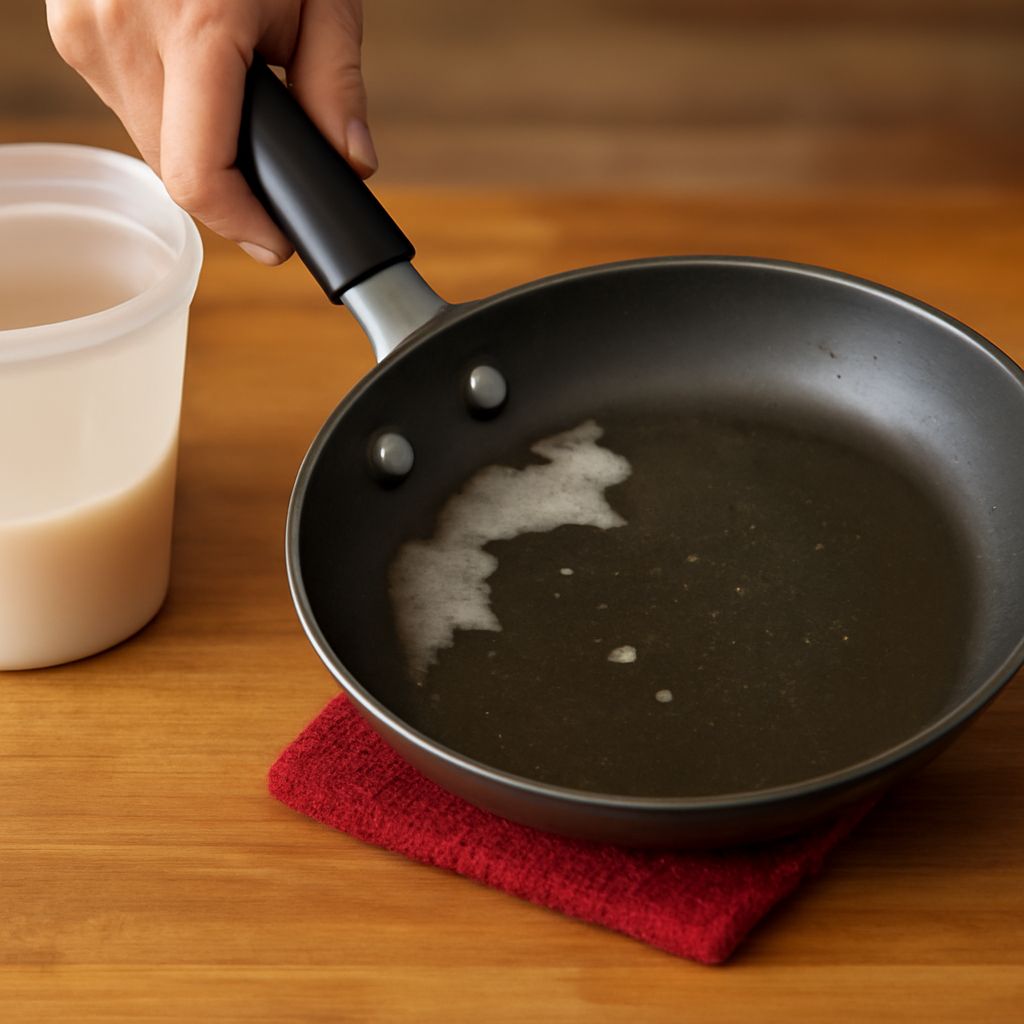
The safest answer to how to dispose of bacon grease is to keep it out of every drain: cool it, contain it, and place sealed waste in the trash. Never pour bacon grease into a sink, toilet, or garbage disposal, even if you follow it with hot water.
For a thin coating, wipe the pan with an absorbent paper towel. For a larger pool, cool the grease, pour it into a leak-resistant container, seal it, and discard it. You can also strain and refrigerate clean grease if you plan to cook with it.
Let Bacon Grease Cool Safely
- Turn off the burner and leave the pan in place. Do not carry a pan of hot grease across the kitchen.
- Let a small amount cool until it is safe to touch and has begun to solidify. A larger amount can cool until it is warm and fluid rather than steaming.
- Use an oven mitt when handling the pan. Hot grease can cause serious burns and can splatter when it contacts water.
Choose the container based on the temperature. Pour warm grease only into a heatproof metal or ceramic container. Wait until grease is fully cool before using a disposable plastic tub, yogurt container, or other thin packaging. Do not pour hot grease into glass, which can crack from thermal shock.
Save Bacon Grease for Cooking
Clean bacon grease can be useful for frying eggs, roasting vegetables, seasoning beans, or making cornbread. Saving it is optional, but it avoids waste when the grease is fresh and free of burnt particles.
- Let the grease cool slightly while it remains liquid, but do not handle it while it is dangerously hot.
- Strain it through a fine-mesh strainer lined with cheesecloth or a coffee filter. This removes bacon bits that spoil more quickly.
- Pour the strained grease into a clean, dry, heatproof jar or covered container.
- Label the container with the date and refrigerate it. Use clean utensils each time.
Discard stored grease if it develops mold, a sour or rancid odor, or an unusual appearance. Do not mix newly strained grease into an old container unless the older grease is still fresh and properly refrigerated.
Small Residue: How to Dispose of Bacon Grease
Small residue means a thin film, a few drops, or an amount that a paper towel can absorb without dripping.
- Allow the pan to cool until the grease is no longer hot.
- Wipe the inside with paper towels, a napkin, or another absorbent material.
- Place the used material in the household trash. If it is heavily saturated, wrap it in another towel or put it in a small bag first.
For a small solid lump, scrape it directly into a lined trash bin using a spatula. Do not add water to make the grease move. If the residue is too large for one towel or begins to run, treat it as a larger amount and use a container instead.
Larger Amounts: The Best Way to Dispose of Bacon Grease
When grease has pooled in the pan or skillet, use a disposable, sealable container rather than absorbent material alone. An empty takeout tub or sturdy food container works well once the grease has cooled enough for that material.
- Cool the grease until it is no longer steaming and can be moved without splashing.
- Set the container on a stable surface. Pour slowly, using a funnel if the opening is narrow.
- Leave the grease to cool and solidify completely, then close the lid tightly.
- Place the sealed container in the household trash. Put it inside a second bag if the container could leak.
For grease that has already solidified, spoon or scrape it into the container. Do not put bacon grease in a backyard compost pile; fats and meat particles can attract pests and break down slowly. A municipal compost or cooking-oil program may accept it only under specific local rules, so follow that program’s container instructions.
Clean the Pan Without Sending Grease Down the Drain
Remove the bulk of the grease before washing the pan. While the pan is warm but not hot, scrape solid residue into the trash and wipe the surface with paper towels. A plastic scraper helps remove stubborn patches without damaging the pan.
After wiping, add dish soap directly to the pan and use a warm, damp cloth to loosen the remaining film. Wash the pan with hot water and plenty of dish soap only after the visible grease is gone. The result should be a clean pan without an oily sheen and no grease poured into the sink, toilet, or garbage disposal.