
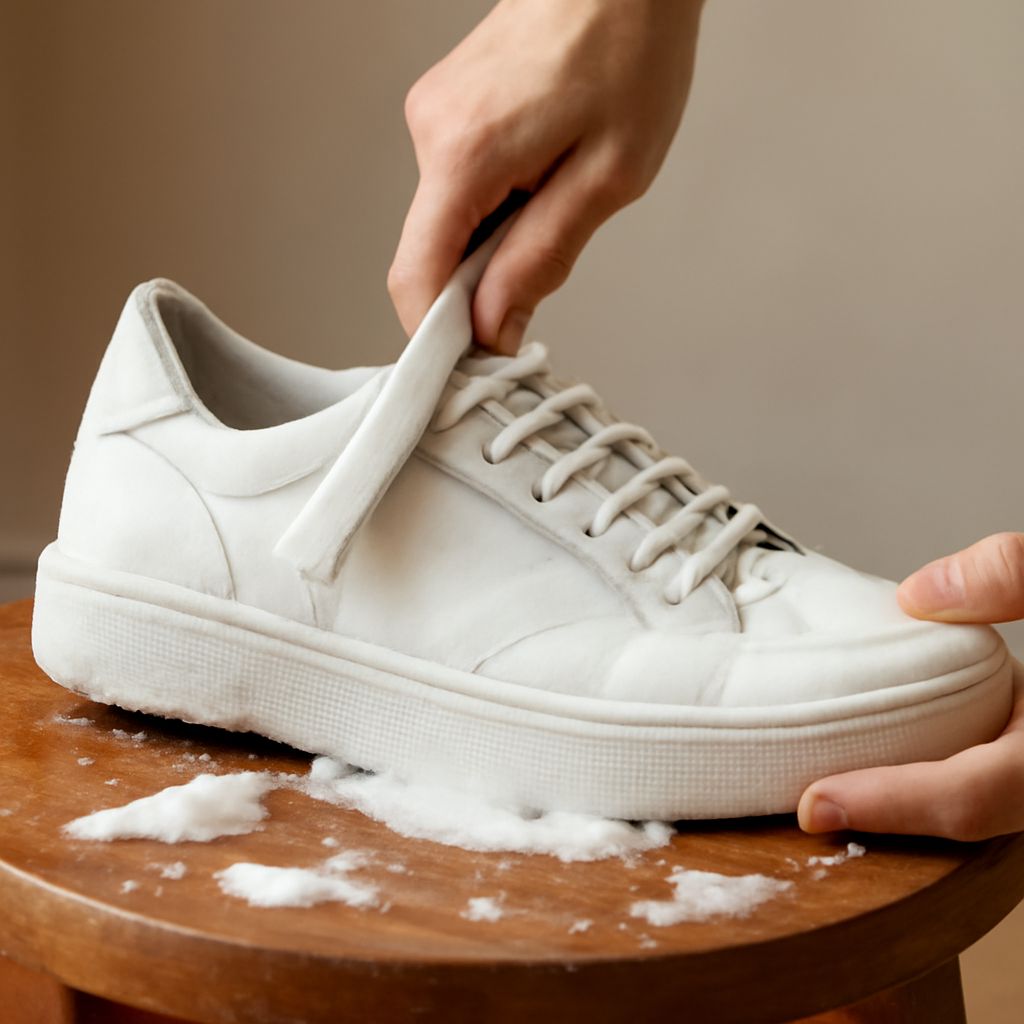
To learn how to disinfect shoes safely, first identify the material and remove visible soil. Then clean the upper, outsole, and insole with the least moisture possible before treating interior contact surfaces.
This process shows how to clean used shoes without treating every pair as machine washable or submersible. Glued construction, delicate finishes, stains, odor, and structural damage all affect the safest method.
How to Disinfect Shoes Safely
- Remove laces and removable insoles. Shake out grit, then brush dry dirt from the upper, seams, tongue, and outsole.
- Choose a cleaner and sanitizer whose label covers the shoe’s material or footwear use. Follow its stated application route, such as spray, wipe, or foam.
- Keep moisture controlled. Use a barely damp cloth on leather, synthetic material, and glued areas. Fabric and mesh can tolerate more moisture, but should not remain soaked.
- Never mix cleaning or sanitizing products. Wear gloves when the product label recommends them, and use ventilation while applying the product.
Cleaning removes soil that can block a sanitizer. Sanitizing comes afterward, on surfaces that are clean enough for the product to reach.
Inspect Shoe Materials and Condition
Check the upper, lining, outsole, seams, and insole separately. Leather needs low moisture and may require a leather-safe cleaner. Suede and nubuck need dry brushing and a product specifically labeled for those finishes. Fabric and mesh generally accept gentle detergent and limited water. Synthetic leather and rubber can usually be wiped, but harsh solvents may damage their finish.
Look for peeling layers, cracked leather, separated soles, loose stitching, broken eyelets, and compressed cushioning. Glued construction can loosen with heat, soaking, or aggressive scrubbing. If the sole is separating or the upper is structurally split, cleaning will not restore safe wearability.
Note stains, visible soil, moisture, and odor. A strong smell may come from the insole or lining rather than the outsole. Photograph or mark delicate areas before cleaning if you need to monitor color or shape changes.
How to Clean Used Shoes by Material
- Leather: Brush away dry dirt. Wipe with a lightly damp, leather-safe cloth, then remove residue with a second cloth. Do not soak or machine-wash leather.
- Suede or nubuck: Use a suede brush for dry soil. Treat stains only with a compatible suede product, following its label. Avoid general liquid cleaners unless the manufacturer permits them.
- Fabric or mesh: Mix a small amount of mild detergent with water. Work it into the upper with a soft brush or cloth, using enough moisture to lift soil without saturating the lining.
- Synthetic uppers and rubber soles: Wipe with diluted mild detergent. Use a soft brush on tread grooves, then wipe away residue.
Clean outsoles separately from uppers so ground-in grit does not spread. Rinse a cloth rather than running water over glued seams. Treat visible stains before sanitizing, because a sanitizer is not automatically a stain remover.
Wash removable insoles according to their care label. If they are washable, clean them separately and rinse away detergent. If they are foam, leather, or firmly bonded, wipe them lightly instead of soaking. Replace an insole that remains sharply odorous, crumbles, or no longer supports the foot.
How to Sanitize Used Shoes: Treat Interior Contact Surfaces
To sanitize used shoes, focus on the insole, heel cup, tongue, lining, and areas that contact skin. Apply a footwear-compatible product only after cleaning. Use the label’s spray, wipe, or other required route, and keep the surface visibly wet for the stated contact time. A quick mist that dries immediately may not meet the product directions.
Test the product first on a hidden area, especially on dyed leather, suede, mesh, and printed linings. Avoid saturating padded collars or glued seams. Do not use bleach, alcohol, or household disinfectant unless the label specifically permits that material and application. Treat laces separately, and discard them if they remain stained or odorous after washing.
Dry Fully and Reassess Wearability
Open the shoes, remove insoles, and let every part dry completely at room temperature. Use airflow, but avoid radiators, hair dryers, direct high heat, and prolonged strong sunlight, which can warp materials or weaken adhesive. Drying may take overnight or longer for padded fabric.
When dry, check for lingering odor, dampness, discoloration, stiffness, and shape changes. Press the heel and forefoot to confirm the cushioning still feels even. Make sure the outsole is secure, tread is usable, seams are intact, and the shoe holds its shape. If moisture or odor persists, repeat only the material-safe cleaning step; replace the insole or do not wear the pair if structural damage remains.