
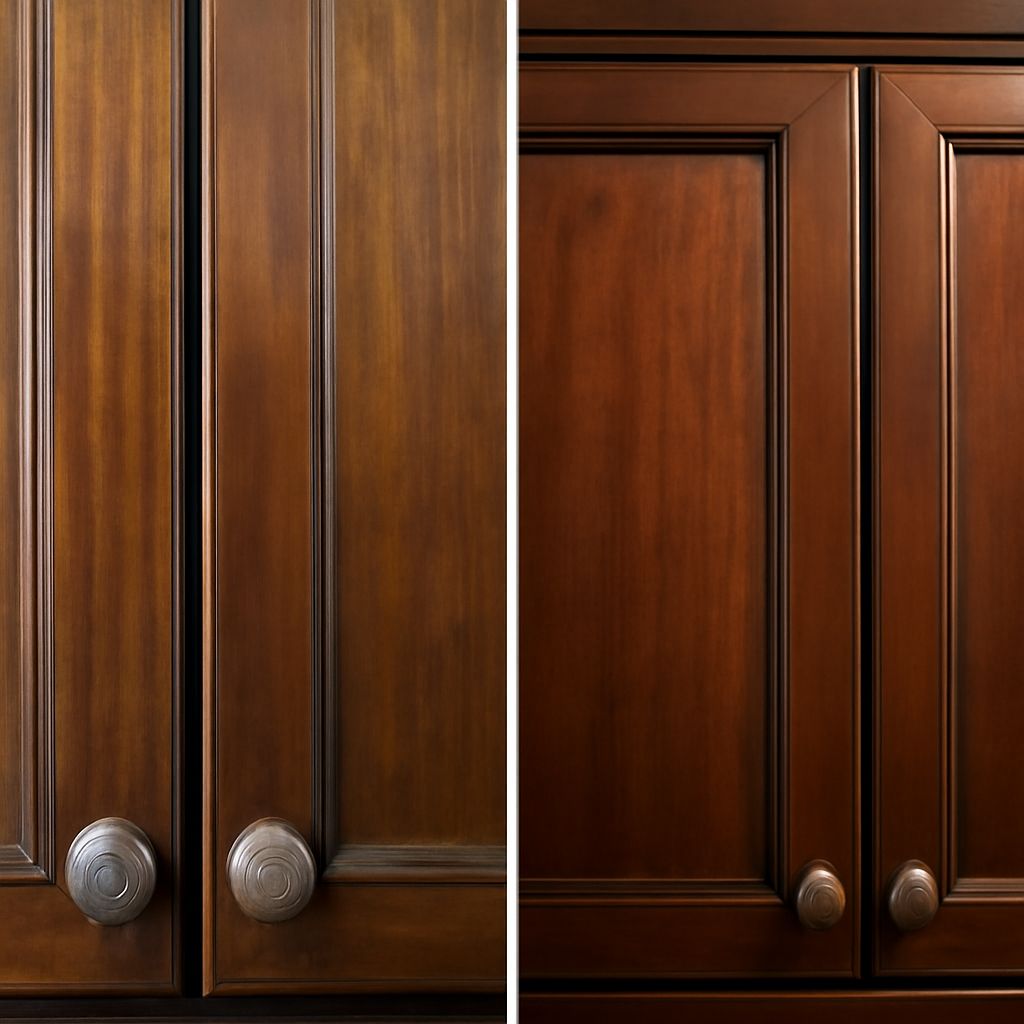
If you want to know how to clean grease off kitchen cabinets without dulling paint or swelling wood, start with the gentlest method that works. Use a mild dish-soap solution first, test it in a hidden spot, and only move to stronger cleaners if sticky buildup stays behind.
This approach works for most painted, sealed wood, laminate, and thermofoil cabinets. The key is to match the cleaner to the finish, use very little moisture, and dry the surface right away.
Identify the Finish and Spot Test
Before you get grease off kitchen cabinets, identify the finish. Painted and sealed wood cabinets can handle a little more wiping than unfinished wood. Laminate and thermofoil usually tolerate gentle soap, but too much water can still damage seams and edges. If you are unsure, treat the cabinet as delicate.
Check the surface quickly:
- Painted cabinets: smooth, colored coating that may show wear at edges.
- Sealed wood: visible grain with a protective topcoat.
- Laminate: uniform printed surface, often on flat panels.
- Unfinished or worn wood: absorbs moisture easily and needs the least liquid possible.
Now spot test. Mix 1 cup warm water with 1 to 2 drops of mild dish soap. Dampen a white microfiber cloth, squeeze it until it is barely wet, and wipe a hidden area such as the inside edge of a door. Wait one minute, then dry it. Look for color transfer, dulling, swelling, or a sticky feel. If the spot looks unchanged, continue.
Remove Grease Step by Step
The safest way to clean grease is to work from top to bottom and use the least aggressive cleaner first. For fresh grease, the soap solution is often enough. For older residue, let the solution sit briefly before wiping.
- Dust first. Wipe loose dust and crumbs from the cabinet surface so you do not grind them into the finish.
- Mix the cleaner. Use 1 cup warm water plus 1 to 2 drops of dish soap. Do not add more soap unless the first pass fails; excess soap leaves a film.
- Dampen, don’t soak. Wet a microfiber cloth, then wring it out well. The cloth should feel barely damp.
- Wipe a small section. Clean a 1- to 2-foot area at a time using light pressure and short strokes.
- Let it dwell briefly. On sticky spots, hold the damp cloth against the grease for 15 to 30 seconds. This softens buildup without flooding the finish.
- Agitate gently. If needed, use the cloth wrapped around your finger to make small circular passes. Avoid scrub pads, melamine sponges, and abrasive brushes on painted or glossy surfaces.
- Wipe away residue. Use a clean damp cloth with plain water to remove soap film.
- Dry immediately. Finish with a dry microfiber cloth so moisture does not sit on seams, corners, or panel edges.
If one pass does not fully remove the grease, repeat the soap step once before escalating. Multiple light passes are safer than one aggressive cleaning.
Clean Sticky Buildup
To clean sticky grease off kitchen cabinets, work more slowly instead of using a stronger product right away. Sticky buildup usually needs more dwell time, not more force.
Start with the same soap mix. Hold the damp cloth on the spot for up to 30 seconds, then wipe gently. If the residue still clings, make a slightly stronger solution with 2 cups warm water and 1 teaspoon dish soap. Use it only on the greasy area, then rinse with a plain damp cloth and dry.
If the cabinet still feels tacky, try a second escalation on the same finish test area first:
- For sealed wood, painted cabinets, and laminate: use equal parts water and white vinegar on a cloth, then wipe once and rinse with plain water. Do not use vinegar on unsealed wood or on finishes you have not tested.
- For heavy buildup near handles or above the stove: repeat the soap method with a fresh cloth. Often the residue is layered cooking oil, and a second pass works better than a stronger chemical.
- Avoid harsh degreasers unless the manufacturer approves them: strong solvents can cloud finish, lift paint, or leave patchy sheen.
If the grease remains after these steps, stop and reassess. A worn finish may be absorbing residue, or the surface may need a finish-specific cleaner. Do not scrub harder just to force a result.
Handle Hardware and Dry
Cabinet hardware collects the same grease, but it should be cleaned separately. Pull handles and knobs if they are loose enough to move, or clean around them carefully if they are fixed.
For metal hardware, use the same mild soap solution on a cloth, not directly on the cabinet. Wipe the handle, screw heads, and the area behind the pull. Then follow with a damp cloth of plain water and dry right away. This prevents soap residue from gathering in seams and around hardware bases.
Pay special attention to:
- Edges and corners: liquid pools here and can damage paint or swelling-prone wood.
- Raised panels: clean along the profile with a lightly damp cloth, not a dripping one.
- Decorative trim: use short strokes so cleaner does not collect in grooves.
- Under handles: grease often hides where hands touch most often.
When the cabinet is clean, dry it completely with a soft cloth. Leave doors open for a few minutes if the room is humid so trapped moisture can escape.
Prevent Grease Return
The easiest way to keep cabinets clean is to remove light grease before it builds up. Wipe high-touch areas once a week with a barely damp microfiber cloth and a drop of dish soap in warm water. Rinse with a second cloth if the surface looks cloudy, then dry.
Use the range hood or exhaust fan while cooking, especially when frying or sautéing. That reduces airborne oil that settles on upper cabinets. If splatter is common, wipe cabinet fronts near the stove more often than the rest of the kitchen.
For ongoing care, remember the few rules that protect finishes:
- Use the least amount of liquid possible.
- Test first on an unseen spot.
- Dry after every cleaning pass.
- Avoid abrasive pads on painted, glossy, or laminate cabinets.
- Clean spills and fresh grease quickly before they harden.
That is the safest method for how to clean kitchen cabinets grease without damaging the finish: test, clean gently, rinse lightly, and dry fast.