
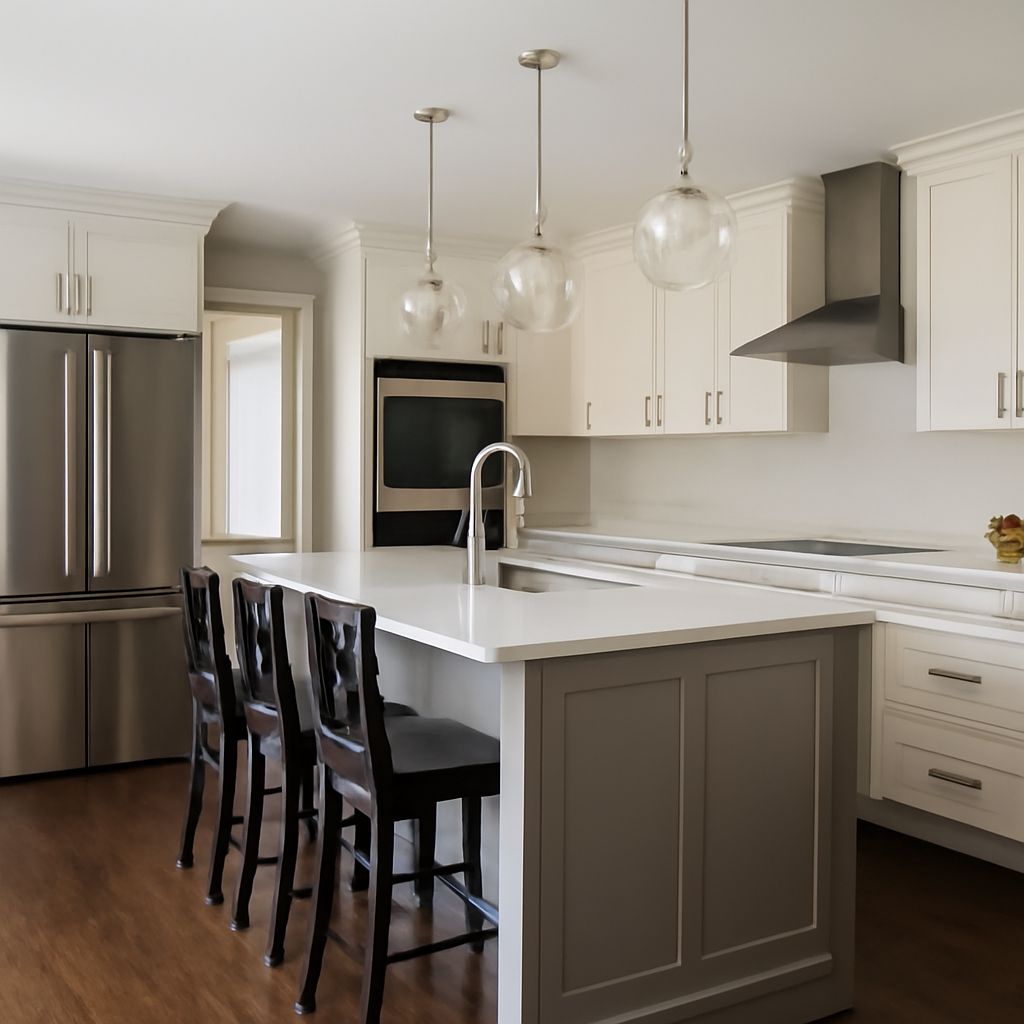
If you are asking how much do kitchen cabinets cost, plan on roughly $6,000 to $30,000 installed for a typical kitchen. Stock cabinets usually cost the least, while semi-custom and custom cabinetry increase the price through better materials, more size options, and additional labor.
For a useful estimate, separate the cabinet package from doors, finished panels, trim, hardware, delivery, removal, installation, and related finish work. A 10-by-10-foot kitchen may contain about 20 linear feet of cabinets, but layout and cabinet count can change the total substantially.
New Kitchen Cabinet Cost by Product Tier: Stock, Semi-Custom, and Custom Installed Ranges
A useful new kitchen cabinet cost estimate starts with the product tier. The following ranges include typical installation but exclude countertops, appliances, plumbing, and major electrical work.
- Stock cabinets: About $150 to $350 per linear foot installed, or approximately $4,000 to $9,000 for a common kitchen. These cabinets come in standard widths, finishes, and configurations.
- Semi-custom cabinets: About $250 to $700 per linear foot installed, or roughly $8,000 to $18,000 for many kitchens. You typically gain more sizes, finishes, door styles, and storage options.
- Custom cabinets: About $500 to $1,500 or more per linear foot installed, with many projects ranging from $15,000 to $35,000. Hand-built construction, unusual dimensions, premium woods, and furniture-style details drive the higher price.
These are planning ranges rather than bids. A small kitchen with extensive drawers can cost more than a larger kitchen using basic doors. Geographic labor rates, cabinet quality, and the number of corners also matter.
Estimate Cost for Kitchen Cabinets by Cabinet Count or Linear Feet
Linear-foot pricing is a quick way to compare cabinet tiers, but it is only a rough planning tool. It treats every foot as similar, even though a drawer base, blind corner, tall pantry, and wall cabinet have different prices.
To estimate by linear feet, measure the cabinet runs along each wall and add them together. Do not count the same corner twice. Multiply the total by the product-tier range, then add items that may be priced separately.
Cabinet count provides a second estimate. Count base cabinets, wall cabinets, tall units, and specialty units separately. A basic 24-inch base cabinet may cost far less than a 36-inch drawer stack or 84-inch pantry. More individual boxes also mean more doors, hinges, installation time, and possible fillers.
For example, 20 linear feet at $250 per foot suggests $5,000 for a midrange cabinet package. That figure may not include finished end panels, decorative trim, delivery, demolition, or installation. Confirm which components the quote includes before comparing it with another estimate.
Materials and Features That Change the Average Kitchen Cabinet Cost
The average kitchen cabinet cost changes most when the construction, finish, and interior storage become more complex.
- Cabinet construction: Particleboard boxes generally cost less than plywood boxes. Thicker shelves, stronger drawer construction, and full-extension hardware add durability and price.
- Door materials: Thermofoil and laminate can be economical. Painted wood, stained hardwood, and specialty veneers usually cost more.
- Door style: Simple slab or recessed-panel doors are often less expensive than raised panels, applied moldings, inset doors, or furniture-style construction.
- Drawers and accessories: Deep drawers, pull-out waste bins, spice racks, tray dividers, lazy Susans, and appliance garages increase both materials and installation time.
- Finished ends and fillers: Exposed cabinet sides often require matching panels. Fillers, scribes, toe-kicks, light rails, and crown molding may be separate line items.
- Layout changes: Moving plumbing, adding an island, correcting uneven walls, or fitting cabinets around windows can require modifications and extra labor.
When comparing the cost for kitchen cabinets, ask whether the quote includes boxes, doors, drawer fronts, shelves, hinges, drawer slides, basic toe-kick material, fillers, and exposed end panels. Many quotes include the main cabinet units but exclude decorative panels and trim.
Sample Cabinet Budget: Boxes, Doors, Panels, Trim, Hardware, and Contingency
Here is a planning example for a 20-linear-foot semi-custom kitchen. It assumes a straightforward layout, one island is not included, and the existing walls need only minor repair.
- Cabinet boxes: $5,200
- Doors and drawer fronts: $2,400
- Finished end panels: $700
- Fillers, toe-kick, and decorative trim: $650
- Knobs and pulls: $450
- Delivery: $500
- Old cabinet removal and disposal: $800
- Cabinet installation: $3,000
- Minor wall repair and touch-up painting: $900
The subtotal is $14,600. Adding a 10% contingency of $1,460 produces a working budget of approximately $16,060. The contingency covers damaged parts, extra fillers, leveling, missing hardware, and small site adjustments. It does not cover new countertops, appliances, plumbing relocation, or major electrical work.
How Much You Should Budget for New Kitchen Cabinets: Delivery, Removal, Installation, and Finish Work
The question of how much for new kitchen cabinets cannot be answered accurately from cabinet prices alone. Installation and site work commonly add 20% to 40% to the cabinet package, depending on complexity.
Installation may be priced per cabinet, by the project, or as a percentage of the cabinet order. A simple replacement with level walls costs less than a project requiring scribing, shimming, crown molding, an island, or numerous fillers. Get separate labor pricing for setting boxes, installing panels, adjusting doors, and attaching trim.
Removal and disposal often cost about $300 to $1,500. The range depends on cabinet quantity, demolition difficulty, access, flooring protection, and whether the installer must remove countertops first.
Delivery may be a flat charge or about 5% to 10% of the order. Ask whether the fee includes inside delivery, inspection, packaging removal, and a second trip for replacement parts.
Related finish work can include wall repair, painting, flooring patches, electrical adjustments, plumbing changes, and countertop installation. These costs belong in the total project budget even when they do not appear on the cabinet invoice. A detailed quote should list each item as included, excluded, or allowance-based so you can compare estimates on equal terms.