
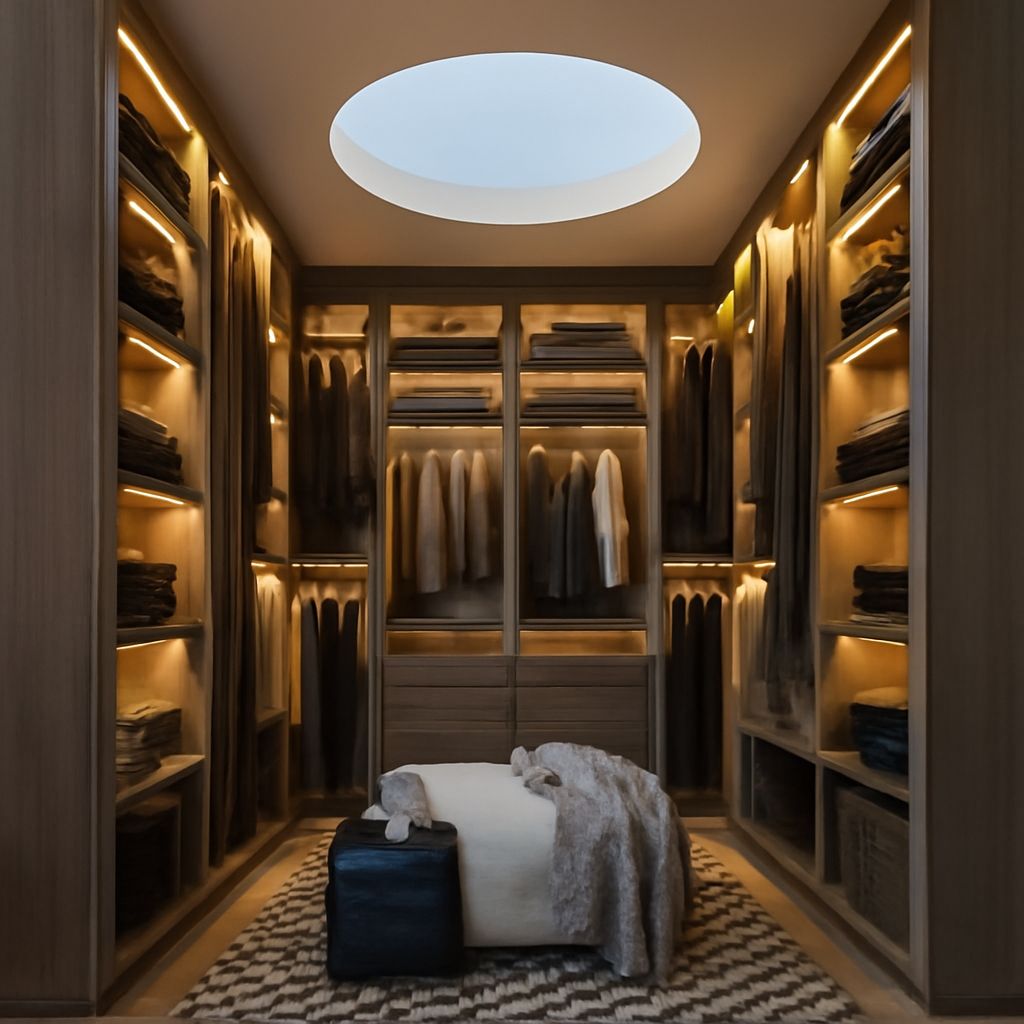
For most hanging clothes, how deep should a closet be? Plan for at least 24 inches of clear finished interior depth. This allows a standard hanger, garment shoulders, sleeves, and a little working clearance without clothes rubbing against the back wall or door.
The key measurement is the usable space inside the completed closet, not the depth of the framed wall. Measure from the finished back wall to the nearest obstruction, such as a door, shelf edge, or trim. A 24-inch interior is a practical minimum; 26 to 30 inches feels more comfortable for bulky clothing and easier reach.
How Deep Should a Closet Be for Hangers? Measure 24 Inches of Finished Interior
A typical hanger is about 17 to 19 inches wide, while clothing can project roughly 20 to 22 inches from the rod. Shoulders, sleeves, thick fabrics, and uneven garment shapes account for the extra space. That is why a 24-inch clear depth is the standard starting point for hanging clothes.
Place the rod centerline about 12 inches from the finished back wall. This position gives garments room to hang naturally while keeping the rod accessible. Check the actual projection with your preferred hangers, especially if you store suits, sweaters, uniforms, or padded coats.
Do not measure only to the wall framing. Drywall, paneling, shelving, doors, and trim reduce the finished interior depth. A wall framed 24 inches deep may provide less than 24 inches of usable space after finishes and hardware are installed.
Reach-In and Coat Closets: The Minimum Closet Depth for Doors and Shelves
The usual minimum closet depth for a reach-in closet with a hanging rod is 24 inches clear. A depth of 26 to 30 inches is more forgiving, particularly when the closet stores coats or has shelves beside the hanging section.
Coats need more room than shirts because their shoulders, linings, hoods, and sleeves create greater projection. Use 26 inches as a practical target for everyday outerwear, and consider 28 to 30 inches for bulky winter coats or multiple layers.
Doors change access more than they change the required garment depth. Sliding doors can block part of the opening, so center the most-used hanging zone where it remains accessible. Hinged doors need swing clearance outside the closet and should not strike shelves, drawers, or bins. Bifold doors usually provide a wider opening, but their folded panels can still limit access near the sides.
Keep shelves for folded clothes about 12 to 16 inches deep. Deeper shelves often create lost space behind stacks. Bins and drawers should be sized to their contents, with enough front clearance for pulling them open. A 24-inch hanging zone and shallower storage zone can share one closet when the layout separates their projections.
Minimum Depth of a Closet for Walk-Ins: Rod Placement and Clear Aisles
For a one-sided walk-in closet, allow roughly 24 inches for hanging clothes plus at least 36 inches of clear aisle. That produces an overall depth near 5 feet when the hanging zone is on the back or side wall. The aisle is measured from the front of the garments to the opposite obstruction, not from the wall to the rod centerline.
For hanging on two opposite walls, allow about 24 inches on each side and a 36-inch aisle between garment fronts. The total interior width or depth becomes approximately 84 inches, or 7 feet. A 42- to 48-inch aisle is more comfortable when two people will use the closet or when drawers open into the walkway.
Keep the rod centerline about 12 inches from each finished wall, then verify the clear distance between shoulders, sleeves, doors, and shelving. Drawers require their full pull-out depth plus standing room. Avoid placing a drawer directly opposite another drawer unless both can open without blocking the aisle.
Shallow Closet Alternatives: Front-Facing Rods, Hooks, Shallow Shelves, and Open Storage
When the available depth is less than 24 inches, do not force a standard hanging arrangement. Use front-facing rods mounted perpendicular to the back wall. Hangers face sideways and occupy less front-to-back space, although the arrangement holds fewer clothes and makes individual garments less convenient to browse.
Hooks work well for coats, bags, robes, and frequently used clothing. Mount them on a back or side panel, leaving enough spacing for shoulders and sleeves. A row of hooks can provide useful storage in a 6- to 10-inch-deep area.
Use shelves about 10 to 12 inches deep for folded clothing, shoes, and small bins. Open storage avoids door swing losses and makes shallow compartments easier to reach. Stackable bins or narrow drawers can organize accessories, but check that their handles and pull-out paths remain clear.
If the closet is extremely shallow, reduce the number of hanging zones and reserve them for garments that truly need hangers. Combine one short hanging section with hooks, open shelves, and under-shelf bins instead of sacrificing access throughout the closet.