
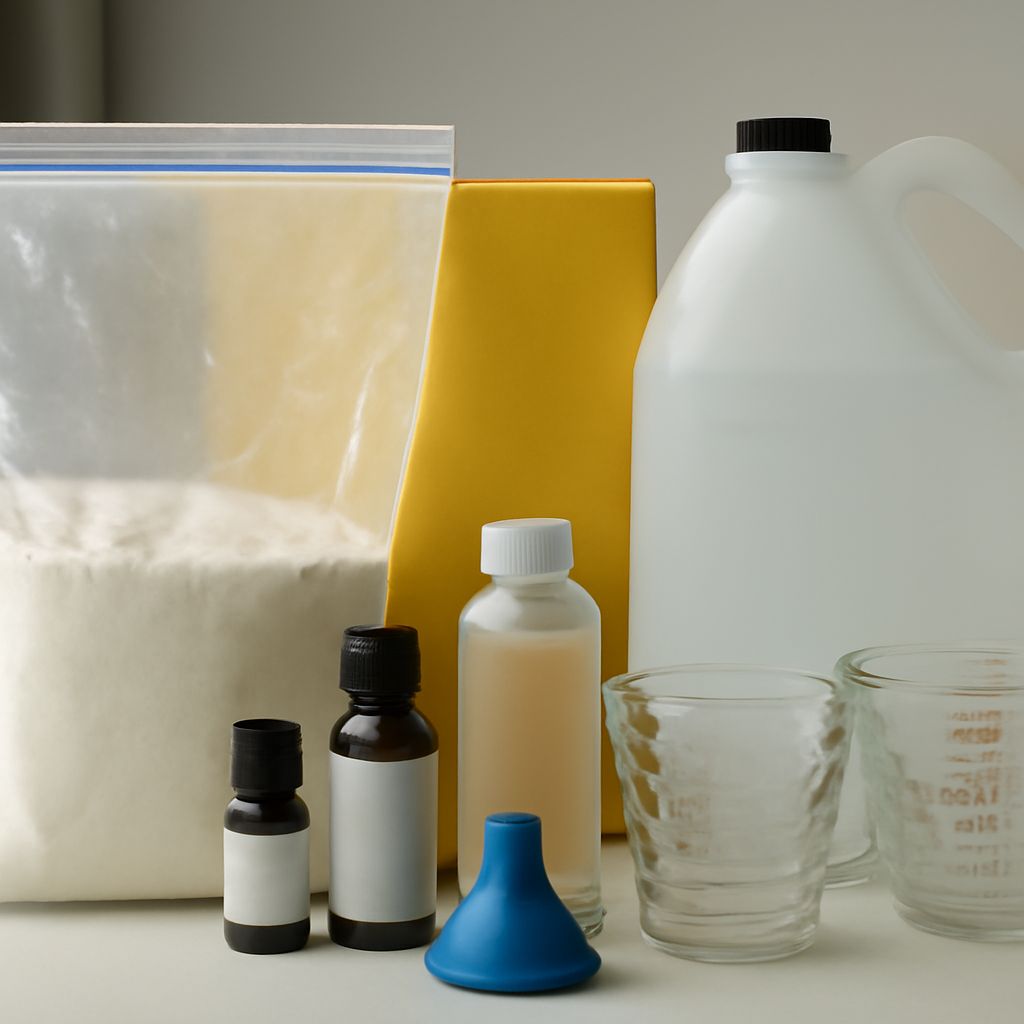
This homemade laundry detergent recipe makes about 8 cups of dry powder. Combine one grated 5-ounce laundry bar, 3 cups washing soda, 2 cups borax, and 1 cup sodium percarbonate oxygen bleach.
Use 1 tablespoon for a regular load, up to 2 tablespoons for a large or heavily soiled load. In a high-efficiency washer, start with 1 teaspoon and use no more than 2 teaspoons. This is a soap-based powder, so water hardness and residue deserve close attention.
Homemade Laundry Detergent Recipe: Ingredients, Equipment, and Batch Yield
Measure these ingredients by weight when possible. Cup measurements are useful, but grated soap varies in volume.
- One fragrance-free laundry bar, 5 ounces or 142 grams: Grated soap helps loosen oily soil. Choose a laundry bar rather than moisturizing bath soap, which can leave extra emollients on fabric.
- 3 cups washing soda, about 675 grams: Sodium carbonate raises alkalinity and helps break down grease. It also softens moderately hard water.
- 2 cups borax, about 400 grams: Borax acts as an alkaline builder and supports water conditioning. It is not the primary cleaning surfactant.
- 1 cup sodium percarbonate, about 200 grams: This oxygen bleach helps lift many organic stains when used with colorfast fabrics. Do not use it on wool, silk, or leather.
The finished batch yields approximately 8 cups, or about 128 one-tablespoon doses. Actual yield changes slightly with the soap’s grating size and how firmly the powder settles.
Gather a box grater, a large dry mixing bowl, measuring cups or a kitchen scale, a tablespoon measure, and an airtight container with at least a 2-quart capacity. Use a dedicated grater and bowl, or wash them thoroughly after mixing. Keep powder dust away from your eyes and avoid breathing it while measuring.
Laundry Detergent Recipe: Preparation Order, Texture, Container, and Labeling
- Finely grate the laundry bar. Small, dry flakes dissolve and distribute more evenly than thick shreds.
- Put the washing soda, borax, and sodium percarbonate in the mixing bowl. Stir until the color and texture look uniform.
- Add the soap flakes gradually. Fold them through the powder until no large clumps remain.
- Check the texture. The finished mixture should be dry and free-flowing, with small soap flecks throughout. It should not feel damp, sticky, or compacted.
- Transfer the powder to an airtight, dry container. Seal it immediately because moisture can harden the soap and reduce the oxygen bleach’s effectiveness.
Label the container with the ingredient list, mixing date, starting dose, and “laundry use only.” Store it out of reach of children and pets, away from heat and humidity. Never add water, liquid fragrance, or chlorine bleach to the batch.
Best DIY Laundry Detergent: Dose by Load, Soil, Washer, and Water Hardness
These are starting doses, not a reason to keep adding powder. Place the powder in the washer’s recommended powder compartment, or directly into an empty drum if the manual permits it.
- Standard top-loading washer: Use 1 tablespoon for a small or normally soiled load. Use 1½ tablespoons for a full load and 2 tablespoons for a large, greasy, or heavily soiled load.
- High-efficiency washer: Start with 1 teaspoon for a small or regular load and 2 teaspoons for a large load. HE machines use less water, so excess powder is more likely to remain on clothing. Follow the washer manual; if it prohibits homemade formulations, use a labeled HE detergent instead.
- Soft water: Begin at the low end of the range. Soft water usually needs less builder and less soap to rinse clean.
- Moderately hard water: Start with 1 tablespoon in a standard washer and use an extra rinse if fabric feels coated.
- Very hard water: Do not automatically increase the dose. Washing soda and borax can help, but the soap portion may react with calcium and magnesium and create insoluble residue. A formulated detergent usually performs more reliably in very hard water.
For stains, apply a small amount of liquid detergent or a suitable pre-treater before washing. Choose the warmest water safe for the fabric, and avoid packing the washer tightly. Powder needs enough water movement to disperse through the load.
Recipe for Laundry Detergent: Cleaning Performance, Soap Residue, and Troubleshooting
Soap and detergent are not chemically identical. Soap can clean by surrounding oils, but minerals in hard water may turn it into a sticky or insoluble film. Synthetic detergents use surfactants designed to remain effective and rinse more easily across a wider range of water conditions.
After three or four similar loads, check both the clothing and the washer. Successful cleaning leaves fabric fresh, flexible, and free of visible powder, gritty spots, waxy patches, and lingering body odor.
- White powder or gritty marks: The dose may be too high, the water too cold, or the powder poorly dispersed. Reduce the dose, add it before the clothes, and select a warmer safe cycle.
- Stiff, slick, gray, or waxy fabric: This indicates buildup or soap-mineral residue, especially in hard water. Run an extra rinse and reduce the dose. If the film returns, stop using this soap-based mix and switch to a formulated detergent.
- Oily spots, persistent odor, or visible soil: The load may be underdosed, overloaded, or beyond this formula’s cleaning strength. Pre-treat stains, improve water movement, and use the higher starting dose without exceeding 2 tablespoons in a standard washer.
- Residue inside an HE washer: Lower the dose first and inspect the dispenser and door seal. If buildup continues, clean the washer according to its manual and use an HE-rated detergent.
- Weak stain removal: The oxygen bleach works best with sufficient contact time and warm water. For delicate, dark, or non-colorfast items, omit oxygen bleach from that wash and use a fabric-safe stain treatment.
If you make laundry soap at home, test a small batch on everyday items before washing towels, dark clothing, or delicate fabrics. Persistent residue or weak cleaning is a performance limit, not a signal to keep increasing the powder.