
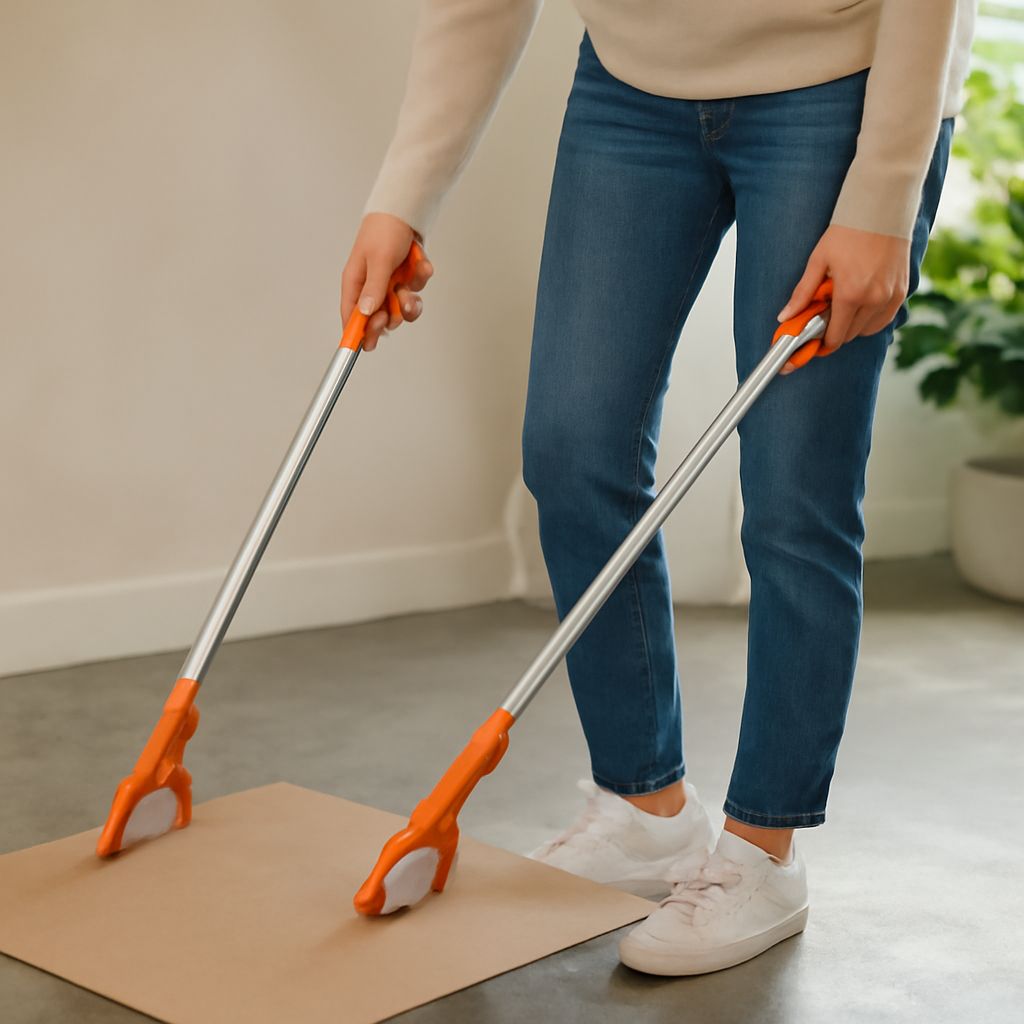
A garbage grabber is the best all-purpose choice for cans, bottles, paper, and most dry litter. Trigger-operated jaws offer controlled pickup without bending, while spike sticks and tongs solve narrower problems. Choose by item shape, surface, reach, hand strength, and how long you will work.
For routine litter rounds, prioritize a rubber-grip jaw, low trigger force, moderate weight, and a shaft that stays rigid under load. Specialty features such as rotation, folding, magnets, and bag clips matter when they reduce repeated handling.
Garbage Grabber Types: Trigger Tools, Spike Sticks, Tongs, and Specialty Pickers
Trigger grabbers use a cable or linkage to close opposing jaws. Rubber-lined jaws hold bottles, cans, paper, and soft litter without piercing them. They are the most versatile option for pavements, lawns, and indoor accessibility use.
Spike sticks have a pointed end for piercing paper, cardboard, leaves, and soft debris. They are quick for high-volume litter collection but can tear bags, puncture containers, or damage delicate surfaces. A pointed spike and a blunt grabber are not interchangeable for every item or terrain.
Tongs use two long arms and can provide a wide opening for bulky debris. They usually require more hand movement and may be less comfortable during long sessions. Specialty pickers may add magnets, suction tips, rotating heads, or clips for holding a collection bag.
Choose Reach, Jaw Opening, Rubber Grip, Trigger Force, and Shaft Flex
Choose enough shaft length to reach the ground without bending, but avoid excessive length if it makes the tool heavy or flexible. A long, flexible shaft can twist when lifting a wet item, reducing jaw control and increasing hand fatigue.
- Jaw opening: A wide opening handles cans, bottles, and larger packaging. Narrow jaws are more precise around plants, railings, and small pieces.
- Rubber grip: Textured rubber improves hold on smooth bottles and wet litter. It also reduces crushing and slipping.
- Trigger force: A light, smooth trigger suits arthritis, reduced hand strength, or repeated use. Test the trigger with one hand before buying.
- Weight: A lighter tool helps on long sessions, provided the shaft remains rigid enough to lift full containers.
- Rotation: A rotating head lets you approach litter from the best angle without twisting your wrist.
Check whether the jaws stay aligned when the shaft is held horizontally. Squeaking, uneven closure, or visible cable slack can signal poor control or early wear.
Match Cans, Bottles, Paper, Soft Litter, Small Shards, Wet Items, Leaves, and Terrain
Match the mechanism to the material rather than expecting one tool to handle everything.
- Cans and bottles: Use wide rubber jaws with firm closure. A magnet may help with steel cans, but it will not lift aluminum or plastic.
- Paper and soft litter: Either rubber jaws or a spike stick works. A spike is faster for flat, windblown pieces; jaws are gentler around planted areas.
- Small shards: Treat glass, sharp metal, and splintered plastic as a distinct limit. A spike can fail to hold fragments securely, while blunt jaws may push them away. Use a rigid, precise tool only where the fragments are clearly visible, and place them directly into a rigid container rather than a thin bag.
- Wet items: Choose deep, textured jaws and a stiff shaft. Waterlogged paper and leaves are heavier and more likely to slip.
- Leaves: A spike stick is efficient for dry leaves, while broad jaws work better for damp piles or mixed debris.
Uneven ground, gravel, grass, and cracks favor a rotating head and a longer reach. Smooth pavement allows more precise jaw placement. Avoid dragging the tool across rough ground, which can wear rubber pads and bend spikes.
Choose a Trash Pickup Stick for Weight, Rotation, Folding, Magnets, and Long Sessions
A trash pickup stick for long sessions should balance low weight with shaft stiffness. Hold it near the middle and lift a typical item. If the shaft bows noticeably or the handle strains your wrist, choose a shorter or stronger model.
Rotation is useful when litter lies beneath benches, beside curbs, or at awkward angles. A folding shaft saves storage space and suits car trunks, but inspect the hinge for looseness before each use. A magnet helps collect steel screws, bottle caps, and cans; it cannot replace jaws for glass, plastic, aluminum, or wet paper.
For bagging, choose a tool with a bag-holding clip or loop. Securing the bag to the shaft keeps one hand free and prevents repeated bending. Confirm that the clip holds a partly filled bag without pulling the tool sideways.
Use a Garbage Picker: Set the Pickup Angle, Keep Weight Close, Release, Bag, Clean, Inspect, and Store
- Set the angle: Rotate the head or reposition your feet so the jaws approach the item squarely. Avoid pinching at the tip unless the item is small and light.
- Keep weight close: Lower the tool beside your body and lift with the shaft near vertical. Do not extend a heavy, wet item far in front of you.
- Grip and release: Close the jaws until the item is secure, move it over the bag or container, then open the trigger slowly. Confirm it has dropped before moving away.
- Bag safely: Use a clip, loop, or separate rigid container for sharp debris. Do not place shards or leaking wet waste in a thin handheld bag.
- Clean the tool: Remove visible residue, wash rubber jaws with mild soap and water, and dry the mechanism fully. Follow any material-specific care instructions.
- Inspect and store: Check jaws, pads, cable, trigger, shaft, hinge, and magnet for cracks, looseness, corrosion, or bending. Fold the tool only after it is dry, then store it with the jaws closed and the spike protected.