
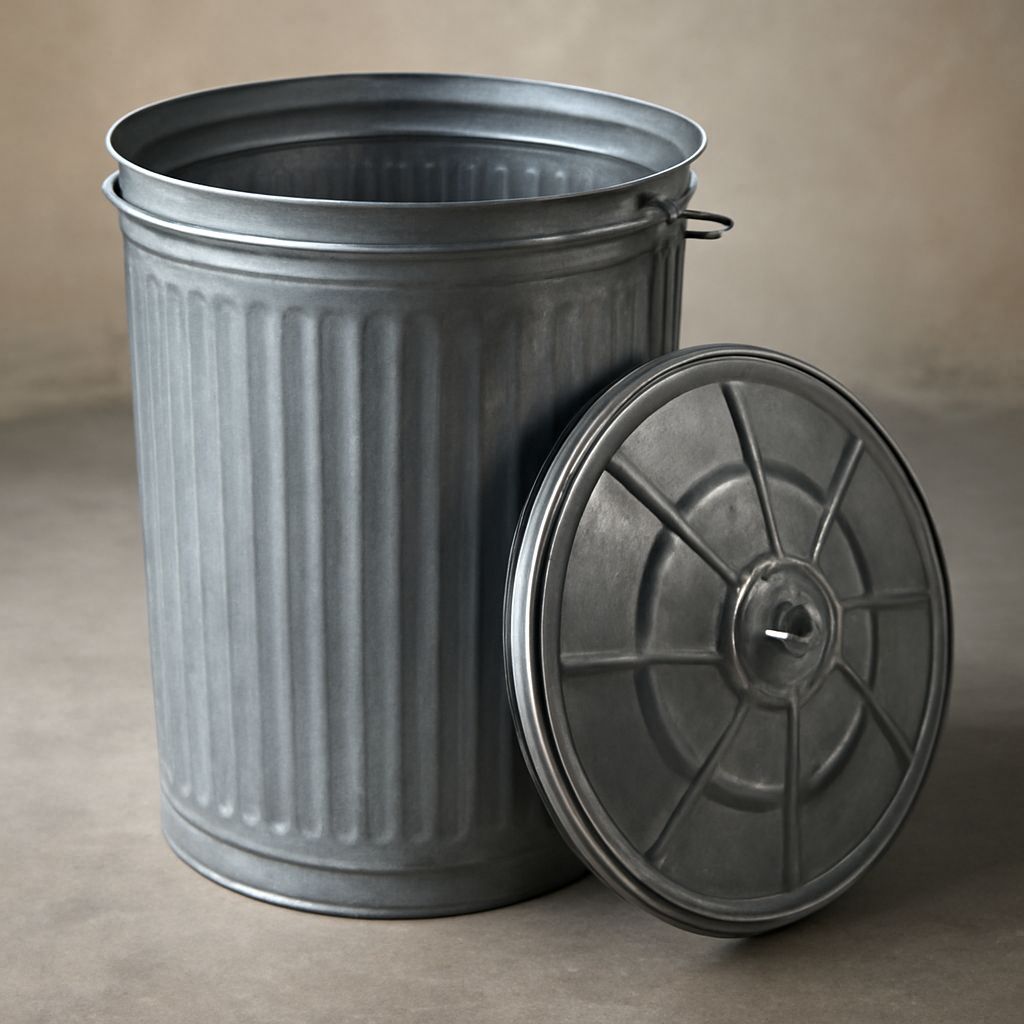
A galvanized trash can works best for dry or moderately damp waste when you need a durable, pest-resistant container. For most homes, a 20- to 32-gallon can with a snug, removable lid offers the best balance of capacity, handling, and liner compatibility.
Choose a smaller can for indoor refuse or a larger one for yard debris. Before buying, check the zinc coating, seam construction, lid fit, handles, and bag size. Galvanized steel resists corrosion, but it is not automatically watertight, food-safe, or suitable for hot material.
What a galvanized trash can offers: coating, rust points, and limits
Galvanizing coats steel with zinc. The zinc layer protects the underlying steel from moisture and slows corrosion when the surface is scratched. This makes galvanized cans more suitable for garages, porches, sheds, and outdoor refuse than many uncoated steel containers.
Rust usually begins at damage or weak points rather than across an intact surface. Inspect these areas carefully:
- Cut edges: The rim, handle openings, and lid lip may have less coating than the broad panels.
- Seams: Rolled or crimped seams should be even and tightly closed. Poorly finished welds can expose steel or collect water.
- Scratches and dents: Deep damage can break the coating and hold moisture against the steel.
- Bottom and underside: Standing water, wet leaves, and damp floors can accelerate corrosion where the can is rarely inspected.
Galvanized steel is durable but not dent-proof. A hard impact can deform the body or lid, preventing a proper seal. Water can also enter through a loose-fitting lid, damaged seam, open handle slot, or condensation. If you need dry storage, keep the can under cover and elevate it from wet ground.
Do not assume a galvanized container is suitable for food, animal feed, or liquids. Use it for feed only when the manufacturer specifies that application and the interior is clean and appropriate. Never put hot coals, live embers, or hot ash into a galvanized can. Ash must be fully cold before disposal, and a purpose-built ash container is safer for repeated use.
When a galvanized garbage can fits the job
A galvanized garbage can is a practical choice when the contents need protection from animals, light rain, or rough handling. The best application depends on the material inside and how often you will move the container.
- Indoor refuse: Use a 10- to 20-gallon can for kitchens, workshops, or utility rooms. A smooth interior and removable lid make bag changes easier.
- Outdoor waste: Choose a 20- to 32-gallon model with a close-fitting lid. Store it on a dry, level surface rather than directly in standing water.
- Yard debris: A 30- to 55-gallon can can hold leaves, weeds, and dry trimmings. It may be awkward to carry when full, so consider two smaller cans if you move the material often.
- Dry storage: Use a clean can for potting supplies, rags, seasonal items, or other non-food materials. Add a dry liner or desiccant only if it will not contact the contents improperly.
- Pest resistance: A rigid body and fitted lid can deter raccoons, rodents, and pets better than a thin plastic bag alone. The lid must remain closed and heavy enough that animals cannot lift it.
For wet garbage, a galvanized can can work if the bag contains the moisture and the can is emptied frequently. Do not leave liquid or decomposing waste sitting in the bottom. Moisture trapped beneath a liner can still damage the base.
Choose metal trash cans with lids by capacity and lid style
Capacity should match both the amount of waste and the weight you can safely lift. Nominal gallon ratings vary by brand, so compare the opening diameter and overall height as well as the stated volume.
- 10 to 13 gallons: Best for indoor refuse, bathroom waste, small workshops, and low-volume storage.
- 20 to 21 gallons: A versatile size for household waste, garages, and covered outdoor areas.
- 30 to 32 gallons: Suitable for larger household loads, pet waste, and moderate yard debris.
- 44 to 55 gallons: Useful for bulky, lightweight yard material or high-volume storage, but difficult to move when full.
Match the liner to the can’s measured rim, not just its gallon label. A bag that is too narrow may pull away from the rim; one that is too short can fall inside. For heavy or sharp contents, use a thick contractor-style liner and keep the load below the lid.
Lid design determines how well the container controls pests and water entry:
- Slip-on lids: Quick to remove and suitable for routine indoor or covered use. They need a close fit to resist animals and rain.
- Rimmed or rolled-edge lids: They sit more securely and can shed water away from the opening.
- Clamp or locking lids: Better for pest resistance and transport, provided the latch is strong and easy to operate.
- Handled lids: Convenient, but inspect the attachment points. A loose lid handle can fail when the lid is stuck or heavy.
For outdoor waste, prioritize a lid that overlaps the rim and cannot slide off when the can is nudged. For indoor use, easy removal may matter more than a locking mechanism.
Inspect seams, handles, and liner fit before buying
Examine the can in person when possible, or study product photographs closely. A well-made body should stand level without rocking, and the rim should be round enough for the lid to seat evenly.
Seams should be continuous, smooth, and free from sharp projections. A folded or crimped seam can be reliable when it is tight and uniformly finished. Welded seams should not show gaps, pinholes, rough slag, or bare patches. The interior matters as much as the exterior because a rough seam can tear liners and retain wet waste.
Handles should be firmly riveted or welded to reinforced areas. Fixed side handles help with lifting, while a bail handle can make a full can easier to carry but may swing into nearby objects. Look for rounded grips and enough clearance to use gloves. Avoid a can whose handles flex the body or scrape against the lid.
Test the lid with a liner installed. The bag should fold over the rim without preventing the lid from closing. If the lid relies on friction, a bulky liner may make it sit crooked. A retaining ring can improve bag fit, but it should not create a channel where liquid remains trapped.
A steel trash can with lid is most useful when the lid, body, and handles function as one system. A heavy body cannot compensate for a warped lid or weak attachment points.
Clean and maintain galvanized trash cans
Empty the can before residue hardens. Remove the liner, sweep out loose material, and wash the interior with mild dish soap and warm water. Use a soft brush or nonabrasive sponge; harsh scouring can damage the zinc coating.
Rinse thoroughly and dry the can completely, especially around seams, the base, handle mounts, and the underside of the lid. Do not seal a damp can immediately after cleaning. Leave the lid off until all moisture has evaporated.
For odor or residue, use a diluted household cleaner that the manufacturer permits, then rinse well. Avoid mixing cleaners and avoid strong acids or caustic products that can attack galvanized surfaces. Periodically check for rust spots, bubbling coating, sharp edges, loose handles, and a lid that no longer seats evenly. Touch up or replace a damaged can before moisture reaches the steel beneath the coating.