
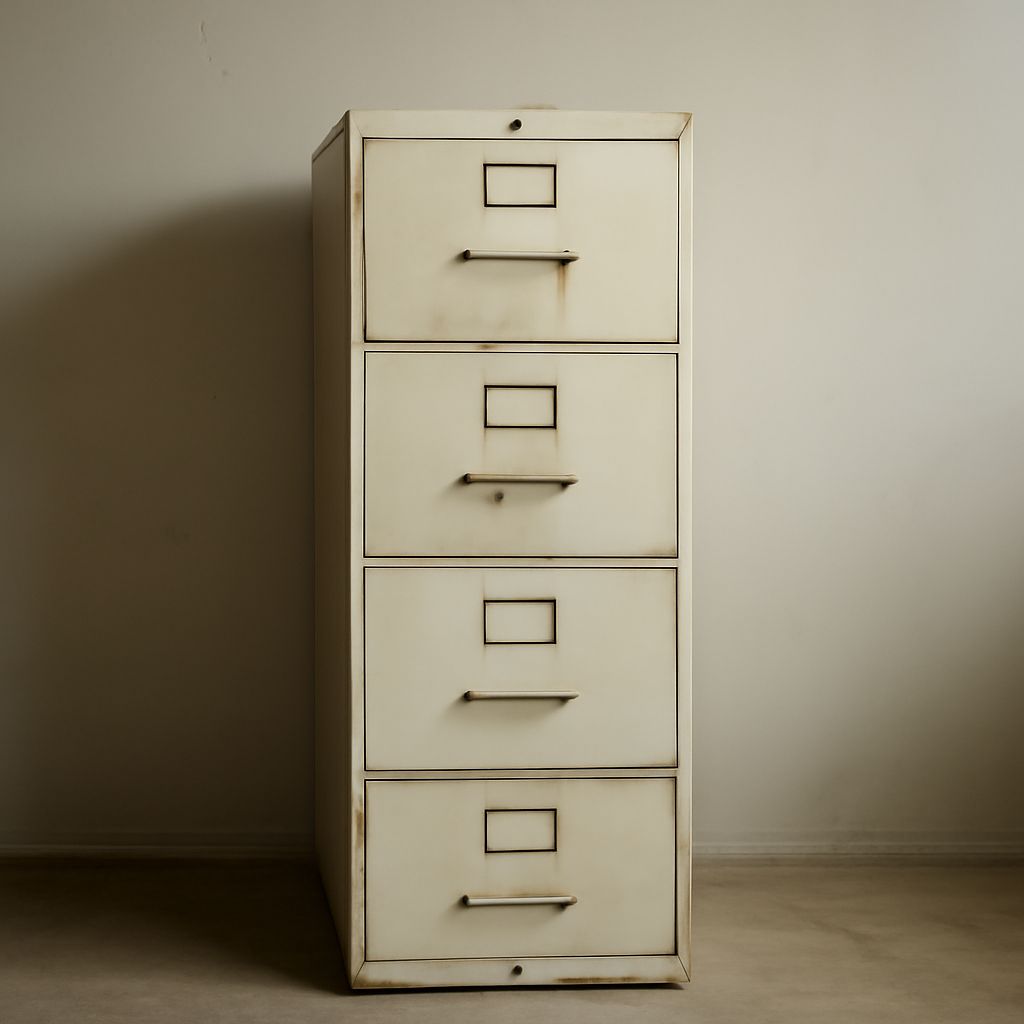
A fireproof file cabinet is better understood as a tested fire-resistant container, not an absolute guarantee. Its rating applies to specific media, exposure time, internal temperature, and test conditions.
Choose protection by asking what you store, how long it must remain protected, and whether impact, water, access control, or daily filing matters. Ratings are only useful when their scope matches your records.
What Fireproof File Cabinet Ratings and Labels Mean
Read the rating as a set of limits rather than a marketing adjective. A label should identify the test standard, protected media class, duration, and temperature limit. Common time claims include 30, 60, and 90 minutes, but the test method determines what those numbers mean.
Third-party labels, such as a certification to UL 72 or another recognized standard, are more useful than an unsupported “fireproof” claim. Check the certificate or manufacturer documentation for the exact model, media class, test duration, and installation conditions. A cabinet tested for paper is not automatically tested for computer media.
For paper, a common target is an interior temperature below approximately 350°F during the rated fire exposure. Digital media can require substantially lower temperatures and tighter humidity limits. Some products therefore use separate classes for paper, magnetic media, optical media, or other sensitive records.
Impact and water protection are separate considerations. A fire test may not prove that a cabinet survives a fall through a damaged floor, and a fire rating may not establish resistance to hose water or sprinkler discharge. Look for distinct impact and water-test claims, including any limits on duration or water entry.
Match a Fireproof Filing Cabinet to Your Media
Start with an inventory. Paper contracts, personnel files, deeds, and ledgers usually need a paper-rated cabinet. Backup tapes, external drives, film, and optical discs need a rating specifically covering digital or temperature-sensitive media. If one cabinet stores mixed media, use the strictest applicable requirement or separate the media.
Preserve critical records in more than one location when recovery would be difficult. A cabinet protects the copy inside it; it does not replace an off-site, secure, or otherwise independent copy. Identify which originals must remain immediately available and which can be archived.
Confirm whether the rating covers ordinary folders, hanging files, binders, or another container. Internal shelves, dividers, and drawer hardware can reduce usable capacity. Ask whether the published capacity is measured in linear filing inches, folders, or a stated number of drawers.
Choose Fire-Resistant File Cabinets by Format and Features
Vertical drawers use less wall space and suit modest volumes. Lateral drawers accept files from the side, provide wider access, and can be easier to organize, but they may require more floor width. Select a format that fits both your filing method and the room’s clearances.
Inspect construction details that support the rating:
- Insulation: layered fire-resistant material should surround the protected compartment, not merely the exterior shell.
- Gaskets: seals help limit heat, smoke, and moisture entry when drawers are properly closed.
- Lock: keyed, electronic, or mechanical locks should match access needs and maintenance capabilities.
- Relockers: where present, these mechanisms can help secure the cabinet after forced-entry attempts or severe impact.
- Drawers: smooth suspension, anti-tip interlocks, and full closure improve daily use without compromising security.
Do not treat a heavier cabinet as automatically better protected. Weight often reflects insulation and steel, but only the documented rating establishes performance. Confirm the loaded weight, not just the empty shipping weight.
Plan Capacity, Placement, Delivery, and Record Priority
Measure current files in linear inches, then add roughly 25% to 50% for growth and easier handling. A cabinet filled to capacity becomes difficult to close and leaves little room for new records. Confirm drawer dimensions for letter, legal, or other required file sizes.
Before ordering, verify the floor’s allowable load, especially on upper levels or raised flooring. Check door and hallway widths, ceiling height, stair turns, thresholds, elevator limits, and the delivery company’s equipment requirements. A heavy cabinet that cannot reach its final room is not a practical choice.
Place the cabinet where authorized staff can reach it, but away from avoidable flood exposure, leaking pipes, exterior heat sources, and congested escape routes. Keep drawers closed and follow anchoring instructions if the manufacturer requires them.
Maintain a simple inspection schedule. Check the lock, drawer alignment, gaskets, hinges, relockers, labels, and signs of corrosion or water entry. Reconfirm the rating whenever the cabinet is modified, relocated, or used for a different media type.