
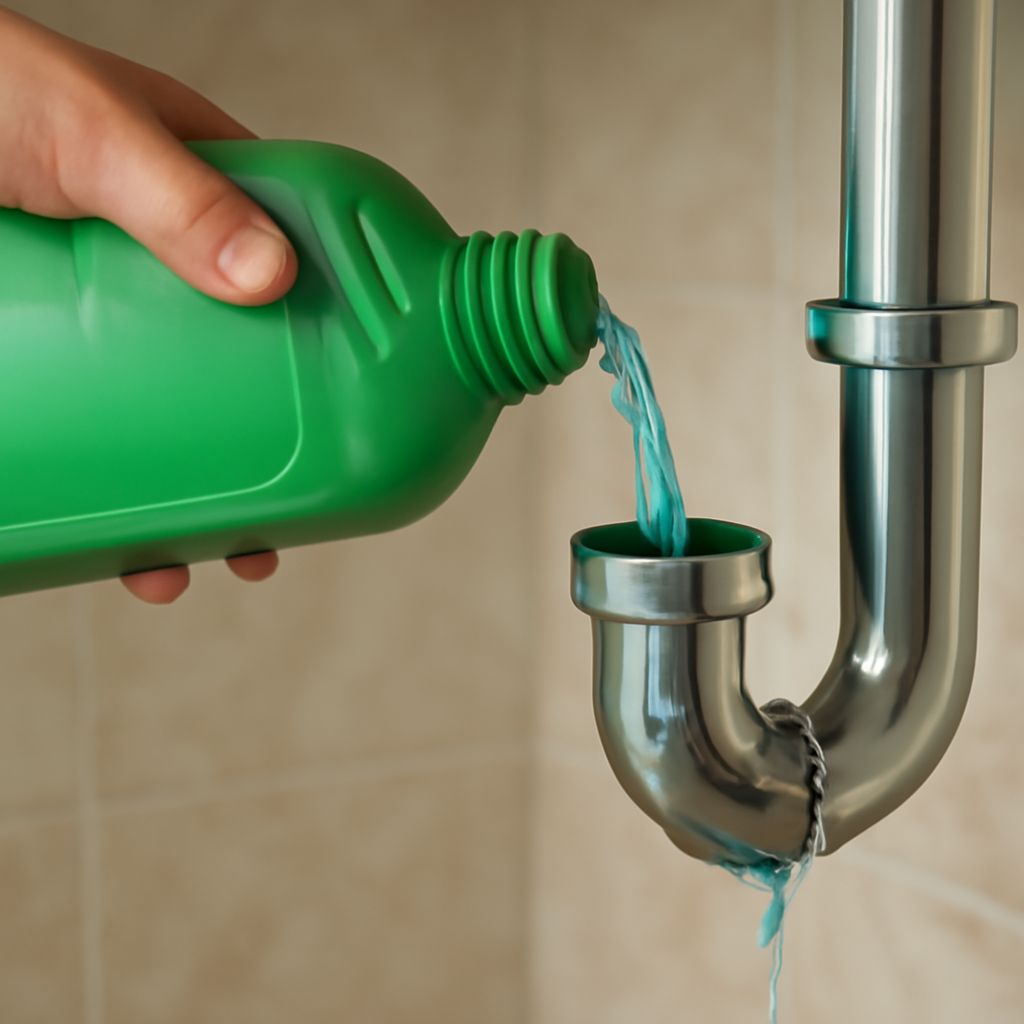
A drain cleaner for hair is usually a tool before it is a chemical. Remove visible hair from the stopper and drain opening first, then use a product only for residue or an inaccessible clog.
The best drain cleaner for hair clogs depends on the blockage. A plastic zip tool or hand auger handles a dense plug; enzyme products suit slow organic film, while oxidizing and alkaline formulas can treat remaining buildup.
Drain Cleaner for Hair: Confirm Surface Hair, Stopper Buildup, Slow Organic Film, Standing Water, or a Deeper Blockage
Identify the clog before choosing a remover. The location and symptoms indicate whether extraction or treatment will work fastest.
- Surface hair: Hair is visible around the drain opening or sits just below the grate. Use tweezers or a plastic extraction tool.
- Stopper buildup: Water drains slowly, and hair collects around a pop-up or lift-and-turn stopper. Remove the stopper to reach the wrapped hair.
- Trap-area clog: The opening looks clear, but the basin drains slowly or gurgles. Hair and soap may be packed in the curved trap below.
- Slow organic film: Water still drains, but flow has gradually weakened. Soap, skin oils, and fine hair may coat the pipe rather than form one plug.
- Standing water: Water remains in the basin or tub. A dense clog is likely, so extract what you can before applying a product.
- Deeper blockage: Several fixtures drain slowly, or the problem returns immediately. The obstruction may be beyond the local trap or involve the main drain.
Mechanical Hair-Removal Tools: Open the Stopper and Reach the Trap Area
Direct extraction is the best first step because it removes the hair instead of dissolving it into the pipe.
- Gain access. Put on gloves, remove the drain cover or stopper, and use a flashlight to inspect the opening. Set removed parts aside in order.
- Extract the accessible plug. Insert a plastic zip tool, barbed drain stick, or long tweezers slowly. Twist, pull upward, and discard the hair. Repeat until the tool comes out clean.
- Reach farther. Feed a small hand-crank drain snake into the opening when the clog sits below the stopper. Turn the handle while advancing, then withdraw the cable and clean it.
- Open the trap if necessary. Place a bucket under the U-shaped trap, loosen the slip nuts, and clean the trap if the design allows removal. Refit the washers and nuts without overtightening.
Do not force a snake through resistance or push a solid plug deeper. If extraction produces no material and the trap is clear, the blockage may be farther down the line.
Best Drain Cleaner for Hair Clogs: Compare Enzyme, Oxidizing, and Alkaline Formulas
Choose a formula by clog condition, then follow its current label for dosage, compatibility, dwell time, and flushing.
- Enzyme cleaners: Products such as Bio-Clean are better for recurring slow organic film and routine maintenance. They work gradually on organic residue, not as an instant remover for a dense hair plug. Use them after extraction, usually with a longer dwell period.
- Oxidizing cleaners: Formulas using oxidizing ingredients can break down hair, oils, and odor-producing residue. They may help with a partial or inaccessible clog, but they are not a substitute for removing a reachable wad of hair.
- Alkaline cleaners: Products such as Drano Max Gel or Liquid-Plumr Hair Clog Eliminator use strong alkaline ingredients intended for hair and organic debris. They are the more practical product choice when water stands and the clog cannot be reached, provided the label allows that condition.
Never mix drain cleaners, bleach, acids, or other household chemicals. Avoid using a plunger after chemical treatment unless the product instructions specifically permit it; splashing caustic liquid can cause injury.
Best Hair Clog Remover: Apply, Flush, Flow-Test, Repeat, or Escalate
- Remove water and hair when possible. Bail standing water into a bucket if the label requires a clear drain, then extract material from the opening. Some products are designed for standing water, so do not guess.
- Apply the labeled amount. Ventilate the room, wear the recommended protection, and pour carefully without combining products. Keep the container nearby for its first-aid instructions.
- Observe the dwell time. Leave the product for the stated period, not longer. Enzyme treatments may require hours; other formulas may specify minutes.
- Flush as directed. Use the label’s water temperature and volume. Do not assume boiling water is safe for every drain or pipe material.
- Flow-test the drain. Run a steady stream for two to five minutes. A successful clearing leaves no pooling, gurgling, or backup. If flow remains weak, repeat mechanical extraction once; repeat chemical treatment only when the label permits.
Stop using products and call a plumber when standing water persists, multiple fixtures back up, the clog returns quickly, or a snake cannot pass the trap. Tell the plumber which cleaner was used.