
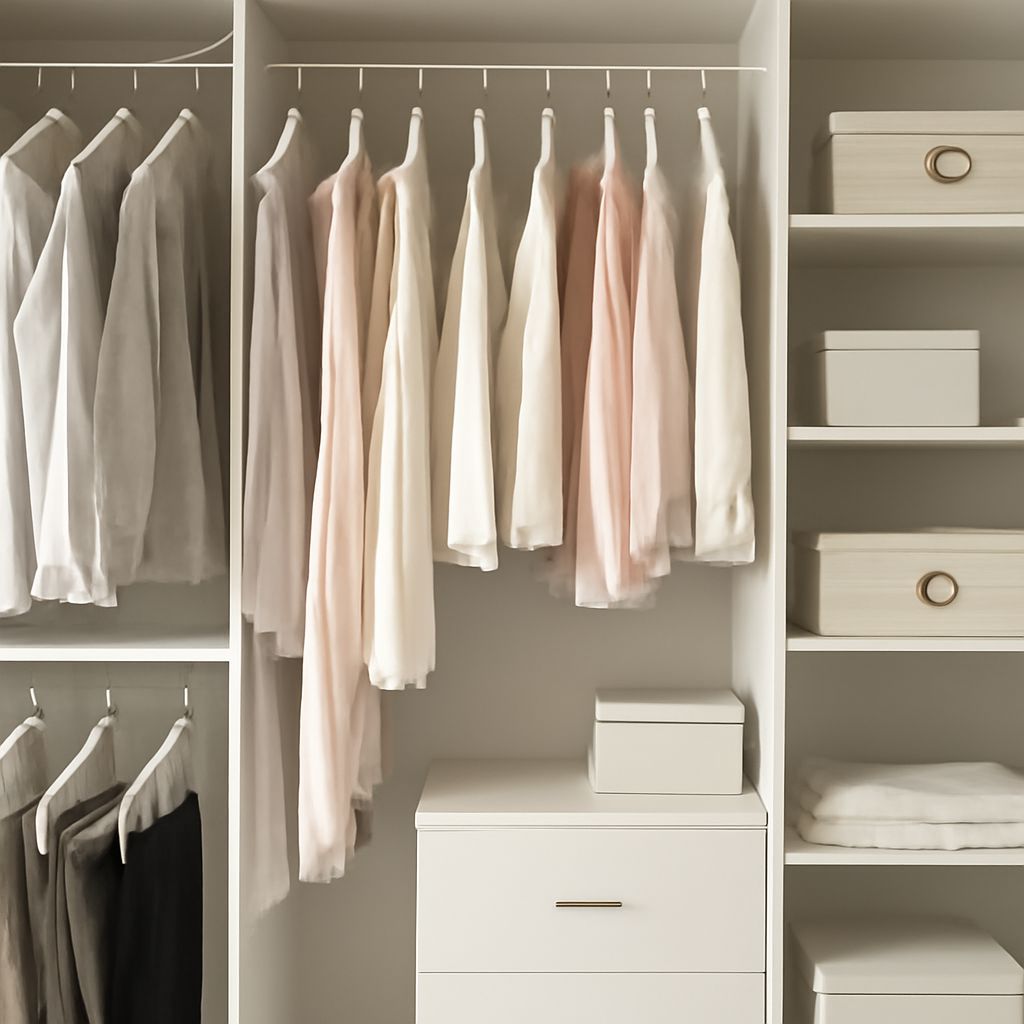
Closet shelf height depends on the stored item, rod position, shelf thickness, and user reach. In a typical 8-foot reach-in closet, place a top shelf at 84–90 inches from the finished floor. Pair it with a single hanging rod whose centerline sits 66–72 inches high.
A useful standard closet shelf height is not one universal number. The correct elevation leaves enough clearance for shirts, dresses, coats, shoes, folded stacks, bins, or linens while keeping frequently used storage reachable.
How to Measure Closet Shelf Height: Floor, Top, and Underside
Measure every elevation from the finished floor, meaning the completed walking surface rather than the subfloor. Record both the shelf top and underside:
- Shelf top: the upper surface where items sit.
- Shelf underside: the lower surface that limits the opening below.
- Rod centerline: the center of the closet pole, not its bottom edge.
Shelf thickness changes usable space. For example, a ¾-inch shelf with its top at 84 inches has an underside at 83¼ inches. If the next shelf needs a 10-inch opening, calculate its top as the lower shelf top plus 10 inches of clearance plus ¾ inch of thickness.
Measure the tallest item that will occupy each zone. Add 1–3 inches for lifting, sliding, and removing it. This opening is measured from the top of one shelf to the underside of the shelf above.
Elevation sketch, not to scale: finished floor at 0 inches → shoe shelf top at 7 inches → folded-clothing shelf top at 18 inches → single rod centerline at 68 inches → top shelf top at 84 inches.
Standard Closet Shelf Height: Top Shelves and Rod Centerlines
For an 8-foot closet, set a top shelf at 84–90 inches when it stores occasional items. A ¾- or 1-inch shelf will place its underside slightly lower. Use the lower end for easier reach and the higher end when preserving more hanging length matters.
For shirts, blouses, and jackets, a single rod centerline of 66–72 inches usually works. Leave about 12–18 inches between the rod centerline and the top shelf underside. The hanging section below the rod should provide approximately 36–40 inches from the rod centerline to the shelf or floor below.
Dresses, robes, and coats need a longer zone. Allow roughly 54–60 inches from the rod centerline to the floor or lower shelf top, depending on the longest garment. A 66–68-inch rod centerline often suits long hanging better than a higher rod.
For double hanging, place the lower rod centerline around 38–42 inches and the upper rod around 78–82 inches. Give each shirt zone about 36–40 inches of vertical clearance. A top shelf above the upper rod may need to rise to 90–96 inches, so check reach before using this arrangement.
Closet Shelving Height by Item: Shoes, Stacks, Linens, Bins, and Drawers
Closet shelving height should follow the item’s actual height and how it is removed. Use these clear-opening guidelines:
- Shoes: allow 6–8 inches for flats, sneakers, and low shoes. Use 12–18 inches for boots, measured to the tallest shaft.
- Folded clothes: allow 10–12 inches for a manageable stack. Increase the opening to 12–14 inches for bulky sweaters or irregular piles.
- Linens and towels: use 12–16 inches, depending on folded thickness and stack size.
- Bins and baskets: measure the container, then add 2–3 inches above its rim for removal. Typical openings range from 12–16 inches.
- Drawers: reserve enough height for the drawer front, hardware, and hand clearance. Many drawer units use 8–10 inches per drawer front, but verify the manufacturer’s dimensions.
Keep heavier stacks and drawers between knee and shoulder height. Place shoes near the floor, then folded clothing or linens above them. Use upper shelves for seasonal clothing, luggage, and lightweight bins rather than daily essentials.
Adjust Shelf Spacing for Reach, Closet Type, and Future Changes
For many adults, the most useful reach zone is approximately 15–72 inches above the finished floor. Store daily items between waist and shoulder height. Shelves above 72–84 inches are better for occasional use, while anything higher may require a step stool. Lower shelves work better for children, seated users, or heavy items.
Reach-in closets often benefit from 12–16-inch-deep shelves and one clear long-hang section. Walk-in closets can combine shoe shelves, drawer towers, double hang, and upper storage, but leave corner zones accessible rather than filling them with deep fixed shelves.
- Measure the tallest item, bin, stack, or garment in each planned zone.
- Add the required handling clearance and shelf thickness to calculate the next shelf top.
- Place the rod by its centerline, then verify the garment clearance below it.
- Mock up the elevations with painter’s tape, cardboard shelves, and an actual hanger or storage bin.
- Reach, remove, and replace each item. Lower frequently used shelves or raise openings that feel cramped.
- Use adjustable standards or extra shelf-pin holes when contents may change. Keep fixed shelves for structural or highly predictable zones.