
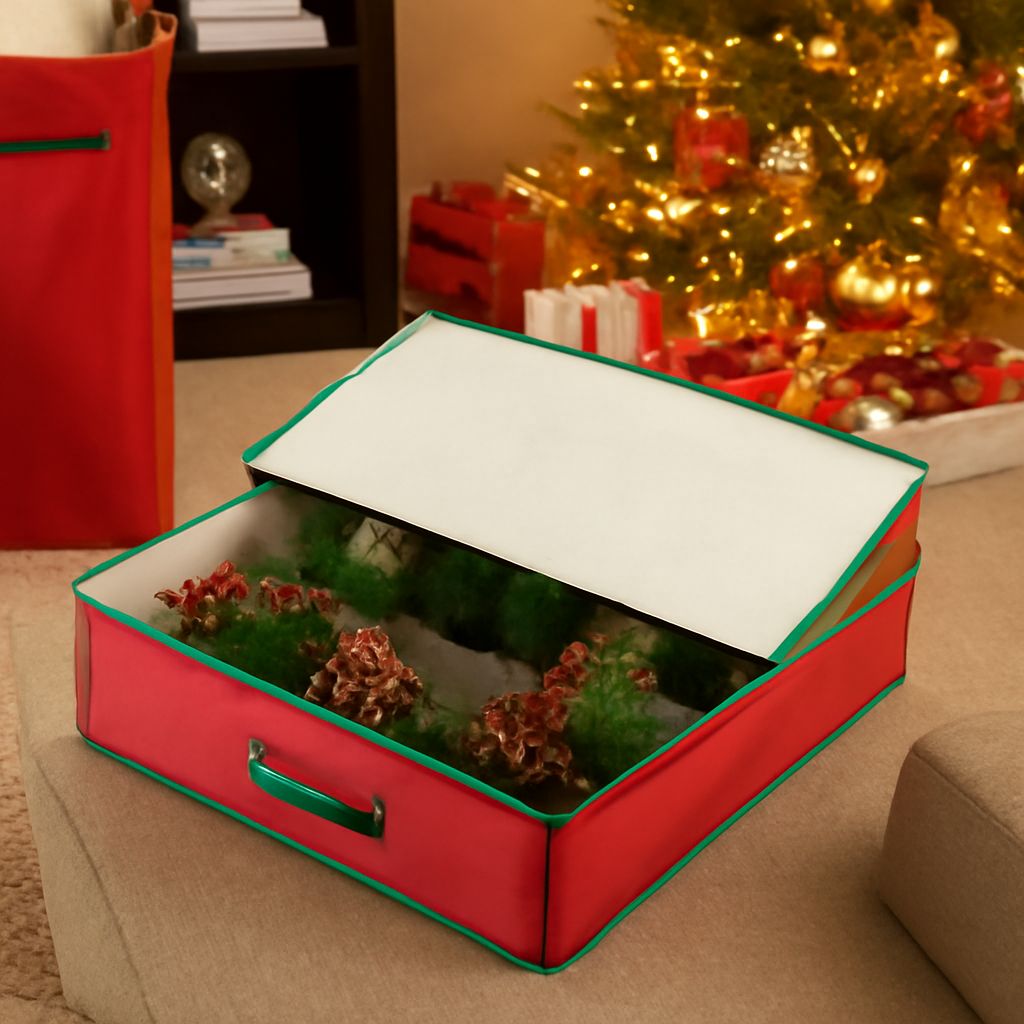
The best Christmas storage containers match each decoration to its shape, fragility, and storage location. Start by inventorying holiday zones, then choose rigid bins, divided boxes, reels, bags, or cases that fit your shelves, closet, attic, or garage.
Use a dedicated Christmas storage box for small, light collections such as ornaments and figurines. Larger containers should hold bulky items only when their dimensions, weight, and stacking limits suit the available space.
Sort holiday decorations by type, condition, and storage location
Inventory each holiday zone before buying containers
List decorations by the room or area where they are used: tree, mantel, dining room, entryway, outdoor display, and wrapping station. Measure the shelf, cabinet, closet, or attic floor before shopping. Record height, width, depth, and clearance for lids or handles.
This inventory prevents buying tall containers for a low shelf or filling one large bin until it becomes too heavy to move. It also creates a retrieval map for next season.
Inspect ornaments, lights and cords, wreaths and garlands, and the artificial tree
Check ornaments for cracks, loose finishes, and missing hooks. Test lights and cords, discard damaged wires, and coil working strands without tight kinks. Inspect wreaths and garlands for crushed foliage, loose decorations, pests, and moisture.
For an artificial tree, note the number and length of sections before choosing a tree bag. Keep the original assembly instructions with the tree if they are still useful.
Group smaller categories together
Pack linens, candles, figurines, wrapping supplies, hooks and hardware, and batteries as separate groups. Store candles away from heat and direct sunlight. Remove batteries from lighted decorations, test them separately, and keep usable batteries in a cool, dry place.
Quarantine damaged items before packing
Place broken ornaments, frayed lights, stained linens, and warped décor in a clearly marked repair or discard box. Do not mix them with usable decorations, where damage and missing parts can go unnoticed for another year.
Choose Christmas storage containers by item and available location
Match container dimensions and capacity to the space
Choose shallow containers for ornaments and deep bins for bulky garlands or fabric. Leave enough room to lift contents without crushing them. On narrow shelves, several small Christmas storage boxes are usually easier to handle than one oversized bin.
Use the right container for each item
- Rigid bins: Use lidded plastic bins for general décor, outdoor pieces, and items needing pest and dust protection.
- Divided boxes: Use adjustable compartments for glass ornaments, figurines, and other small fragile pieces.
- Reels: Use cord reels or spool-style organizers for lights and extension cords to reduce tangles.
- Bags and cases: Use fabric bags for artificial trees, garland bags for flexible greenery, and wreath cases for shaped wreaths.
Clear bins make seasonal sorting faster because contents are visible. Opaque bins protect light-sensitive items and look neater in living areas, but they require detailed labels. Choose gasketed or moisture-resistant containers in garages and attics, while remembering that a sealed bin cannot protect damp items packed inside.
Keep decorations away from leaks, condensation, extreme temperature changes, and known pest activity. Consider weight and stackability together: a reinforced lid may support stacking, but a full container can still be unsafe to lift.
Pack Christmas storage boxes for fragile and bulky pieces
Wrap ornaments and figurines carefully
Wrap glass ornaments and delicate figurines individually in archival tissue, then place them in divided compartments. Fill empty spaces with acid-free paper or soft padding so pieces cannot shift. Avoid newspaper against pale finishes because ink can transfer.
Place the heaviest fragile pieces at the bottom of a divided box and keep the box level. Do not use loose filler that can press against thin ornaments when the lid closes.
Reel lights and cords; protect wreaths, garlands, and trees
Untangle and test lights before winding them onto a reel. Secure the plug without sharply bending the cord. Place wreaths in cases that preserve their shape, and use breathable garland bags when greenery needs protection from dust without trapped condensation.
Collapse artificial tree sections only after they are dry and free of loose debris. A tree bag should fit the longest section without forcing branches flat. Store the bag horizontally or vertically according to the manufacturer’s seams and the available space.
Compress textiles only in suitable conditions
Fold clean, completely dry linens and use breathable fabric containers where moisture or temperature changes are likely. Compression bags save space for durable textiles, but avoid compressing embellished, delicate, or easily creased fabric. Add a moisture indicator or desiccant only where its use is appropriate, and never pack damp fabric.
Label, stack, and map everything for next-season retrieval
Label contents and handling notes
Label every container on at least two visible sides with its contents, room, and handling instructions, such as “fragile,” “keep upright,” or “do not stack.” Add the packing year when items need inspection. Photograph the open container before closing it, especially when compartments hold many similar ornaments.
Stack by weight and record the location
Place heavy décor low, medium-weight bins in the middle, and light containers above. Never place heavy décor above fragile ornament containers merely because the boxes stack. Keep frequently used wrapping supplies near the front, while once-a-year items can go farther back.
Record each container’s shelf, closet, attic zone, or garage position in a simple inventory. At the next holiday setup, retrieve by room rather than opening every bin, then update the list when items are repaired, discarded, or relocated.