
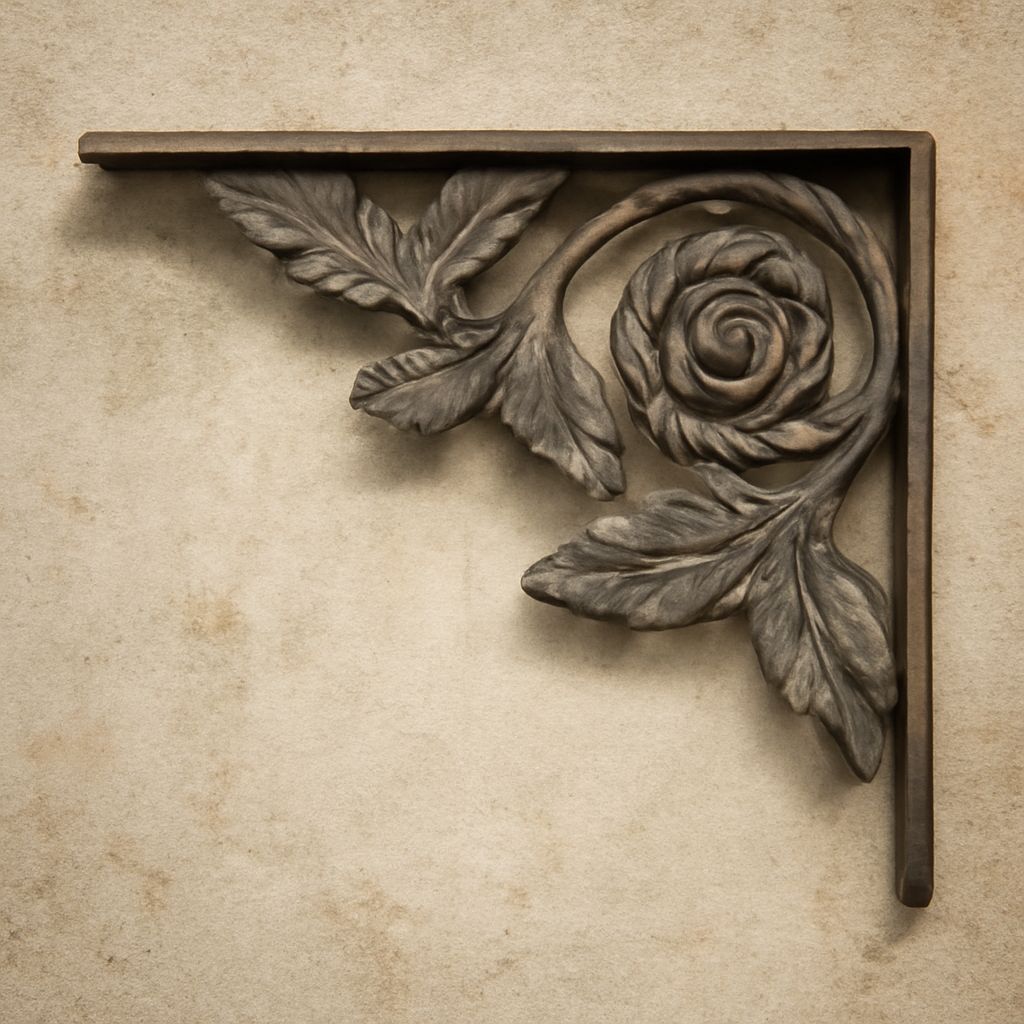
Cast iron shelf brackets are rigid wall supports made to hold shelves securely under load. They are used when you want a bracket that can carry weight, resist bending, and add a traditional industrial or decorative look. In practice, they work best for wood shelves, pantry storage, books, display shelving, and utility spaces where strength matters more than a lightweight profile.
People also use the broader term cast iron brackets for similar support hardware in other mounting applications, but in shelving the goal is the same: strong, fixed support with a solid visual presence. If you are comparing styles, the main choice is usually between a cast iron shelf bracket and a wrought iron shelf bracket, which can look similar but behave differently in fabrication and finish.
Cast Iron Shelf Brackets: Direct Answer
A cast iron shelf bracket is a bracket molded from molten iron into a fixed shape. That process produces a heavy, sturdy part with decorative detail and excellent compressive strength. For shelving, that means dependable support for everyday loads when the bracket is mounted correctly into solid framing or with appropriate anchors.
These brackets are often chosen for three reasons:
- Strength for books, kitchen items, tools, or décor.
- Style for vintage, farmhouse, industrial, or traditional rooms.
- Stability because the shape is firm and does not flex much under load.
The main limitation is that cast iron is strong but relatively brittle. It is not intended to bend or absorb hard impact the way a springier metal might. That is why proper mounting matters. A good bracket can fail if the screws, wall anchors, or shelf board are undersized.
How They Work and Vary
All shelf brackets work by transferring weight from the shelf into the wall. With cast iron shelf brackets, the vertical arm carries downward force while the horizontal arm supports the shelf from below. The load travels through the bracket into the fasteners and then into the wall structure.
Bracket performance varies based on shape, size, and mounting method. Common variations include:
- Short decorative brackets for light display shelves.
- Deep heavy-duty brackets for wider shelves and heavier loads.
- Ornamental brackets with scrolls, arches, or Victorian-style detail.
- Plain utility brackets with simpler lines and fewer decorative features.
Size matters as much as material. A small cast iron shelf bracket may be attractive, but it will not support the same load as a deeper bracket with a longer wall leg. For deeper shelves, the bracket should extend far enough to support most of the shelf depth. Otherwise, the front edge can sag or tip under weight.
Finish also matters. Many cast iron brackets are painted, powder-coated, antiqued, or left with a dark matte appearance. Finish affects appearance and corrosion resistance, especially in kitchens, basements, garages, or bathrooms where humidity is higher.
When people search for cast iron brackets, they sometimes mean shelf supports, curtain hardware, or general mounting pieces. For shelving, look for products that specify load rating, mounting hole placement, and shelf depth compatibility. That information is more useful than appearance alone.
Cast Iron vs. Wrought Iron Brackets
Wrought iron shelf brackets and cast iron shelf brackets can look similar, but they are made differently and often suit different priorities. Wrought iron is typically shaped from worked metal, which gives it a forged, handcrafted feel. Cast iron is poured into a mold, which makes repeating ornate forms easier and often keeps the cost lower for decorative designs.
In everyday shelving use, the distinction usually comes down to these practical differences:
- Appearance: cast iron often has heavier ornamentation and more uniform detail; wrought iron may look hand-forged or slender.
- Feel: cast iron tends to look and feel denser; wrought iron can appear more refined or linear.
- Durability profile: both can be strong, but cast iron is more brittle and wrought iron is generally more workable in shape.
- Design style: cast iron often suits rustic, heritage, or decorative shelving; wrought iron can fit both traditional and modern minimalist settings.
If the bracket will be visible and decorative, style may outweigh everything else. If the bracket will be hidden under a shelf lip, load rating and depth become more important than visual texture. In real projects, either material can work if the bracket is sized correctly and mounted into a solid wall.
For buyers, the best comparison is not “which metal is better” but “which bracket matches the shelf, the wall, and the load.” A heavy cast iron shelf bracket is a good match for a solid oak shelf and visible hardware. A slimmer wrought iron bracket may be better when the look should be lighter and more handcrafted.
How to Choose and Recognize Them
Choose cast iron shelf brackets by measuring the shelf first. Shelf depth, intended weight, and wall type should guide the decision. A bracket should support the shelf depth with enough bearing surface to keep the front stable.
Use this practical checklist:
- Shelf depth: match the bracket arm to the shelf board depth.
- Load: heavier items need thicker brackets and stronger anchors.
- Wall type: studs, brick, and masonry support different fasteners.
- Look: decorative brackets should match the room’s hardware and trim.
- Finish: choose coatings that suit the room’s moisture level.
Recognizing a cast iron shelf bracket is usually straightforward once you know the signs. It often has a dense, solid feel, sharp molded detailing, and a matte or painted finish. Many cast pieces show repeated patterns, curves, or floral ornament because molding makes those shapes efficient to produce.
If a listing calls something “cast iron” but the part looks extremely thin, flexible, or hollow, check the specifications closely. Some products use mixed materials or decorative naming that does not describe the load-bearing part. Reliable listings will give dimensions, weight capacity, hole spacing, and recommended shelf thickness.
Installation also affects performance. A strong bracket still needs:
- secure fastening into studs or masonry where possible
- level placement so the shelf sits evenly
- screws sized for both the bracket and the wall material
- a shelf board thick enough to resist splitting
For storage use, cast iron shelf brackets are best when you want visible support that does real work. They are a practical choice for kitchen shelving, utility rooms, workshops, entryways, and display spaces. When you need the simplest answer: choose cast iron for strength and visual weight, choose wrought iron for a more forged look, and choose the size that matches the shelf and load first.