
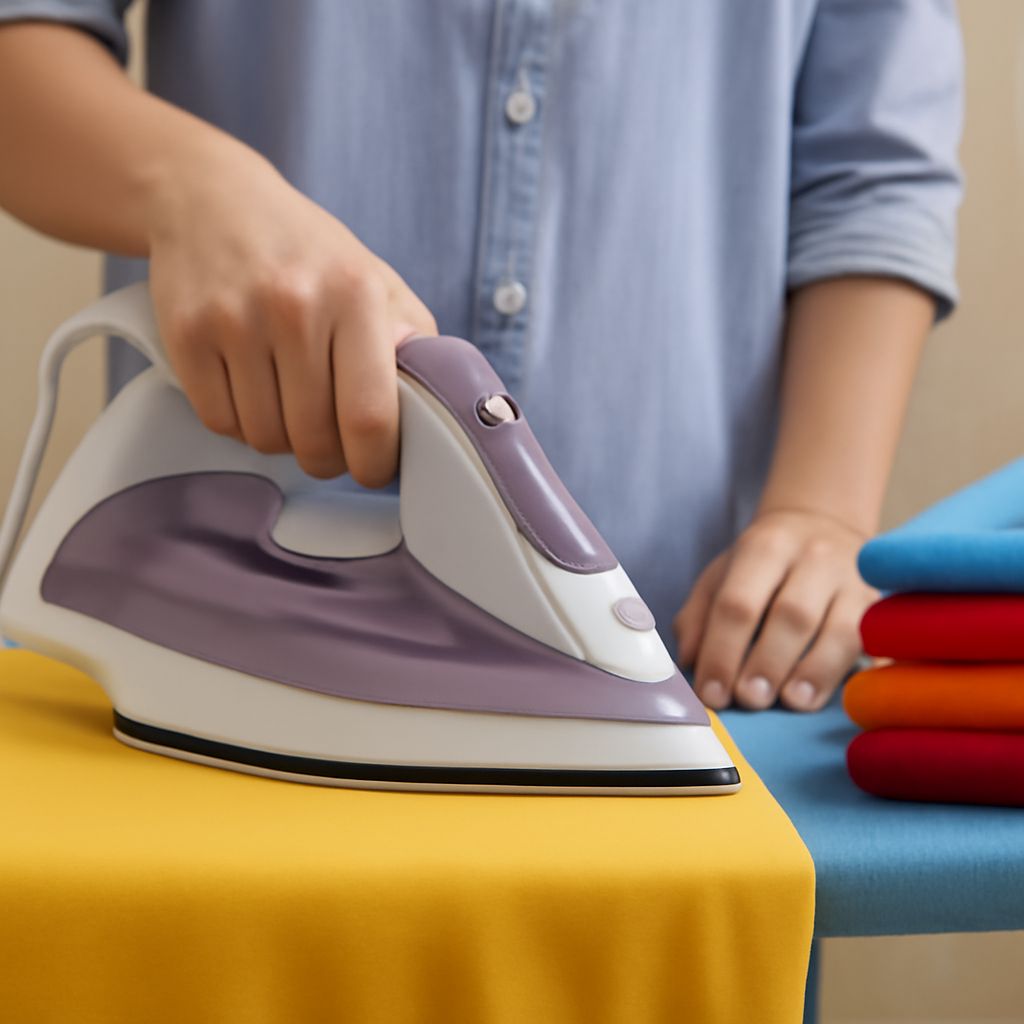
Yes, can you iron polyester safely? Usually, but only when the care label permits ironing. Start with the lowest synthetic setting, turn the garment inside out, and use a pressing cloth. Polyester can flatten, shine, distort, or melt under excessive heat.
The safest method is gentle pressing rather than prolonged contact. Test an inconspicuous area first, keep the iron moving, and stop immediately if the fabric feels sticky or develops a glossy mark.
Can you iron polyester? Check the care label first
The garment’s care label takes precedence over general polyester guidance. A polyester item may contain coatings, prints, elastic, lining, or another fiber that needs different treatment.
- An iron symbol with a cross means do not iron. Use steaming or hanging instead.
- One dot usually indicates the lowest heat range. Choose the iron’s synthetic or low setting.
- A steam symbol crossed out means use a dry iron, even if the fabric itself tolerates low heat.
- If the label gives a temperature, follow that temperature rather than the fiber name.
Check the entire garment before starting. Look for heat-sensitive decoration, vinyl, sequins, elastic panels, glued details, and plastic zippers. These areas may need to be avoided completely.
For a polyester blend, follow the garment label and use the lowest setting suitable for the whole item. Do not select a cotton or linen setting simply because the blend includes cotton. The polyester component can still scorch or melt.
Set the polyester iron setting: choose low or synthetic heat
Choose the iron’s polyester iron setting if it has one. Otherwise, select low heat or the one-dot setting. If the dial displays degrees, begin around 110–130°C, unless the care label specifies a different limit.
Let the iron reach its setting fully before touching the garment. A cool iron may encourage repeated passes, while an overheated soleplate can damage polyester quickly. Keep the soleplate clean so residue does not transfer to the fabric.
Use steam only when the label allows it. A light steam burst can relax wrinkles, but excess moisture may leave marks on some polyester fabrics. For a cautious approach, use a dry iron over a clean, lightweight pressing cloth.
Prepare a firm, smooth ironing surface. Cover it with a clean ironing-board cover, then lay the garment flat without stretching it. Place a folded towel beneath delicate details, seams, or raised decorations.
How to iron polyester step by step: test first, press inside out, and keep moving
- Read and inspect the label. Confirm that ironing is allowed and identify the maximum heat and steam settings.
- Prepare the garment. Empty pockets, close zippers carefully, and fasten buttons only if doing so does not pull the fabric. Smooth the garment with your hands.
- Turn it inside out. This protects the visible surface from direct heat and reduces the risk of shine. If the garment cannot be turned inside out, cover the outside with a pressing cloth.
- Test a hidden area. Place the iron briefly on an inside seam or hem through the cloth. Check for discoloration, shine, texture changes, or sticking before continuing.
- Position the pressing cloth. Lay a clean, dry, lightweight cloth between the iron and polyester. Keep it flat so it does not create new creases.
- Press in small sections. Start with broad, flat areas and follow the fabric’s grain. Move the iron continuously with short, steady strokes, or lift and reposition it. Never leave the soleplate stationary.
- Work around details. Iron beside zippers, pockets, seams, prints, and elastic rather than directly over them. Use the tip of the iron only where the label and fabric allow it.
- Release the wrinkles gradually. Use one light pass first. If a crease remains, add a small amount of approved steam or a very fine mist, then repeat through the pressing cloth. Do not soak the fabric.
- Let the garment cool. Hang or lay it flat immediately after ironing. Polyester can develop fresh creases if folded while warm.
Use minimal pressure. The iron’s warmth and the cloth’s protective barrier should do most of the work. Pressing hard can stretch the weave, flatten texture, or leave a permanent shine.
For stubborn wrinkles, place the fabric flat, apply gentle steam from the label-approved distance, and smooth the section with your free hand. Keep that hand clear of the soleplate. If the crease does not release after one or two careful passes, stop and switch to a garment steamer.
How to iron a polyester dress, blends, pleats, and stubborn wrinkles
When learning how to iron a polyester dress, begin with the bodice, then work down toward the skirt. Turn the dress inside out when possible. Insert a folded towel beneath the bodice or sleeves to support the shape, and avoid stretching curved seams.
For a dress that cannot be placed comfortably on an ironing board, hang it on a sturdy hanger. Steam from the inside or hold the steamer slightly away from the fabric, moving from the hem upward. Gently pull the fabric taut with one hand, but do not drag or distort it.
Handle pleats individually. Align each fold with your fingers, cover it with the pressing cloth, and use a brief lift-and-press motion along the pleat. Do not sweep the iron across several pleats, since this can erase their structure or create uneven lines. Secure the top of the pleats with your hand rather than pressing over clips or pins.
For polyester-and-cotton or polyester-and-rayon blends, use the care label’s lowest safe temperature. Treat the garment as a heat-sensitive item even if the other fiber normally tolerates more heat. Test every unfamiliar finish, especially satin-like, coated, or brushed surfaces.
For lining, cuffs, collars, and narrow seams, keep the garment inside out and use the pressing cloth. Iron around buttons and decorative elements. If a lining is shorter than the outer fabric, avoid pulling it flat; smooth it gently and press only where it lies naturally.
Check results and choose steaming or hanging
Inspect the garment under normal light before putting it away. A successful result has a smooth surface, intact texture, even seams, and no water spots, shiny patches, or flattened decorations.
- Shine: stop, lower the heat, turn the garment inside out, and use a thicker pressing cloth.
- Sticky texture or plastic odor: remove the iron immediately. The fabric may be overheating or melting.
- Water marks: stop spraying and use dry pressing or a steamer approved for the garment.
- Wrinkles remain: hang the garment, apply gentle steam, and allow it to cool while supported.
Hanging is the safest alternative when the label prohibits ironing or the garment has delicate decoration. A garment steamer is also useful for dresses, flowing panels, and items that are difficult to lay flat. Keep the steamer moving, avoid saturating the fabric, and let the garment dry completely before wearing or storing it.