
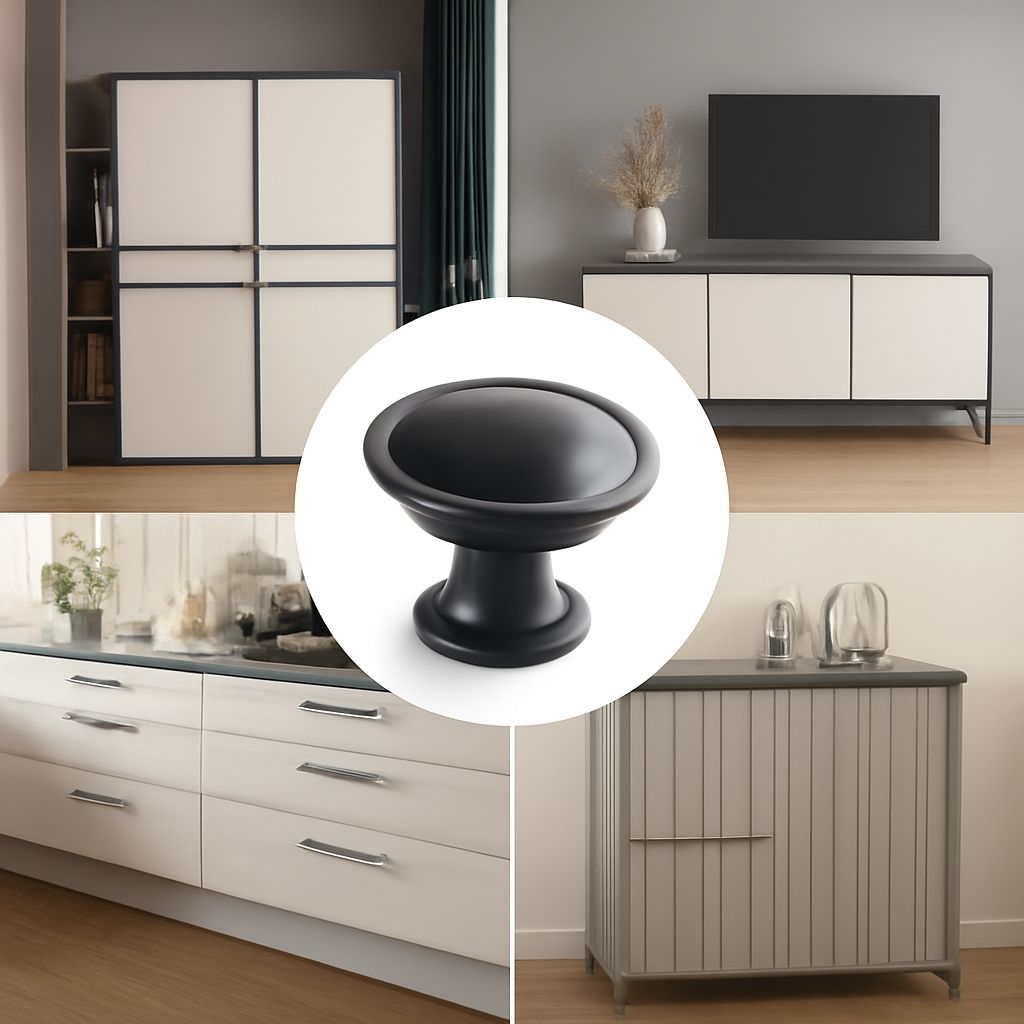
Cabinet knobs are small pieces of hardware used to open cabinet doors and drawers by hand. They attach with a single screw and give you a simple grip point for everyday use. In most homes, they are the easiest and most affordable way to update storage hardware without changing the cabinet itself.
They are common in kitchens, bathrooms, laundry rooms, and closets. The right knob can make a cabinet easier to use, improve the look of the room, and match other finishes already in place.
Cabinet Knobs: Direct Answer
Cabinet knobs are single-point handles mounted to a door or drawer front. Their main job is practical: they help you open and close storage spaces quickly with one hand. Unlike longer bar-style hardware, knobs use a compact shape that works well on many cabinet sizes and styles.
People often choose cabinet knobs when they want a clean look, a lower-cost upgrade, or a hardware option that is easy to install. They are also a common choice for small drawers, upper cabinets, and lighter-use storage. If you want a simple answer, knobs are the standard, versatile hardware option for cabinets when you do not need a full pull.
How Cabinet Knobs Differ
The main difference between knobs and other hardware is how you grip them. A knob is usually round, square, or decorative, with one mounting point. A pull has a longer shape and usually uses two screws. That difference affects both appearance and function.
Knobs vs. pulls
Unique cabinet pulls often feel more substantial and can be easier to grab on wide drawers or heavy doors. Cabinet knobs, by contrast, are smaller and more discreet. They work especially well when you want the hardware to stay visually quiet.
For larger drawers, pulls often give better leverage. For smaller doors and drawers, knobs are usually enough. Many homes use both: knobs on doors and pulls on drawers. That creates a balanced look and matches how the storage is used.
Shape, finish, and size
Cabinet knobs vary in shape, finish, and size. A round brass knob looks different from a matte black square knob, even if both do the same job. Finish matters because it affects how much the hardware stands out and how well it blends with appliances, faucets, and light fixtures.
Size also matters. Small knobs can look refined on narrow cabinets, while larger knobs are easier to grasp and can read as more decorative. If a knob is too small for the cabinet scale, it may look underbuilt. If it is too large, it can dominate the door.
Cabinets knobs and common wording
You may see cabinets knobs used in search results or product listings, but it means the same thing as cabinet knobs. The plural wording does not change the item. It usually appears when people are browsing multiple options or comparing sets for a whole room.
Where They Work Best
Cabinet knobs work best anywhere you want simple access and a neat visual finish. They are especially useful on:
- Small cabinet doors where a pull would feel oversized.
- Upper cabinets that are opened often but do not need heavy leverage.
- Bathroom vanities where compact hardware keeps the look light.
- Closets when the doors or built-ins need easy opening without bulky hardware.
- Light drawers that do not carry much weight.
Closet knobs are a good example of where this hardware shines. Closet doors, drawers, and built-in storage often benefit from a small, durable knob that does not catch on clothing or interrupt the room’s layout. In tight spaces, the compact profile matters as much as the style.
They are also useful in rooms where cabinet hardware should not overwhelm the design. If the cabinets are painted in a strong color or the room already has many visual elements, knobs can keep the storage looking orderly rather than busy.
How to Choose the Right Style
The right cabinet knob should match both the cabinet and the way the cabinet is used. Start with the material and finish, then think about comfort, scale, and installation.
Match the room’s finish
Choose a finish that works with nearby hardware and fixtures. Common options include brushed nickel, chrome, black, brass, bronze, and ceramic. A matching finish creates a coordinated look, while a contrasting finish can become a design detail.
Think about grip and comfort
A cabinet knob should be easy to hold, even when your hands are full. Smooth, rounded shapes are comfortable for quick use. More angular or decorative designs can look special, but they should still offer enough grip for daily opening and closing.
Check the size against the cabinet
Hardware scale should fit the cabinet size. Smaller knobs usually work on narrow doors and compact drawers. Larger knobs can suit taller cabinet fronts or decorative furniture-style storage. If the knob looks visually lost on the door, it is probably too small for the space.
Consider installation and spacing
Cabinet knobs are typically easier to install than pulls because they need only one hole. That makes them useful for quick updates and replacement projects. If you are replacing existing hardware, measure the current hole placement before buying so the new knob covers or aligns properly.
Knobs, Pulls, and Cheap Hardware
When shoppers search for cabinet handles cheap, they are usually looking for lower-cost hardware that still looks decent and functions reliably. Cabinet knobs are often one of the cheapest options because they use less material and a simpler mounting system than many pulls.
That said, cheap should mean budget-friendly, not flimsy. Look for hardware with a solid feel, a finish that does not chip easily, and threads that tighten cleanly. A low price is helpful only if the knob still lasts through daily use.
If you are comparing knobs and pulls on cost, knobs usually win on price per piece. They also make large projects easier to budget because a whole kitchen or closet can be updated without a high hardware bill. For that reason, they are often chosen for rental units, quick refreshes, and practical storage upgrades.
Use unique cabinet pulls when the design calls for a stronger visual statement or when the cabinet size demands a longer grip. Use cabinet knobs when you want simplicity, low visual weight, and straightforward installation. In many projects, the best answer is a mix: knobs for doors, pulls for drawers, and budget hardware where the room needs function more than ornament.