
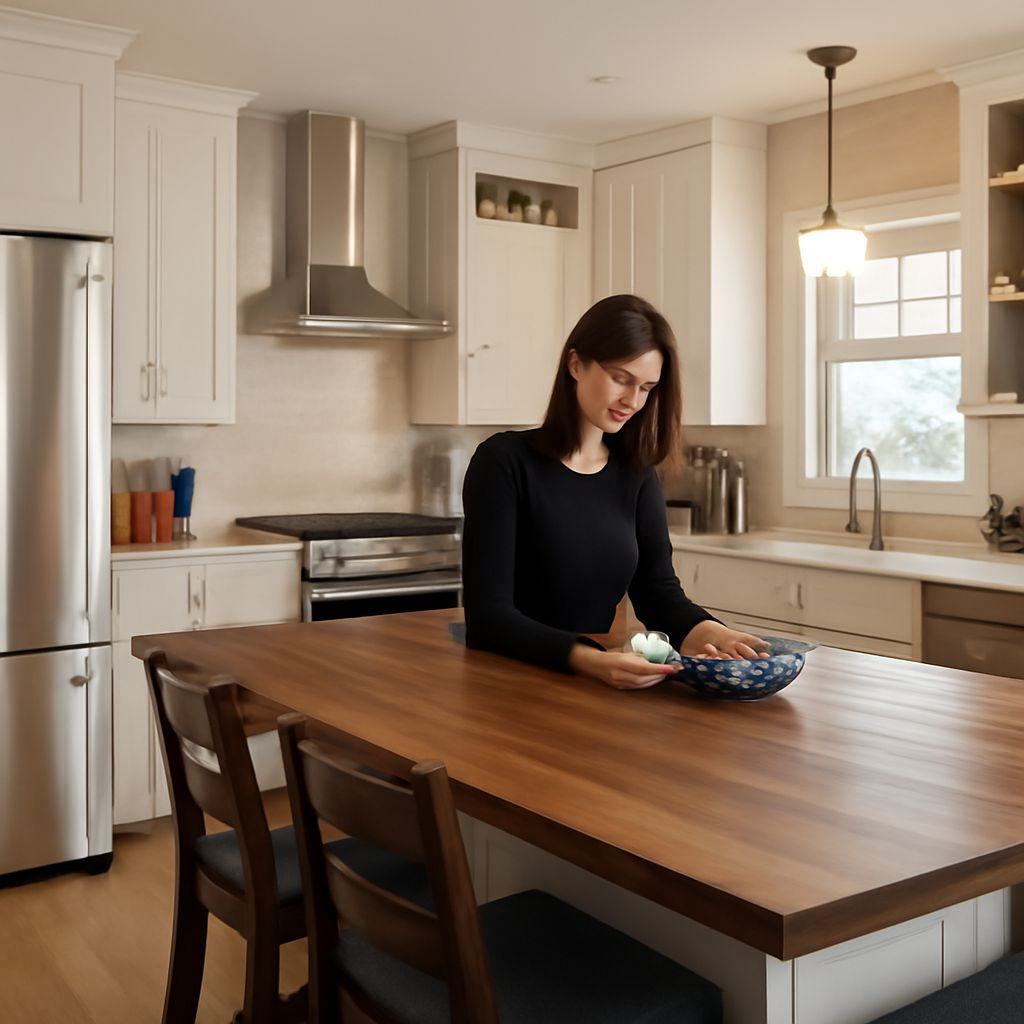
The best kitchen cabinets are the line that meets your project’s demands without wasting money on features you will not use. Judge every option by construction, finish, storage, customization, service, lead time, and total installed cost.
IKEA SEKTION, KraftMaid, Barker, and a local custom shop can all be sensible choices. Their quality and value depend on the specific line, specifications, installer, and project—not the brand name alone.
Best kitchen cabinets: what makes a line high quality?
High-quality cabinets should remain square, support daily use, and maintain their finish through years of cleaning and opening. Look beyond door style and inspect the cabinet components that carry the workload.
- Box material: Plywood is usually more moisture-tolerant and durable than particleboard, while high-density fiberboard can provide a stable, smooth surface. Particleboard is not automatically poor quality, but its thickness, edge sealing, and fastener strength matter.
- Joinery: Dovetail, doweled, glued, or reinforced joints generally provide stronger assembly than staples alone. Check how corners are connected and whether the cabinet stays square.
- Backs: A full back adds rigidity and simplifies installation. Thin backs set into grooves can also perform well when properly supported; loosely stapled backs are less reassuring.
- Shelves: Adjustable shelves should be thick enough for dishes and supported by secure, well-spaced pins. Edge banding protects exposed shelf edges from moisture.
- Drawers: Look for solid or engineered drawer boxes, dovetail or reinforced joints, a captured bottom, and a smooth full-extension glide.
- Hardware: Soft-close hinges and drawer slides improve daily use, but verify their load rating and whether replacement parts are readily available.
- Finish: Examine sample doors for even color, sealed edges, consistent sheen, and clean transitions around profiles. Ask how the finish handles heat, moisture, and routine cleaners.
These details define best-quality kitchen cabinets more reliably than a showroom label. A premium door on a weak box is not a premium cabinet.
How stock, semi-custom, and custom cabinets fit the project
Cabinet tiers mainly differ in size selection, modifications, lead time, and price. Use the same construction checklist at every tier.
- Stock: Standard widths and heights are mass-produced and usually offer the shortest lead times and lowest entry price. They work well for straight runs, rental upgrades, budget replacements, and layouts that accommodate fillers.
- Semi-custom: These lines offer more door styles, finishes, sizes, and interior options. Some allow altered depths, reduced widths, or specialized storage. They suit family kitchens where better organization justifies a moderate increase in cost.
- Custom: A shop builds cabinets around exact dimensions, unusual angles, furniture details, or highly specific storage needs. Custom work provides the greatest design flexibility, but drawings, finish samples, installation skill, and change-order controls become especially important.
Do not pay for custom sizing when standard cabinets solve the layout. Conversely, forcing stock cabinets into an irregular room can create expensive fillers, awkward access, and wasted storage. Compare the completed wall, not the price of one cabinet.
How to identify best-quality kitchen cabinets with a consistent inspection
Request a door, drawer, and cabinet sample before ordering. Open the drawer fully, remove a shelf, inspect the back, and look at unfinished areas when possible. Then score each line from one to five on the following criteria:
- Construction: Rate the box material, thickness, joinery, corner reinforcement, and back attachment.
- Storage hardware: Check shelf adjustment, drawer capacity, glide smoothness, hinge adjustment, and soft-close performance.
- Finish durability: Compare color consistency, edge sealing, coating coverage, and resistance to fingerprints or abrasion.
- Fit and customization: Record available widths, heights, depths, fillers, panels, toe kicks, modifications, and accessory choices.
- Installation readiness: Confirm mounting rails, finished ends, leveling provisions, filler requirements, and clear installation instructions.
This scorecard prevents a striking door style from overshadowing weak drawers or limited sizing. It also makes quotes from different tiers easier to compare. Ask whether the displayed sample represents the exact product line being quoted; one manufacturer may sell several lines with different materials and hardware.
Which top-rated kitchen cabinets fit your project? Compare IKEA, KraftMaid, Barker, and custom shops without ranking by name
Top-rated kitchen cabinets are not one universal category. Each option can be a strong fit under different conditions.
- IKEA SEKTION: A practical choice for budget-conscious replacement and modular layouts. Its standardized system can deliver efficient storage and broad accessory compatibility. Measure carefully, plan fillers and cover panels, and include assembly and installation in the budget.
- KraftMaid: Its semi-custom approach can suit a busy family kitchen needing more sizes, finishes, storage accessories, and dealer guidance than a stock system typically offers. Compare the exact construction specification, not just the KraftMaid name.
- Barker: Barker’s RTA and custom-order offerings can appeal to buyers who want online ordering, contemporary frameless styling, or more sizing flexibility. The buyer generally carries more responsibility for measuring, assembly, design review, and problem resolution.
- Custom cabinet shops: A reputable local shop is the strongest option for unusual architecture, integrated features, exact dimensions, or distinctive finishing. Evaluate its sample work, written drawings, references, installation process, and correction policy.
For each quote, compare the same cabinet material, drawer box, slide rating, finish, interior accessories, panels, fillers, delivery terms, and installation scope. A lower cabinet price may exclude the parts needed to make the kitchen look complete.
Kitchen cabinet manufacturer reviews and the best kitchen cabinets for the money
Use kitchen cabinet manufacturer reviews to identify recurring service patterns, but verify those reports against the line’s written warranty and your dealer’s process. Reviews are most useful when they discuss damaged shipments, finish consistency, missing parts, replacement timing, and warranty resolution.
Check service before placing the order
- Warranty: Confirm coverage length, exclusions, finish limitations, and whether labor, shipping, or installation damage is excluded.
- Dealer support: Ask who measures, reviews the plan, orders replacement parts, and handles defects. A capable dealer can be worth more than a small product discount.
- Lead time: Get a written estimate for production, shipping, inspection, and replacements. Add a buffer before demolition or countertop scheduling.
- Order accuracy: Confirm the process for approving drawings, door samples, modifications, and final cabinet quantities.
The best kitchen cabinets for the money are determined by total installed cost. Add cabinets, panels, fillers, hardware upgrades, accessories, delivery, assembly, installation, and likely replacement parts. Then weigh that total against expected durability and the value of better storage.
Match value to the project
- Budget replacement: Choose stock cabinets when standard sizes fit and the box, drawers, finish, and hardware meet your minimum score.
- Family kitchen: Spend more on full-extension drawers, durable finishes, adjustable storage, and dependable service rather than decorative upgrades alone.
- Design flexibility: Choose semi-custom or custom when unusual dimensions, deep drawers, appliance panels, or accessibility changes prevent an efficient stock layout.
- Long-term ownership: Prioritize repairable hardware, available replacement parts, moisture-resistant construction, strong finish coverage, and a dealer with a clear service process.
Choose the line with the highest score on your essential criteria after installation costs are included. That approach identifies genuine value without assuming the most expensive or most advertised cabinet is the best choice.