
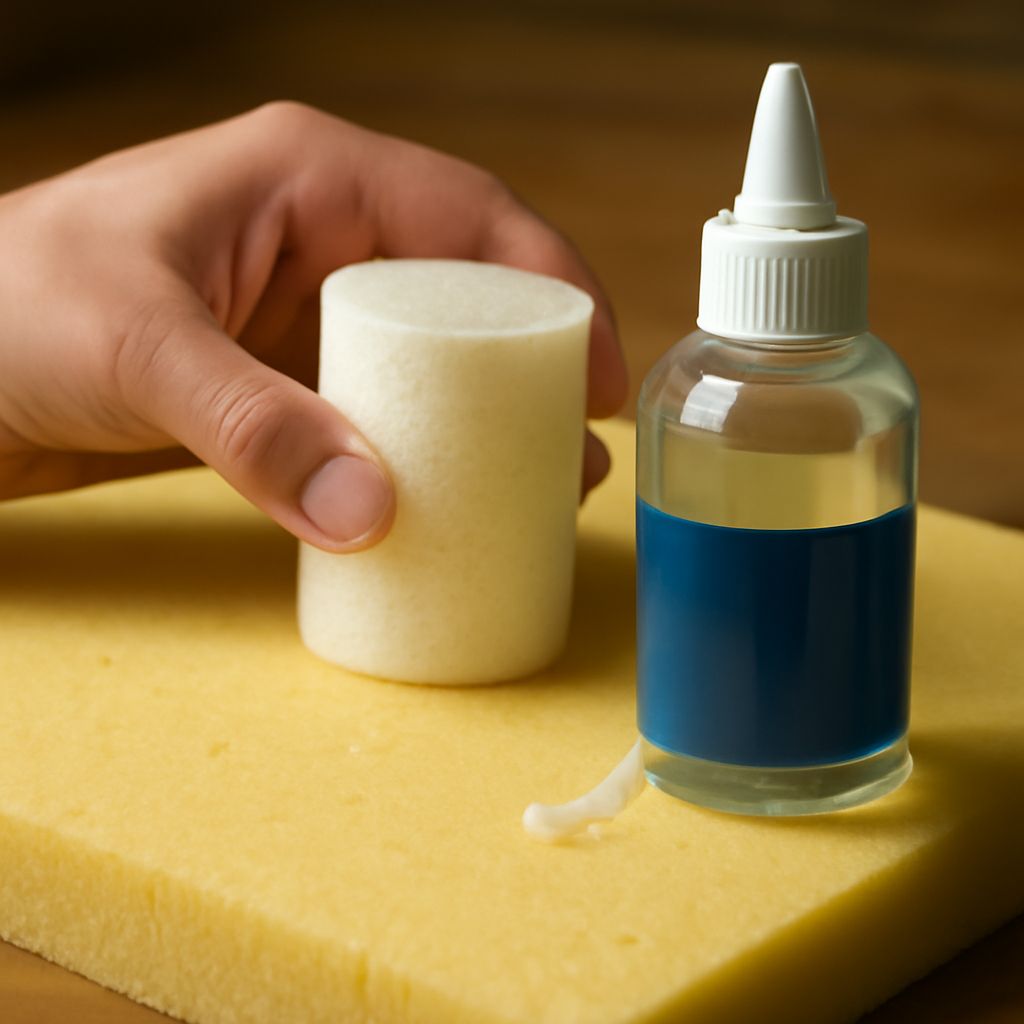
The best glue for styrofoam is a foam-safe adhesive that will not melt, pit, or weaken the foam. For most projects, that means a styrofoam glue made for craft use, a low-solvent construction adhesive, or a spray adhesive rated safe for foam. Choose the adhesive by the job first, then by finish, cure time, and bond strength.
If you are gluing styrofoam for models, decor, insulation, or repairs, the safest choice depends on how much load the bond must hold. Light craft pieces need a different glue for styrofoam than panel seams or large surface laminations. Matching the adhesive to the project prevents failed bonds and damaged foam.
Choose a Foam-Safe Glue
Styrofoam is sensitive to solvents. Many contact cements, solvent-heavy construction products, and some sprays can dissolve the surface before they bond. The label should clearly say foam-safe, safe for polystyrene, or list foam among the approved materials.
The most useful adhesive types for styrofoam are:
- Foam-safe craft glue for paper, card, lightweight foam shapes, and decorative assemblies. It dries slowly, gives time to adjust, and usually dries clear or nearly clear.
- Styrofoam glue formulated for foam projects. These are often water-based or low-solvent and work well where strong grab is not required immediately.
- Spray adhesive for broad, even coverage on sheets, scenery, posters, and laminated layers. Use only a foam-safe spray.
- Hot glue for quick tacking and small contact points. Use low-temp glue if possible, because high heat can deform foam.
- Epoxy for rigid, high-strength bonds on small areas, embeds, or repairs that need durability.
- Construction adhesive made for foam board or insulation panels, especially where the bond must hold weight or resist movement.
For most household and hobby work, the best glue for styrofoam is a foam-safe craft or specialty foam adhesive. For heavier jobs, use a foam-compatible construction adhesive or epoxy where extra strength matters.
Match the Glue to the Project
Craft and lightweight foam
For models, floral foam, school projects, ornaments, and light scenic work, choose a foam-safe craft glue or a thin layer of styrofoam glue. These products give you a longer open time, so you can align pieces before the bond sets.
Best use: paper to foam, foam to foam, lightweight trim, and detailed assemblies.
Why it works: it spreads easily, does not attack the foam, and usually leaves a cleaner finish than thicker construction products.
Finish: often clear or matte, with minimal visible squeeze-out if applied sparingly.
Repairs and structural bonds
When the joint must resist stress, use epoxy or a foam-safe construction adhesive. Epoxy is best for small, strong repairs, inserts, or points that carry weight. Construction adhesive is better for larger support areas, panel edges, and fixed installations.
Best use: broken foam sections, attachment points, base plates, shelving foam supports, or bonded layers that need stiffness.
Open time: epoxy may give several minutes to work; construction adhesive can vary from short grab to longer repositioning time.
Finish: epoxy can cure hard and visible. Construction adhesive may remain slightly flexible, which helps on mixed-material joints.
If the foam will flex, a slightly flexible adhesive often performs better than a brittle one.
Large-area coverage
For big sheets, insulation boards, display backers, and scenic surfaces, spray adhesive is often the easiest option. It gives fast, even coverage without heavy bead lines that can telegraph through thin foam.
Best use: full-sheet lamination, mounting foam to cardboard or wood, and covering wide flat areas.
Application note: use a light, even coat on both surfaces if the product directions call for it.
Finish: low-profile and neat when used correctly, but overspray can create mess and weak spots if coverage is uneven.
Hot glue belongs in this category only for small tack points, edge holds, or temporary positioning. It sets quickly, but it can melt the foam if applied too hot or in a heavy bead.
Prepare and Glue Styrofoam
Surface prep
Good preparation matters as much as adhesive choice. Start with clean, dry foam. Dust, oil, and loose crumbs reduce bond strength. Wipe the surface gently with a dry cloth or soft brush. If the foam is glossy or sealed, lightly roughen it with fine sandpaper only if the material allows it.
Check the mate surface too. Cardboard, wood, fabric, and some plastics may need dust removal or a quick test fit. If you are bonding styrofoam to paint, make sure the paint is fully cured and firmly attached.
Always test a small hidden spot first when the substrate is unfamiliar. That is the fastest solvent compatibility check for styrofoam glue, spray adhesive, or construction products.
Application, pressure, and cure time
Apply the smallest effective amount. Too much adhesive can soak into porous foam, weaken the joint, or create long drying times. A thin, even layer is usually better than a thick bead.
- Foam-safe craft glue: spread lightly, align within the open time, and hold with gentle pressure until it grips.
- Spray adhesive: hold the can at the recommended distance and build coverage in light passes. Join the pieces while tacky, not wet.
- Hot glue: use small dots or short lines, then press immediately. Work in sections because it sets fast.
- Epoxy: mix accurately, apply only to the bond area, and keep parts fixed until cured.
- Construction adhesive: use beads or strips according to the package, then support the pieces so they do not slide.
Pressure should be firm, not crushing. Styrofoam dents easily, so use flat boards, books, painter’s tape, or light clamps with a protective buffer. The goal is contact, not compression.
Cure time varies widely. Light craft glue may need several hours. Spray adhesive may grab quickly but still need time to reach full strength. Epoxy and construction adhesive often need overnight curing, and sometimes longer for a full load-bearing bond.
Do not move the piece early. A bond that looks set on the surface may still be weak inside.
Check Compatibility and Fix Failed Bonds
If the foam softens, shrinks, or feels sticky after application, the adhesive is likely solvent-heavy or too hot. Stop using it on that project. Switch to a product labeled foam-safe or polystyrene-safe.
If the bond fails, the usual causes are easy to spot:
- Poor surface prep: dust or debris blocked contact.
- Too much adhesive: the bond stayed wet too long or soaked unevenly.
- Wrong adhesive type: the product was not meant for foam.
- Not enough pressure: the parts never made full contact.
- Moved too soon: the joint shifted before cure.
To fix it, remove loose adhesive, let the foam dry fully, and re-bond with a smaller amount of the right product. For warped or melted foam, trim away damaged material before rejoining. If the project needs a clean finish, scrape cured squeeze-out carefully rather than smearing it into the surface.
For the most reliable results, pair the job with the adhesive type: craft glue for light work, spray adhesive for broad coverage, hot glue for quick tacking, epoxy for small strong repairs, and foam-safe construction adhesive for heavier assemblies.