
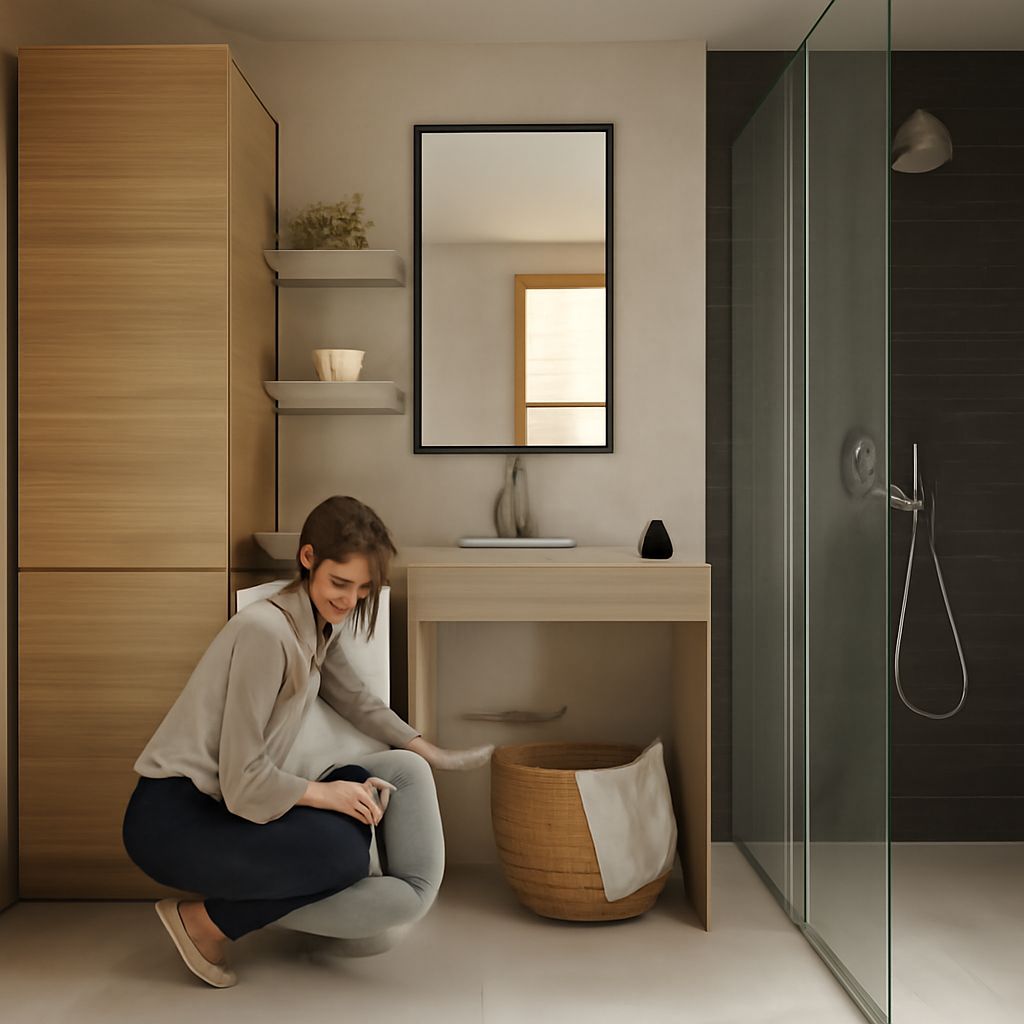
A bathroom laundry room combo is a single room that serves both purposes: bathing and laundry. In practice, that means a toilet, sink, shower or tub, and washer, sometimes with a dryer, share one enclosed space. People also call it a laundry room bathroom combo, bathroom laundry combo, or laundry bathroom combo when the same room handles both routines.
This setup is common in smaller homes, apartments, and older houses where floor space is limited. It can work well if the room is planned for moisture, traffic, and storage. The key is not whether the room combines functions, but whether it keeps each task comfortable and safe.
Bathroom Laundry Room Combo: Direct Answer
A bathroom laundry room combo is exactly what it sounds like: a bathroom that also contains laundry appliances. The bathroom laundry room is usually a shared utility space, not two separate rooms placed side by side. One layout may place the washer and dryer behind doors or under a counter, while another keeps them fully visible in the room.
The main advantage is efficiency. You save square footage, reduce the number of separate rooms, and keep laundry tasks near plumbing and drainage. That makes the bathroom laundry room combo useful in homes where adding a dedicated laundry room would be difficult.
The main tradeoff is coordination. Bathrooms need privacy, airflow, and clean surfaces. Laundry needs machine access, lint management, and room for sorting or folding. A good bathroom laundry combo balances both without making either function feel cramped.
How the Layout Varies
There is no single standard layout for a laundry room bathroom combo. The arrangement depends on the home’s size, plumbing, and how the room is used day to day.
Common layout types
- Side-by-side arrangement: The washer and dryer sit along one wall, with the toilet, sink, and bathing area on another.
- Stacked appliance layout: A stacked washer-dryer pair saves floor space and is common in narrow rooms.
- Hidden appliance layout: Machines sit behind cabinet doors or a closet-style enclosure for a cleaner look.
- Utility-first layout: The room is designed primarily as a laundry zone, with bathroom fixtures added to fit the available footprint.
In a compact bathroom laundry room, the washer may sit under a countertop with a sink nearby. That creates a practical folding surface and keeps supplies within reach. In larger spaces, the bathing area may be separated visually with a partition, half wall, or door so the room feels less crowded.
Ventilation matters in every version. Laundry adds heat and moisture, and bathrooms already produce humidity. Without good airflow, the room can feel damp, and fabrics may take longer to dry. A fan, operable window, or dryer venting system helps the space perform better.
What changes between homes
An older house may use a bathroom laundry room combo because the original floor plan had no separate utility room. In a newer home, the same setup might be a design choice for efficiency. A small apartment might combine the rooms to fit essentials into one footprint, while a family home may use the combo as a secondary wash area near bedrooms.
The style also changes the experience. A laundry bathroom combo with closed cabinetry feels more orderly. A room with appliances in full view feels more utilitarian. Neither is wrong, but each supports a different priority.
What It’s Like to Use Every Day
Daily use is where the differences become obvious. A bathroom laundry room combo can be very convenient, but only if the room is easy to share.
For one person, the room may work smoothly. For a household with several people, timing becomes more important. Someone may need the shower while laundry is running, or may want the room clear before guests arrive. That means the layout should make it easy to move between tasks without blocking the sink, door, or appliance doors.
Storage is one of the biggest practical needs. Laundry detergent, stain remover, baskets, toilet paper, and bath items all need homes. If everything is left on counters, the room quickly feels cluttered. Built-in shelves, a tall cabinet, or recessed storage can make a laundry bathroom combo easier to keep tidy.
Noise is another factor. Washer spin cycles and dryer operation can be noticeable in a shared bathroom. If the room sits near sleeping areas, that can matter. Quieter machines or a schedule that avoids late-night laundry can help.
Cleaning also needs more attention than in a single-purpose room. Lint, soap residue, moisture, and everyday bathroom messes collect in the same place. Wiping surfaces regularly and keeping the floor clear reduces buildup. In a well-used bathroom laundry room, small habits make a large difference.
There are a few signs the setup is working well:
- The washer and dryer doors open without hitting fixtures.
- There is enough clearance to sort or move laundry.
- Bathroom traffic does not interfere with washing cycles.
- Moisture does not linger after showering or drying clothes.
- Supplies are stored where both routines can reach them easily.
When those basics are missing, the room may still function, but it feels awkward. That is usually the point where a bathroom laundry combo needs better storage, stronger ventilation, or a slightly different appliance layout.
How to Recognize a Good Combo Layout
A good bathroom laundry room is easy to use, easy to clean, and not constantly in the way. The best layouts usually share a few traits.
- Clear separation of zones: Bathing, washing, and storage areas are distinct even when they share the same room.
- Safe moisture control: The room can handle steam, splashes, and laundry humidity without feeling damp for long periods.
- Simple access: Appliance doors, cabinets, and bathroom fixtures can all open fully.
- Enough storage: There is a place for detergent, towels, hampers, and bathroom essentials.
- Easy movement: People can walk through the room without squeezing past open machines or laundry baskets.
If you are comparing a bathroom laundry room combo with a separate laundry room, the combo usually wins on space savings. A separate room usually wins on convenience and privacy. If you are deciding whether a bathroom laundry combo will work in your home, measure the appliance footprint first, then check clearance for doors, circulation, and storage.
The best versions are the ones that feel deliberate. They do not look like a bathroom with appliances crammed in at the last minute. They look like a room designed to handle both daily washing and daily laundry without getting in the way of either.