
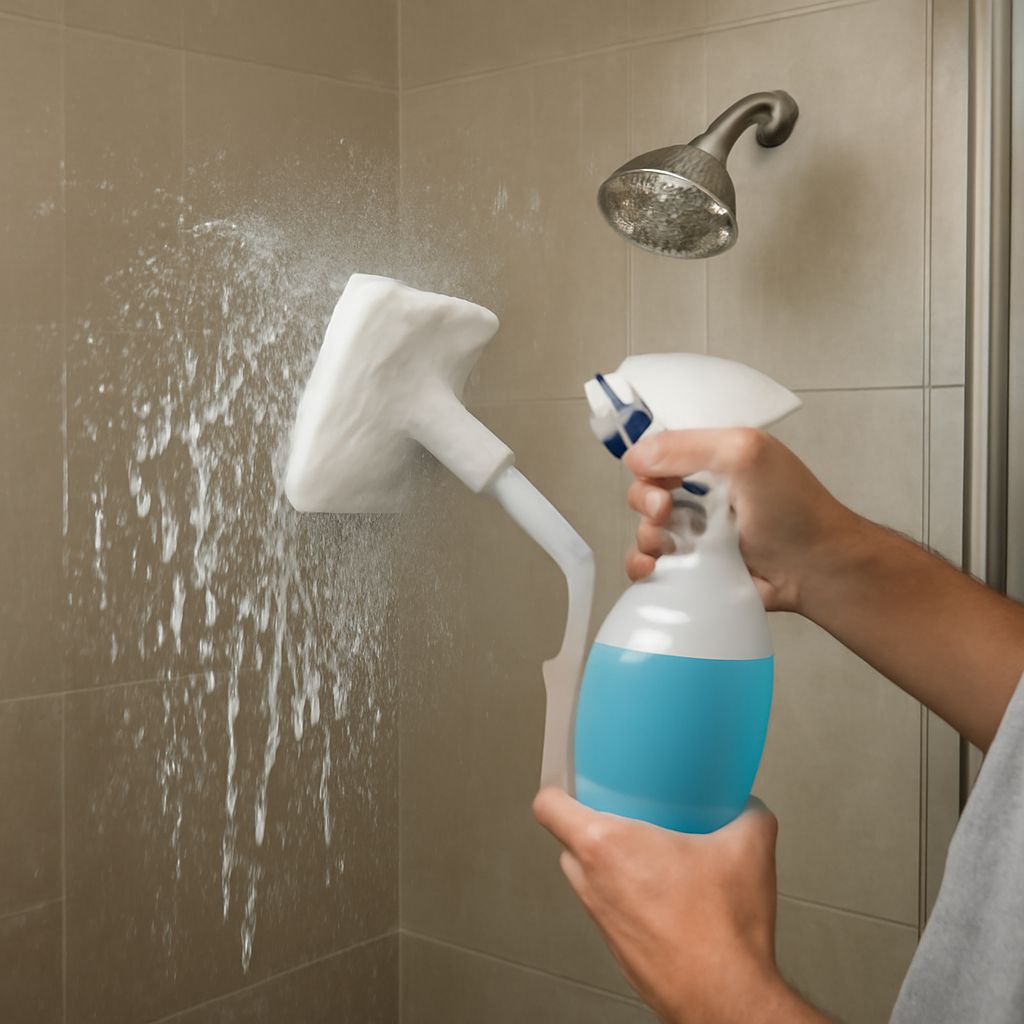
Automatic shower cleaners are designed to slow down soap scum, mildew buildup, and hard-water residue between full cleanings. The two main formats are a spray-device system that mists cleaner on a schedule and a daily-treatment system you apply by hand after showering. Both can reduce scrubbing, but neither replaces occasional manual cleaning.
The best choice depends on your shower surface, how much buildup you usually get, and how much setup you want to manage. Used correctly, an auto shower cleaner can keep a shower looking presentable longer and make deep cleaning less frequent.
How Automatic Shower Cleaners Work
An automatic shower cleaner works by leaving a thin cleaning layer on wet surfaces or by spraying a cleaning solution at set intervals. That coating helps break down residue before it hardens. The goal is maintenance, not restoration.
Spray-device systems
These are the closest thing to a true shower cleaner automatic system. A battery-powered or plugged-in unit mounts in the shower and sprays cleaner on a timer. Many users set it to mist after the last shower of the day, when the surfaces are already wet and residue is fresh.
These systems are useful for busy households because they run with little effort once installed. They work best when the shower is already reasonably clean and the spray can reach walls, doors, and fixtures evenly.
Daily-treatment systems
Daily-treatment products are usually spray bottles or foaming cleaners you apply by hand after showering. They are not fully hands-free, but they still fit the automatic shower cleaner idea because they reduce the need for weekly scrubbing.
This approach is cheaper and simpler. It also gives you more control over where the cleaner goes, which matters in showers with glass panels, textured tile, or sensitive hardware.
Choose and Set Up a System
Start by checking what your shower is made of. Most systems are compatible with tile, porcelain, fiberglass, acrylic, and glass doors, but the solution matters as much as the device. Always confirm that the cleaner is safe for grout, natural stone, chrome, nickel, and any specialty coating on glass or stone.
Set-up for a spray device usually includes mounting the unit, installing batteries or plugging it in, and filling the reservoir with the manufacturer’s solution or an approved refill. Keep the nozzle aimed so it can reach the main wet zones. If the spray misses corners, soap scum will still build up there.
For a daily-treatment system, choose a bottle or spray that is meant for shower maintenance, not just general bathroom cleaning. Apply it to clean, wet surfaces after each use, then let it air-dry. The product should not need rinsing unless the label says otherwise.
- Best for low effort: spray-device systems
- Best for flexibility: daily-treatment sprays
- Best for delicate surfaces: products matched to the exact surface type
Refills and solution choices matter. Use only the liquid recommended by the maker if the system has a reservoir. If you want to switch products, check whether the unit can handle thicker formulas, vinegar-based blends, or foaming cleaners. Some pumps clog easily.
Use It in a Real Cleaning Routine
A realistic routine uses the automatic cleaner between deeper cleanings. After showering, let the water run off for a moment, then let the cleaner work on damp surfaces. If you use a spray device, set it to run at a time when no one is showering. If you use a manual daily spray, apply it right after the last shower of the day.
Even with regular use, plan a manual reset every one to four weeks depending on water hardness and household traffic. That reset should include wiping glass, scrubbing corners, cleaning the drain area, and removing buildup around faucets and tracks. A shower cleaner automatic routine lowers the amount of work, but it does not erase grime that has already bonded to the surface.
Success looks like lighter residue, less odor, and fewer visible spots on glass and tile. If streaks, film, or pink mildew still appear quickly, increase cleaning frequency or use a stronger compatible product.
What They Clean Well and What They Don’t
Automatic shower cleaners are good at controlling everyday soap residue, fresh water spots, and light mildew growth. They are less effective on old limescale, thick soap scum, stained grout, and mineral buildup around fixtures. Those problems usually need manual scrubbing or a targeted descaler.
They also work best on smooth, nonporous surfaces. Textured grout lines, deep corners, and shower door tracks often trap residue that a spray cannot fully reach. If your shower has those features, expect the system to reduce maintenance rather than eliminate it.
Use an auto shower cleaner as part of a routine, not as a substitute for it. The right setup keeps the shower cleaner between deep cleans, saves time, and makes the hard work less frequent.