
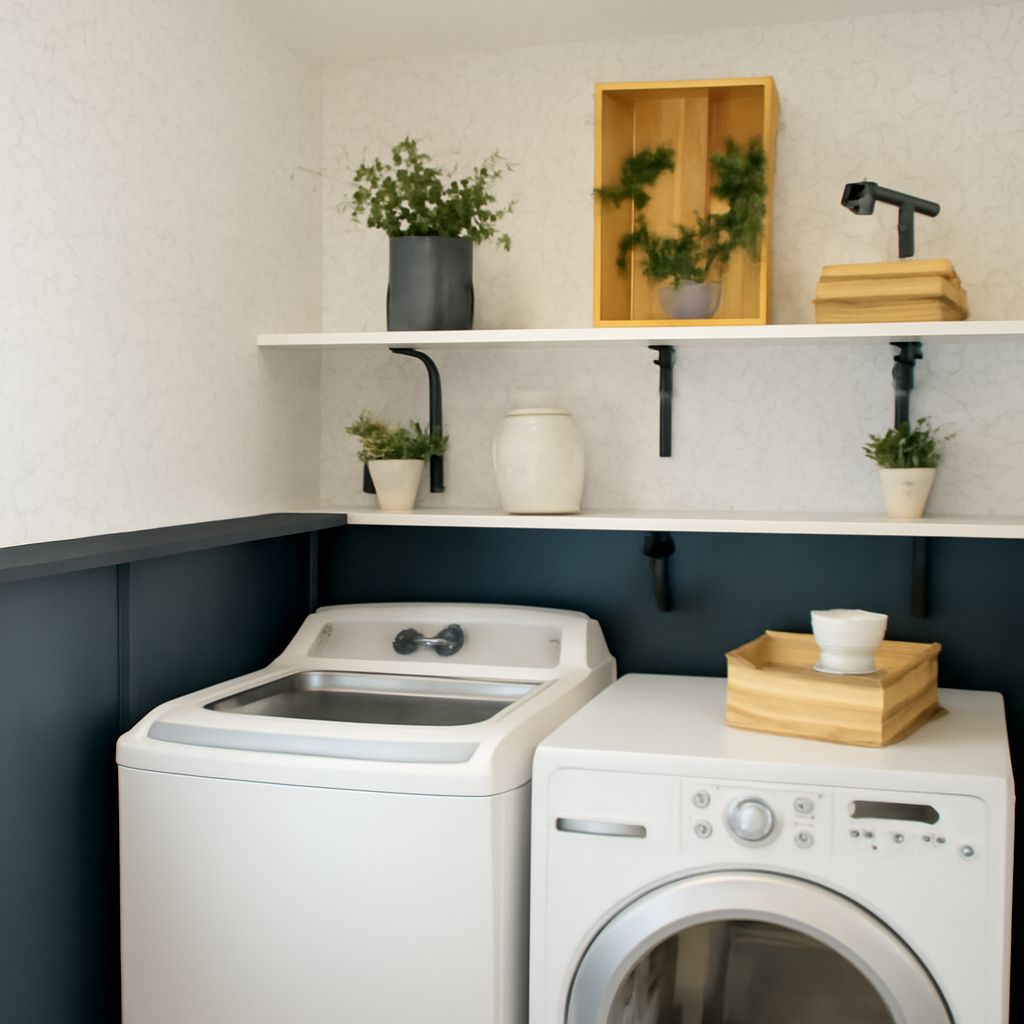
Small laundry room ideas work best when they improve three things at once: storage, folding, and flow. The goal is not to cram in more stuff. It is to make washing, sorting, drying, and putting clothes away easier in a tight footprint.
If your laundry area feels crowded, start by clearing the floor, grouping supplies, and assigning one job to each surface. Small changes can make a cramped room feel calmer and much faster to use.
What to Know Before You Start
Before you change anything, measure the room, the appliance footprint, and the space you need to stand, bend, and open doors. A narrow laundry room often works better when every inch has a purpose. That means fewer loose items, fewer open piles, and fewer “temporary” baskets that never move out.
Think through your routine first. Do you sort clothes in the room, fold there, hang delicate items there, or just move laundry through quickly? The best small laundry room ideas match the way your household actually handles wash day. A room used for sorting needs different storage than one used mostly for folding and detergent refills.
Also decide what should stay in the room and what should leave. Keep only the supplies you use often: detergent, stain remover, dryer sheets, clothespins, and a small stain-treatment kit. Move overflow supplies elsewhere if they are crowding the work area.
Practical Small Laundry Room Ideas
Start with vertical storage. Wall-mounted shelves, tall cabinets, and slim racks make use of space that usually goes unused. Place the most-used items between waist and eye level so you can grab them without bending or reaching too far.
Add a folding surface if you have room for one. A counter over front-load machines is a popular choice because it creates a flat zone for folding towels and stacking clean clothes. If you have top-load machines, a fold-down shelf or a narrow wall-mounted ledge can give you a similar surface without blocking access.
Use baskets or bins to separate the laundry flow. One basket for darks, one for lights, and one for delicates keeps sorting fast. Clear labels help everyone in the household follow the system. If you prefer a simpler setup, use just two bins: “wash now” and “needs treatment.”
Make the room easier to clean by limiting clutter on the floor. Choose wall hooks for reusable bags, a slim hamper, or a hanging mesh bag for small items like socks and clothespins. Open floor space makes sweeping and mopping much simpler.
Good lighting matters more than many people expect. Bright, even light helps you spot stains, match socks, and see whether shelves are dusty. If the room feels dim, add a stronger overhead bulb or a task light above the folding area.
DIY Updates That Make a Big Difference
Simple DIY updates can improve a laundry room without a full remodel. A fresh coat of light paint can make the room feel larger and easier to clean visually. Light colors reflect more light and reduce the boxed-in feel that small rooms often have.
Install peel-and-stick wall bins, hooks, or simple rail systems if you need flexible storage. These are useful for lint rollers, spray bottles, and reusable cleaning cloths. Keep them within easy reach but away from machine vibration and splash zones.
Build a basic countertop from a cut-to-fit board or a ready-made panel if your room needs a folding surface. Make sure the finish can handle moisture and regular wiping. You want a surface that supports routine use, not one that swells or stains quickly.
DIY label systems also help. Mark baskets, jars, and shelves with clear names so supplies return to the right spot. This is especially useful for shared households, where one person may sort, another may wash, and another may fold later.
If you want the room to feel calmer, keep the visible palette simple. Matching baskets, consistent containers, and a small number of finishes reduce visual noise. That does not mean everything has to match perfectly. It just means the room should feel organized at a glance.
Laundry Room Shelf Ideas That Save Space
Shelving is one of the easiest ways to improve a small laundry room. Open shelves work well when you want fast access to supplies. Closed shelves or cabinets work better when you want to hide visual clutter and protect items from dust.
Use the top shelf for backup supplies, extra paper goods, or items you do not need every week. Keep everyday detergent and stain tools on a lower shelf so they are easier to reach. Group similar items together so you can see what needs to be refilled.
Shallow shelves are often better than deep ones in a compact room. Deep shelves invite stacking and hidden duplicates. Shallow shelves keep bottles and boxes visible, which helps you avoid buying things you already have.
If you have awkward wall space, try a narrow shelf above the door or beside a machine. Small gaps can hold folded cloths, a spare hamper, or a basket of laundry clips. Even a few inches of storage can help when the rest of the room is tight.
For a clean look, combine shelves with matching containers. Clear bins can work well for dryer sheets, stain sticks, and cleaning rags, while opaque baskets can hide extra supplies and random odds and ends. The key is consistency, not perfection.
Common Layouts and Decorating Approaches
In a galley-style room, use one wall for machines and the opposite wall for storage. Keep the center path clear. This layout works best when the folding area is slim and the storage is vertical.
In a closet-style laundry nook, focus on stackable storage and compact tools. A hook rail, a narrow shelf, and one pull-out basket can cover a lot of needs without making the space feel crowded. Choose containers that can be removed easily when you need access to the machines.
In a multipurpose room, separate laundry items from everything else as much as possible. Even a small boundary helps. A dedicated shelf, labeled basket, or closed cabinet can keep cleaning supplies from mixing with pet items, sports gear, or general household clutter.
Decorating should support function. A calm wall color, a durable rug, and one or two tidy containers are usually enough. Avoid adding decorative pieces that collect dust or block access. In a small laundry room, useful design is the right kind of style.
If you want a wider home routine to follow, use this simple path: first declutter, then assign storage, then add folding space, and finally refine the labels and containers. That order prevents overbuying and keeps the room usable while you improve it.
Mistakes to Avoid in a Small Laundry Room Makeover
Do not start by buying organizers before you know what the room actually needs. Measure first, sort supplies second, and shop last. Otherwise, you may end up with bins that do not fit or shelves that block movement.
Do not overload the room with open storage. Too many visible bottles and baskets can make a small space feel even smaller. Keep some items hidden so the room stays easy to scan and easier to clean.
Do not forget the workflow. A room can look tidy but still feel frustrating if you have to carry laundry across the room several times. Place sorting, washing, folding, and storage zones in a practical order.
Do not block access to appliance doors, vent areas, or utility points. Leave enough clearance to load, unload, and clean around the machines. A beautiful setup is not useful if it makes routine tasks harder.
Do not ignore maintenance. Shelves gather lint, baskets collect stray socks, and bottles leak over time. A quick weekly reset keeps a small laundry room from sliding back into clutter.
For more help, use related articles in this order: start with decluttering and basket systems, then move to folding station ideas, then look at labels and shelf organization, and finally compare room-specific layouts for closets, alcoves, or shared utility spaces. That sequence helps you build a laundry area that stays functional, not just neat for one day.