
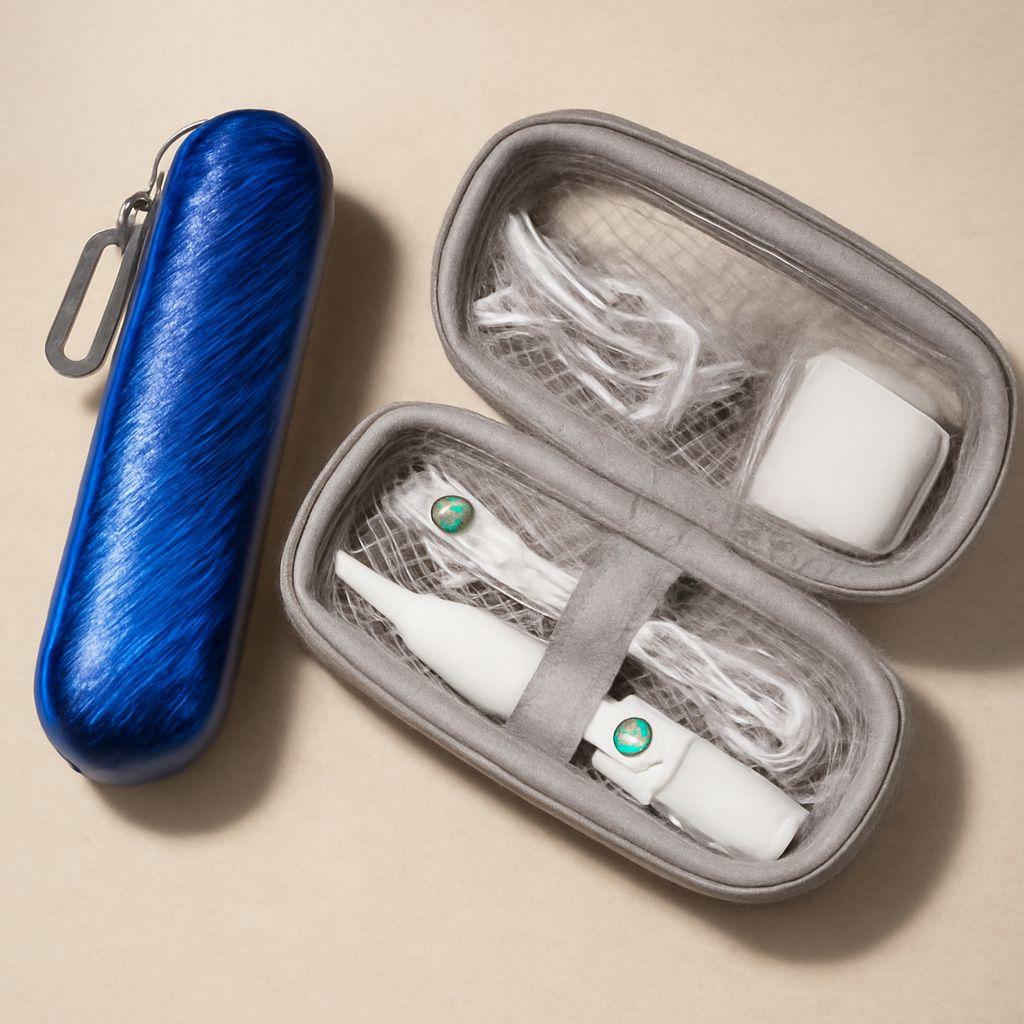
Keep your toothbrush and its heads together, dry, and easy to find when you travel. A travel case for an electric toothbrush gives each piece a place, so the handle doesn’t have to play hide-and-seek among your socks.
Choose an electric toothbrush travel case that fits your brush, heads, and trip.
Check the Fit First
Start with the model name or number on your handle. Compare it with the case maker’s compatibility list. A model-specific listing helps confirm the fit.
If the listing provides dimensions, measure the handle’s length and widest point, including any raised button or base. Check whether the case expects the brush head to be removed. An electric toothbrush travel case should close without pressing the bristles against the lid or forcing the latch.
A travel holder for an electric brush may have a molded slot or a more open interior. A molded slot keeps a matching handle still; a roomy compartment can accommodate different shapes. With either style, look for enough separation that a loose head won’t rub against the handle during a bumpy ride.
Make Room for the Heads
For a powered toothbrush carrying case, count the heads you intend to bring. One person on a short trip may need one; a longer trip may call for a spare. Check the number and size of the slots, especially if your heads have protective caps.
An electric toothbrush travel case with separate compartments makes it easier to keep heads apart and see what is packed. If you share the case, check that each head has a secure position and can be identified at a glance. A small label on the outside can save a sleepy morning debate.
For an electric brush, a travel box should also fit the bag you actually carry. Measure the packed case against the space in your toiletry bag. A case that’s just right on the bathroom counter can become a small suitcase of its own inside a narrow pouch.
Plan for Drying
After brushing, rinse the head according to your brush maker’s directions and give the parts time to air-dry before packing when possible. Philips’ instructions for certain models specifically call for a dry head and handle before storage in the case.
A ventilated travel case for a powered toothbrush can allow some airflow, but drying the brush before closing it still helps. If you must pack soon after use, open the case when you arrive and let the head and interior dry. A little planning keeps the next opening from feeling like a tiny steam-room reveal.
Choose an electric brush carrying case with surfaces you can reach easily for cleaning. Removable inserts and smooth corners are easier to wipe than narrow grooves packed with dried toothpaste. Check the care instructions before buying, especially if the case has charging contacts.
Decide Whether Charging Earns Its Space
Some cases protect the brush; others also charge compatible handles. Compare your brush’s expected battery life with the length of your trip. For a weekend away, charging at home may leave the luggage lighter. For a longer stay, a compatible charging toothbrush case may save you from packing a separate stand.
Check the exact model, cable, and power adapter required. Philips describes a charging case for specific handles; another handle may need different equipment. Keep the charging parts dry and follow their instructions.
An electric toothbrush travel case with charging adds a cable and contacts to organize. Make sure those pieces have a place in your bag and that the case can sit near an outlet where you expect to use it.
Unpack and Clean
When you get home, empty your travel container for an electric toothbrush and remove toothpaste residue. For a plain, non-electronic shell, follow its care instructions for washing or wiping, then let it dry completely. For a charging case, unplug it and follow the manufacturer’s cleaning directions for its electrical parts; keep water away from the contacts and let cleaned surfaces dry before reconnecting.
A clean case for a rechargeable toothbrush is ready for the next trip when the brush, heads, and interior are dry. Before buying, measure your handle and compare its model number and head count with the case’s specifications.