
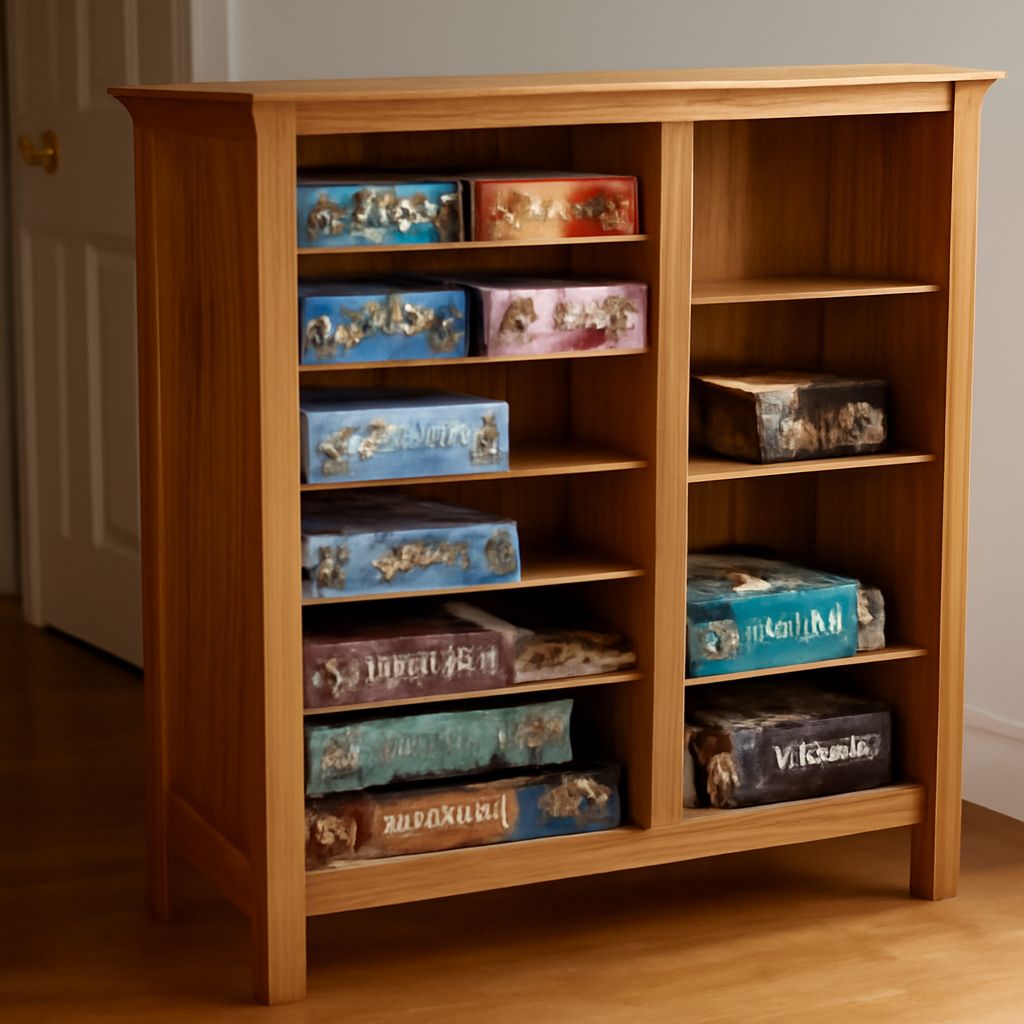
The right board game shelf starts with your collection, not a standard bookcase. Measure the boxes you own, estimate their combined weight, and choose storage around how you browse and play.
Most collections need a mix of accessible shelves, protected storage, and spare capacity. A useful layout keeps frequently played games visible while preventing heavy stacks, shifting components, dust, and crushed box corners.
Board Game Shelf Dimensions: Measure Before You Buy
Record the largest box and the common box size separately. Measure each box’s height, width, and depth, including lids or protruding inserts. Square boxes often need more depth than ordinary bookshelves provide.
- Measure clearance: Add about 1 inch above the tallest common box. Allow more space for unusually large boxes and easy removal.
- Record weight: Weigh a typical stack, or estimate each shelf’s total load from the heaviest games. Include expansions, deluxe components, and storage trays.
- Inspect condition: Note crushed corners, loose lids, bowed boards, or boxes that already show strain. Damaged boxes need easier access and less pressure.
- Mark your browsing style: Decide whether you prefer titles visible in vertical rows or games stored flat for maximum box stability.
Measure the actual interior opening, not the unit’s outside dimensions. A 12-inch cube may not accept a deep square box once the back panel and frame reduce usable space.
Board Game Storage Shelves: Depth, Span, and Load
Choose shelf depth from the deepest box, then leave a small front margin for fingers. Around 13 to 16 inches of usable depth suits many collections, but oversized campaign boxes may require more. Never size shelves from standard books while ignoring deep square boxes and their combined load.
Shelf span matters as much as depth. Long, heavily loaded shelves can sag, especially with particleboard. Prefer shorter spans, a center divider, thicker shelves, or a stated load rating that exceeds your measured weight. Check the rating for each shelf, not merely the entire unit.
A rear back stop keeps boxes from sliding into gaps or touching a wall. It should prevent movement without blocking labels. Leave room for ventilation, and avoid pushing boxes tightly against damp or cold exterior walls.
Board Game Shelving: Compare Formats by Access and Dust
A KALLAX-style cube and a BILLY-style bookcase solve different problems. Compare each format by box fit, adjustable spacing, load support, browsing speed, and dust protection.
- Cube shelving: Offers tidy, stable compartments for square boxes and natural grouping. Fixed cube dimensions waste space around tall or narrow games.
- Bookcases: Make titles easy to scan and often use space efficiently. Check depth, shelf span, and load capacity before filling them with dense boxes.
- Adjustable shelving: Gives the best fit for mixed box heights, expansions, and accessories. Set shelves close enough to prevent unstable leaning.
- Modular units: Let you add sections as the collection grows. Secure tall modules together and keep heavy games low.
- Wall shelving: Preserves floor space and displays favorites well. Use proper anchors, confirm wall strength, and avoid placing heavy campaign boxes overhead.
- Cabinets: Doors reduce dust, sunlight, and accidental knocks. They slow browsing slightly, so reserve them for delicate, seasonal, or less frequently played games.
Arrange Boxes, Expansions, and Small Components
Use zones rather than forcing one rigid taxonomy. Put frequently played games at eye or waist level, with family and party games nearby if they are common choices. Keep campaign games together, ideally with enough depth for journals, organizers, and scenario books.
- Small boxes: Use bins, shallow cubes, or labeled magazine files so they do not disappear behind larger games.
- Expansions: Store them with the base game when possible. If they are in separate boxes, label both boxes with the matching title.
- Accessories: Group card sleeves, upgraded tokens, dice, playmats, and inserts in a nearby labeled container.
- Overflow: Keep a clearly marked zone for games awaiting rotation, lending, donation, or a future shelf.
Store boxes horizontally when lids are loose, components shift easily, or the box is heavily packed. Vertical storage improves browsing, but use snug bookends or dividers and secure loose contents inside the box. Avoid tall, leaning stacks that put pressure on corners.
Plan Access, Protection, and Collection Growth
Place the games you choose most often between shoulder and knee height. Put heavy boxes on lower shelves, and reserve the highest shelves for light, occasional, or empty storage containers. A cabinet or doors help in dusty rooms, while open shelves make browsing faster.
Leave roughly 15 to 20 percent spare shelf capacity. That space accommodates new releases, larger expansions, and easier removal without scraping neighboring boxes. Label shelves by zone or play pattern, such as “frequent,” “campaign,” “party,” or “overflow,” rather than relying only on alphabetical order.
Review the layout when a shelf reaches about 80 percent full. Reweigh crowded sections, check for sag, move dense games lower, and adjust shelf spacing before adding another unit. This keeps the collection accessible while protecting boxes as it grows.