
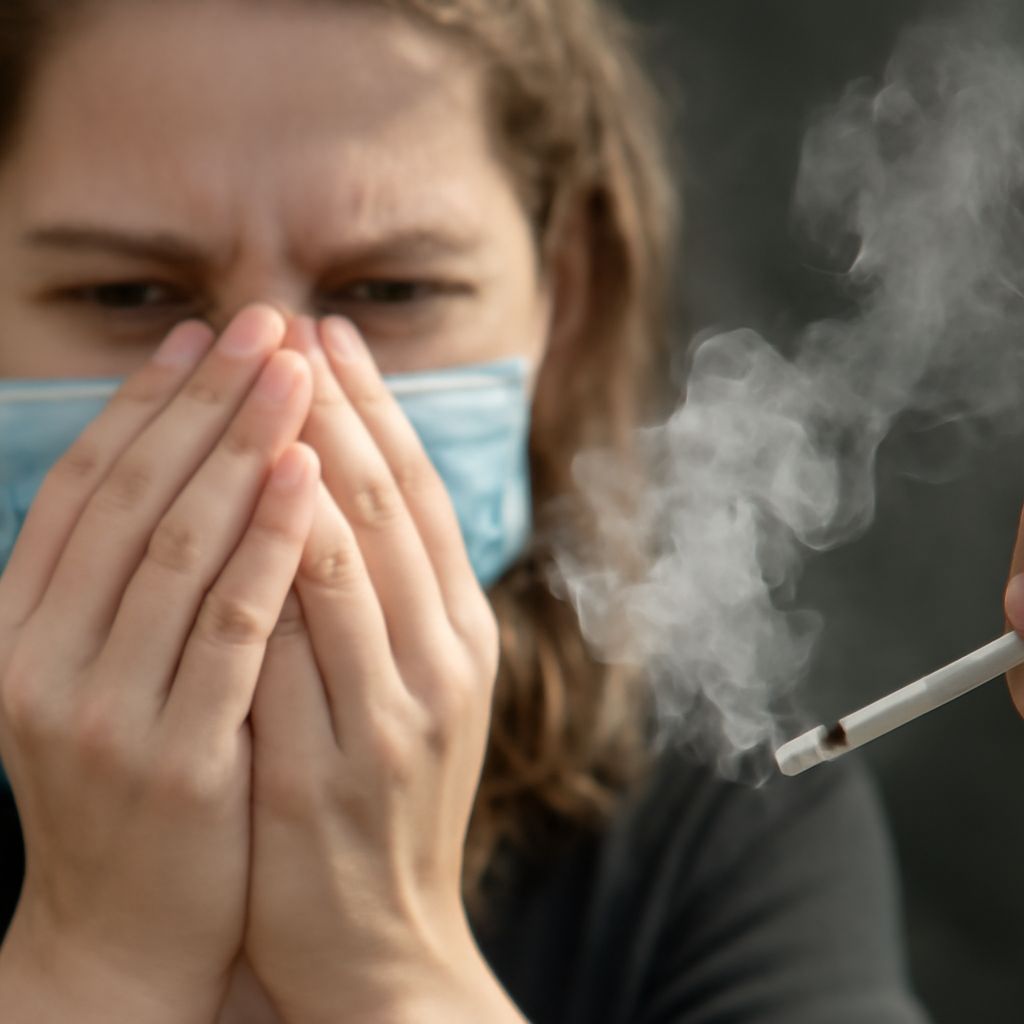
To learn how to remove cigarette smell from a house, stop smoke entry first, then clean residue from air paths, dust, walls, ceilings, cabinets, textiles, floors, and other porous materials. Odor returns when only the air is treated.
Work from dry removal to wet cleaning. Ventilate during the process, and wear gloves and eye protection when handling concentrated cleaners or heavy residue.
How to Remove Cigarette Smell from a House: Stop the Source and Map Residue
- Stop smoking indoors and remove ashtrays, cigarette waste, and other odor sources. If smoke enters from another area, close the route or improve the separation.
- Open windows and use fans to move stale air outdoors. Do not simply blow contaminated air into another room.
- Walk through each room and note smoke-stained ceilings, walls, cabinet interiors, window coverings, vents, floors, and upholstered furniture.
- Remove loose residue before washing. HEPA-vacuum carpets, upholstery, curtains, blinds, vents, baseboards, and other dusty surfaces. Vacuum slowly, and wash or replace the vacuum filter afterward.
Work one room at a time, starting with the least contaminated space. Keep cleaned items away from rooms that still smell strongly.
Get Rid of Cigarette Smell in a House by Washing Textiles and Extracting Carpet and Upholstery
Wash every washable textile that has absorbed smoke, including curtains, bedding, cushion covers, washable rugs, towels, and removable furniture covers. Follow the care label, use the warmest safe cycle, and dry items completely. If fabric still smells after drying, wash it again rather than storing it indoors.
For carpet and upholstery, vacuum first, then use a suitable hot-water extractor or professional extraction service. Avoid soaking materials that cannot dry quickly. Extracted surfaces should dry fully with ventilation and fans; trapped moisture can create a separate odor problem.
- Clean washable blinds and fabric shades according to their materials.
- Empty and wipe textile storage areas before returning clean items.
- Discard foam inserts, heavily contaminated padding, or fabric that remains odorous after repeated cleaning.
Degrease Painted Walls, Ceilings, Cabinets, Windows, Fixtures, and Floors
Smoke residue is often a sticky film. Use a mild degreasing cleaner suitable for the surface, and test an inconspicuous area first. Wash ceilings and walls from top to bottom, changing the cleaning solution when it becomes dirty. Rinse where the product instructions require it, then allow the surface to dry.
Clean cabinet doors, shelves, drawers, handles, and cabinet interiors. Wipe window glass, frames, sills, doors, trim, light fixtures, fans, and other hard surfaces. Pay particular attention to horizontal ledges and textured finishes that collect residue.
For sealed floors, vacuum first and mop with a compatible cleaner. Clean grout and floor edges separately. Do not saturate wood, laminate joints, drywall, or other water-sensitive materials. Continue ventilation until every surface is dry and no cleaner odor remains.
Remove Cigarette Smell from a House with Filters and Porous Materials
Replace HVAC and room-air filters rather than attempting to wash disposable filters. Clean return grilles, supply registers, and nearby walls. If the system circulated smoke for a long period, have the ductwork assessed after surface cleaning. Run the system with a clean filter only when loose residue has been removed.
Inspect mattresses, unfinished wood, books, cardboard, ceiling tiles, insulation, and other porous items. Clean what the material allows, but remove items that remain strongly contaminated. Porous materials can hold odor below the surface, so fragrance only masks the problem.
Do not seal or repaint dirty surfaces. After washing and complete drying, use an odor-blocking, stain-blocking primer on clean surfaces that still show smoke staining or retain odor. Follow the primer’s preparation and ventilation instructions before applying finish paint.
Check Every Room After Drying Before Sealing or Repainting
When the house is fully dry, close windows and doors for one to two hours, then check each room separately. Smell the center of the room, corners, cabinets, carpet, upholstery, vents, and wall or ceiling surfaces.
- Little or no odor: return clean textiles and continue normal ventilation.
- Odor near a fabric or porous item: clean, extract, or remove that item.
- Odor near walls, ceilings, or cabinets: wash again, let the area dry, then consider primer.
- Odor near vents: replace the filter, clean grilles, and investigate the HVAC path.
Repeat the room-by-room check after any targeted treatment. Repainting is the final sealing step, not a substitute for removing cigarette residue.