
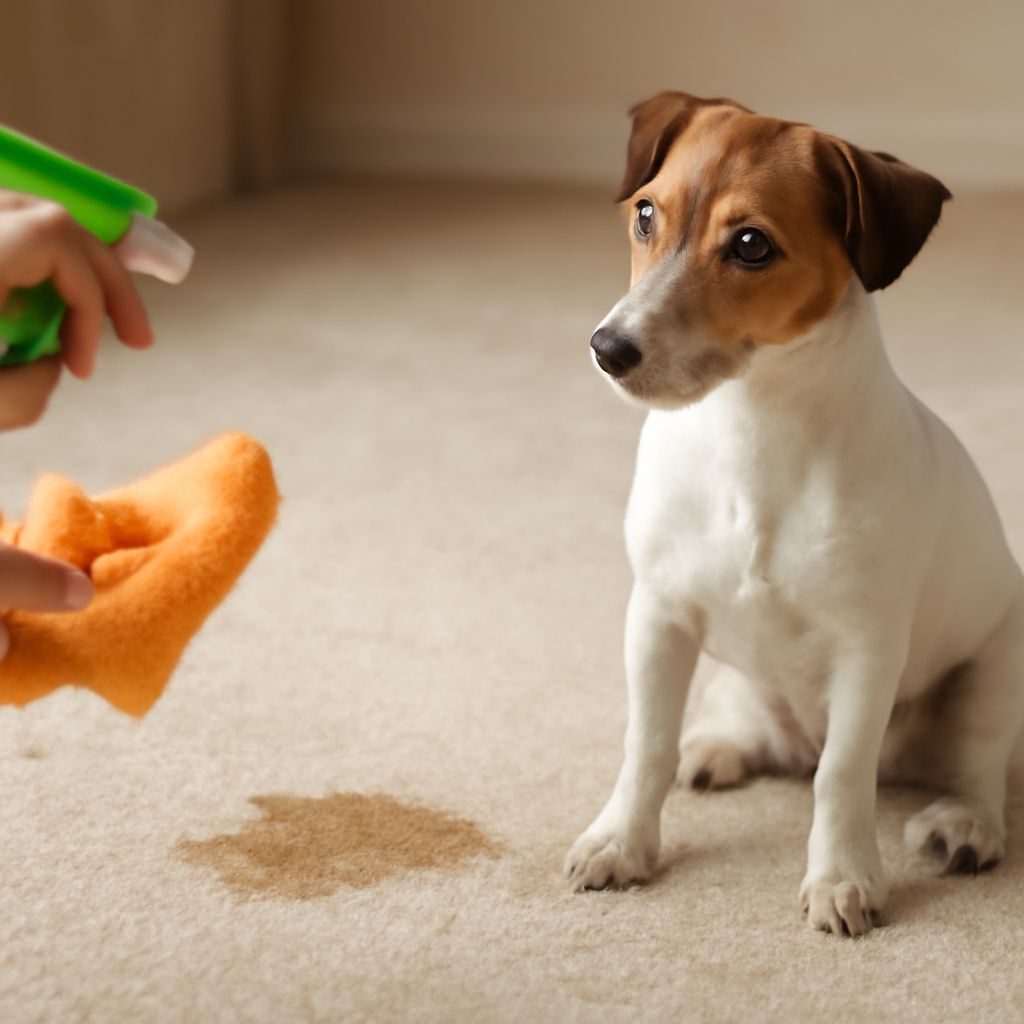
To learn how to clean poop out of carpet safely, separate the job into five problems: solids, soluble soil, pigment, odor, and backing contamination. Remove solids first, use limited moisture, and work from the outer edge toward the center.
Wear disposable gloves and, for dried material, eye protection and a mask. Keep children and pets away until the carpet and pad are completely dry.
How to clean poop out of carpet without spreading it
- Place a trash bag or doubled disposable bags beside the affected area. Keep paper towels, a plastic scraper, cardboard, and a second bag nearby.
- Lift fresh material with folded paper towels or a piece of cardboard. Scoop upward rather than dragging across the fibers.
- For dried feces, hold a plastic scraper or old spoon nearly flat and loosen the material from the outside toward the center. Lift each piece into the bag.
- Pick up crumbs with fresh paper towels. Do not use a household vacuum on untreated feces; it can spread contamination through the machine and across the room.
Seal the waste immediately. Change gloves if they become soiled, then wash your hands. Once all visible solids are gone, inspect the carpet from several angles. A remaining film or colored mark is treated as a stain, not scraped aggressively.
How to get poop stains out of carpet with controlled moisture
First, press a dry white cloth onto the mark. Use firm, short presses and lift the cloth straight up. Continue until little or no residue transfers. Scrubbing broadly can push soil deeper and roughen the carpet pile.
Test your cleaner on a hidden section, such as beneath furniture. Apply a small amount, blot it, and wait until the area dries. Stop if the carpet lightens, darkens, or transfers dye to the cloth.
Choose a carpet-safe enzymatic cleaner or a mild carpet detergent labeled for organic stains. Apply it to a white cloth or use only enough product to dampen the stained fibers. Do not pour cleaner over the carpet. Start at the outside edge and make small inward passes, changing to a clean part of the cloth as soil transfers.
Follow the product’s stated dwell time. Then remove the cleaner and loosened soil with a carpet extractor or wet-dry vacuum. Make slow passes without repeatedly soaking the area. If you do not have an extractor, press a cloth dampened with cool water onto the spot, then blot with dry towels. Repeat the rinse-and-blot cycle until the cloth no longer feels soapy. Pigment may need a second controlled treatment after the first one dries.
Treat remaining odor without flooding the carpet
Odor that remains after visible soil is gone usually comes from organic residue, not from the carpet color. Apply a carpet-safe enzyme product according to its label, keeping the application within the affected fibers. Allow the required contact time, then extract or rinse-blot as above.
Never flood the area to chase odor into the pad. Avoid mixing cleaners, disinfectants, vinegar, or bleach. After the carpet is fully dry, a light layer of baking soda can absorb surface odor for several hours; vacuum it only after no contamination remains and the fibers are dry.
How to remove poop stains from carpet after they reach the pad
A spreading wet ring, recurring odor, or stain that returns after drying indicates possible penetration into the backing or pad. Do not add more liquid. Use towels or an extractor to remove moisture from the carpet surface, working from the edge inward.
If the carpet edge can be lifted safely, inspect the pad underneath. A small, recent spot may respond to careful extraction from above, but saturated or visibly soiled padding usually needs removal and replacement. Clean the exposed subfloor with a product suitable for its material, then let it dry before installing new pad and resetting the carpet.
Repeated contamination, a large affected area, or odor throughout the pad calls for professional carpet and padding replacement advice. Repeated surface treatments will not reliably remove contamination trapped beneath the carpet.
Dry and inspect the carpet and backing
Press dry towels over the area, then place fans so air moves across the carpet. A dehumidifier speeds drying in a closed room. Keep traffic, furniture, and pets away until the carpet and pad feel completely dry; a small surface spot may take 12 to 24 hours, while a damp pad can take longer.
When dry, inspect the fibers in bright light and press a clean white cloth onto the area. Check for color transfer, a stiff or sticky texture, returning discoloration, and odor when the carpet is pressed. A returning mark may be wicking from below and needs another extraction after drying. Persistent odor or dampness confirms that the backing or pad still requires attention.