
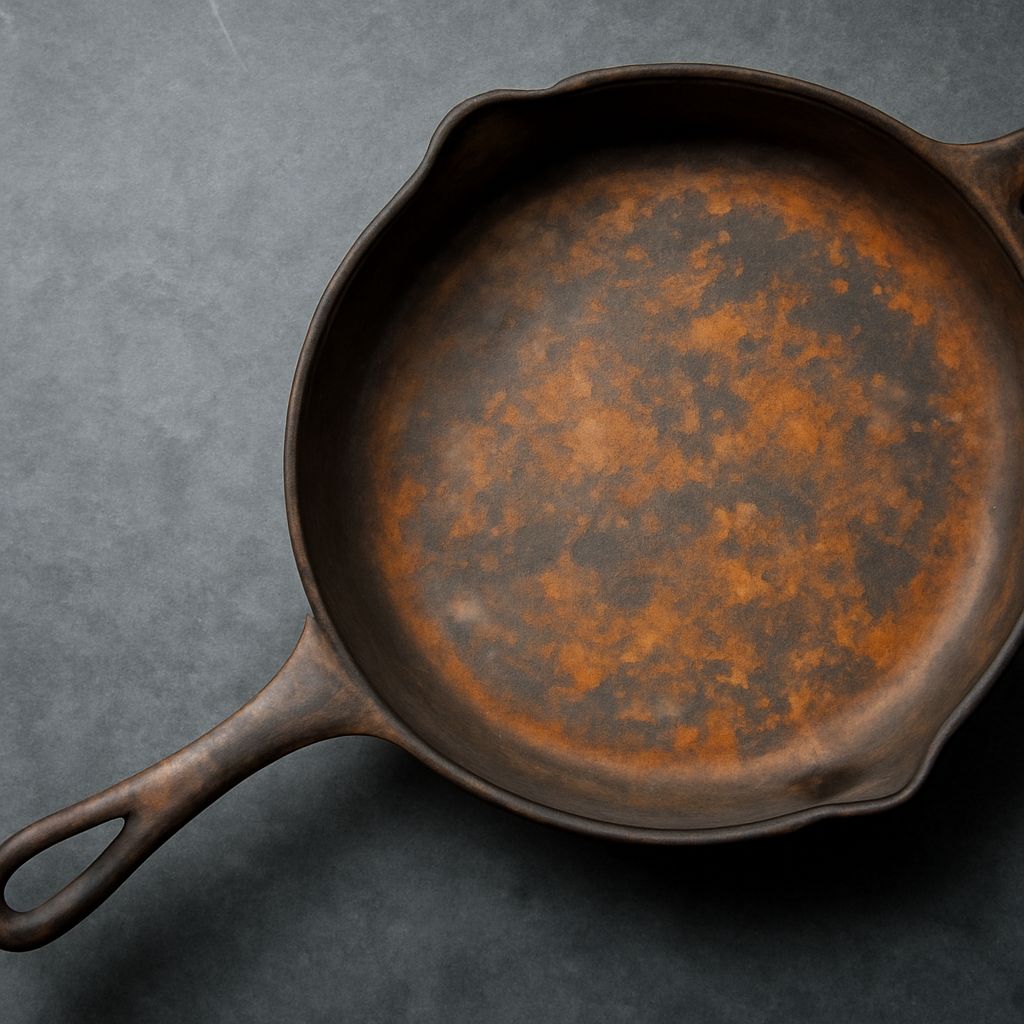
Cleaning rust off cast iron starts with identifying the object, the depth of the rust, and any finish worth preserving. Light orange film needs less work than loose scale, deep pitting, or flaking paint.
Brush away loose debris first, then choose abrasion or controlled rust-removal chemistry. Rinse every residue away and dry the iron immediately, because flash rust can form within minutes.
cleaning rust off cast iron: Assess Rust and Existing Finish
Work outdoors or in a ventilated area. Wear gloves and eye protection, especially when brushing or using a chemical remover. Inspect the piece before disturbing the surface:
- Loose scale: Raised flakes and crusty buildup should be scraped or brushed off before any soak.
- Pitting: Shallow depressions can remain after cleaning. Deep holes, cracks, or severely thin sections may make the item unsafe to use.
- Existing finish: Identify cookware seasoning, bare iron, sound paint, flaking paint, or enamel. The final treatment depends on this surface.
Do not immerse painted or enameled iron in an acid bath unless the product specifically permits it. Preserve sound paint whenever possible, removing only loose coating and rust underneath it.
Remove Light or Heavy Rust with Wire, Abrasives, or Rust Remover
Use the least aggressive method that removes the corrosion. For light rust, scrub with a stiff nylon or wire brush, abrasive pad, or fine steel wool. Work until the orange film and loose residue are gone. Medium-grit sandpaper can smooth remaining patches without unnecessarily reshaping the iron.
For heavy rust, begin with a scraper and wire brush. A wire wheel or coarse abrasive can help on thick, unpainted tools, but use light pressure on thin or decorative sections. Stop periodically and check that you are removing rust rather than cutting into sound metal.
Rust-removal chemistry is useful when scale fills detailed surfaces or mechanical cleaning cannot reach it. A commercial chelating remover is usually easier to control than a strong acid. A diluted white-vinegar or citric-acid bath can also work on unpainted iron, but check the surface frequently and follow the product’s time limit. Prolonged acid contact can etch iron.
Keep the solution in a plastic or compatible container, not aluminum. Mask nearby materials or apply a gel with a brush when immersion would expose unaffected surfaces. Never mix rust removers, bleach, or other cleaners.
how to clean rust from cast iron: Control Contact and Reach Crevices
Knowing how to clean rust from cast iron means controlling both the remover and the tools. Keep chemical contact limited to the rusty metal, and do not let solution pool beneath handles, fittings, or trim.
- Use a small detail brush, old toothbrush, cotton swab, or pipe cleaner in grooves and threaded areas.
- For stubborn deposits, loosen the scale first with a wooden or plastic pick, then brush again.
- Turn the item during a soak so trapped air does not leave untreated rust spots.
- Check crevices before rinsing; leftover orange residue can restart corrosion.
Remove the piece as soon as the rust is loose. A dark, clean metal surface is acceptable; deep pits do not need to be ground completely flat.
Rinse, Neutralize, and Dry Completely to Prevent Flash Rust
Rinse unpainted iron under running water until no grit, acid, or remover remains. For a vinegar or citric-acid treatment, wash briefly with a mild baking-soda solution, then rinse again with clean water. Use the manufacturer’s instructions for commercial products rather than assuming they need neutralizing.
- Wipe the surface immediately with clean towels.
- Blow water from holes and joints with compressed air or a hair dryer.
- Heat bare iron gently on a warm stovetop or in a 200–250°F oven until fully dry.
Air-dry painted items if heat could soften or damage the coating. Do not leave any cast iron damp. Flash rust often appears as a yellow-orange haze while the surface is still drying; remove it with a quick dry scrub and dry again.
how to remove rust from iron: Season Cookware, Oil Bare Iron, Prime and Coat Painted Iron
The best answer to how to remove rust from iron depends on the object’s final use. Do not apply cookware seasoning to every cast-iron surface.
- Cookware: Rub completely dry bare iron with a very thin layer of food-safe, high-smoke-point oil. Wipe away visible excess, then bake upside down at about 450°F for one hour. Repeat two or three thin coats for an even seasoning layer.
- Bare tools: Apply a light coat of tool oil or rust-preventive oil, especially around joints and unpainted edges. Wipe off excess so the tool is protected without becoming slippery or sticky.
- Bare decorative iron: Use paste wax or a suitable clear metal protectant indoors. Outdoor pieces need an exterior metal primer and topcoat for longer protection.
- Painted iron: Feather the edges of remaining paint, remove rust from exposed metal, and spot-prime with a rust-inhibiting metal primer. Apply a compatible topcoat after the primer cures.
Inspect the finish periodically. New orange spotting means moisture remains trapped or the protective layer is too thin; clean, dry, and recoat that area promptly.