
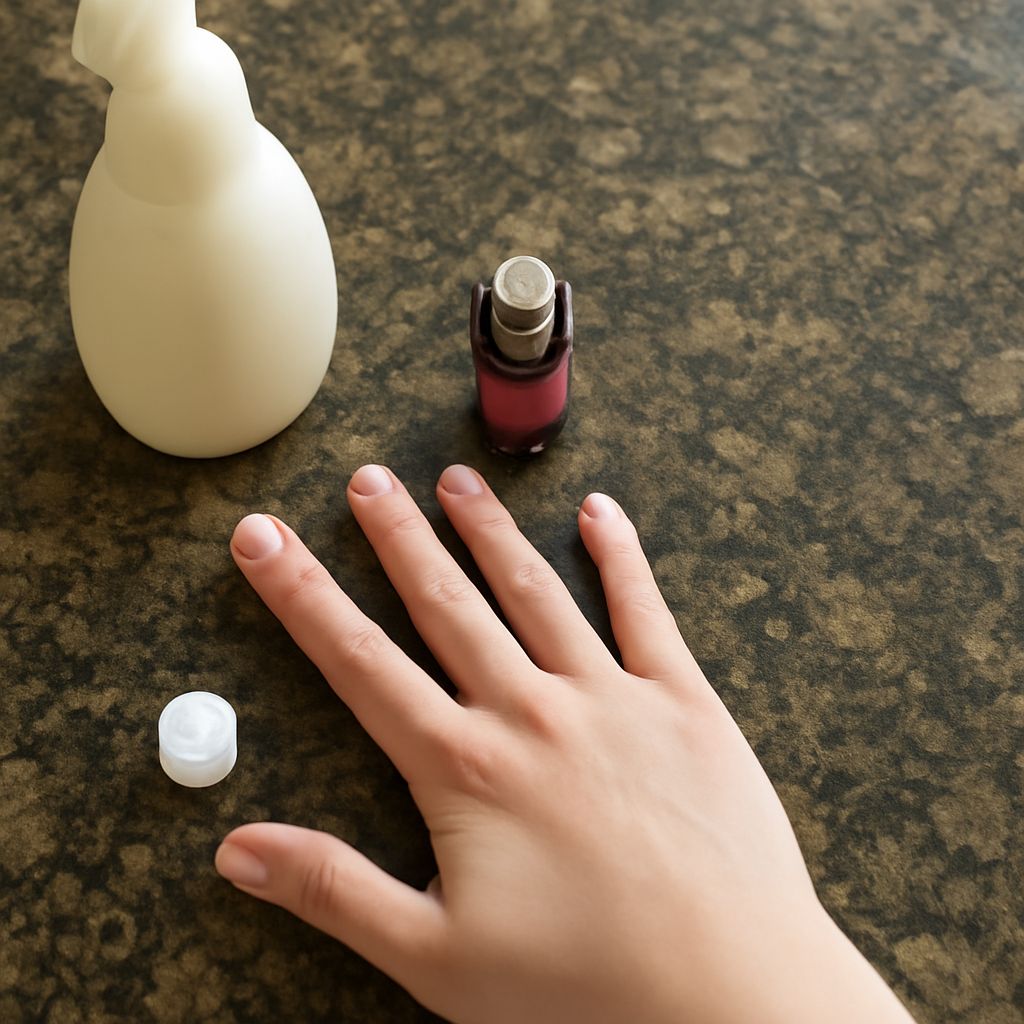
If you need to know how to get spray paint off hands, start with a dry wipe rather than water. Fresh overspray often lifts before it bonds. Then match the method to the paint: soap and warm water for water-based residue, or oil-assisted loosening for oil-based, enamel, and other solvent-based paint.
Use short cleaning passes instead of aggressive scrubbing. Protect cuts and irritated areas, and stop if your skin becomes red, painful, itchy, or burning. Paint residue can be removed gradually; reacting skin should not be pushed further.
How to get spray paint off hands: identify fresh or dried paint
Check the paint can’s label first. It may identify the coating as water-based, acrylic, oil-based, enamel, or solvent-based. If you cannot check, begin with the gentlest method and reassess after each pass.
- For fresh paint, blot and wipe with a dry paper towel or clean cloth. Avoid spreading wet paint across your fingers and palms.
- For dried overspray, rub lightly with a dry cloth to remove loose flakes. Do not pick forcefully at bonded spots, especially around cuticles or skin creases.
- Check the skin, not just the paint. Smooth, dry-colored residue is likely paint. Redness, swelling, stinging, cracking, or warmth may indicate irritation.
To get spray paint off hands safely, use repeated short treatments. If one method is not working after a few minutes, rinse, dry, and move to the next gentle option rather than scrubbing harder.
Remove Water-Based Overspray With Soap and a Soft Brush
Water-based spray paint is usually the easiest to remove, particularly when it is still fresh. Wet your hands with warm water, apply liquid hand soap, and work the lather over your palms, fingertips, knuckles, and the backs of your hands.
- Massage the soapy area for about 30 seconds, using your fingertips to loosen paint around creases.
- Rinse with comfortably warm water. Very hot water can dry or irritate skin and does not make the paint come off faster.
- Repeat the soap-and-rinse cycle once or twice if colored patches remain.
For dried flecks, use a soft nail brush or a textured washcloth after wetting and soaping the skin. Keep pressure light, and make a few passes over each spot. A soft brush can reach the sides of fingers and nail edges without the harsh scraping that may cause tiny abrasions.
If the paint begins to smear instead of lifting, rinse the cloth or brush before continuing. Stop when the remaining color is faint and the skin feels tender; a small stain can fade with normal washing.
How to Get Spray Paint Off Your Hands: Loosen Solvent-Based Paint
Oil-based, enamel, and solvent-based paint may resist soap because water does not dissolve the coating. Start with an ordinary skin-safe oil, such as mineral oil, baby oil, or cooking oil. Petroleum jelly can also soften stubborn residue.
- Apply a small amount of oil or petroleum jelly to the painted area.
- Massage gently for one to two minutes, concentrating on fingertips, creases, and the edges of the nails.
- Wipe away the loosened paint with a soft cloth or paper towel.
- Repeat once with a fresh layer if the paint is still tacky or visibly thick.
For cured flecks, let the oil sit for several minutes before wiping. Then use a soft nail brush or textured cloth with light pressure. Do not use paint thinner, gasoline, or other harsh solvents on your hands. They can strip natural oils, worsen irritation, and create a more serious skin problem than the paint itself.
If the paint remains firmly bonded after two or three gentle passes, leave it alone and wash normally later. Continuing to abrade the skin is not a useful trade-off for removing a small remaining mark.
Wash, Clean Under Nails, and Check Your Skin
After oil-assisted cleaning, wash your hands thoroughly with liquid soap and warm water. Work the lather between fingers, around knuckles, along the wrist, and under each nail. A soft nail brush can clean beneath the nails, but do not force bristles into the cuticle or tender skin.
Rinse until the water runs clear and the slippery oil feels gone. Pat dry rather than rubbing. Examine your hands in good light: clean skin should feel comfortable, with no greasy film, wet paint, or loose flakes in the creases.
If a little color remains but the skin is calm, moisturize and let normal washing remove it over the next few hand washes. If the area is burning, increasingly red, swollen, blistered, or painful, stop cleaning and rinse with plenty of water. Do not apply more oil, brush harder, or try a stronger solvent to remove the last residue.