
The best wood cleaner for cabinets depends on the finish and the soil, not the label alone. Start with the mildest product that can remove the mess, then control its pH, solvent content, moisture, and residue.
For most sealed cabinets, a diluted mild detergent is the safest first choice. Products such as Bona Cabinet Cleaner, Murphy Oil Soap, and Krud Kutter Kitchen Degreaser serve different jobs; none is suitable for every painted, sealed, raw, veneered, or laminated surface.
Best Wood Cleaner: Identify Cabinet Material and Finish
Look at an inconspicuous door edge, hinge area, or cabinet interior before choosing a cleaner. Identify both the material and its protective finish.
- Sealed wood or veneer: Finished varnish, lacquer, polyurethane, or conversion coating generally tolerates a lightly damp cloth and mild cleaner. Excess water can still enter joints, seams, and exposed end grain.
- Painted cabinets: Use low-moisture, low-solvent products. Strong alkaline cleaners, alcohol, ammonia, and abrasive powders can dull paint or soften some coatings.
- Laminate and thermofoil: These nonporous faces usually handle mild detergent well, but adhesive seams and edges are vulnerable to heat, solvents, and soaking.
- Unfinished or raw wood: Begin with a dry microfiber cloth. Water may darken the surface, raise the grain, or create tide marks, so follow the cabinet maker’s directions before using liquid.
Do not mistake finish damage for dirt. Cloudiness, tackiness, color transfer, peeling, swelling, lifted veneer, crazing, or a newly dull patch means stop cleaning and assess the coating.
Best Cabinet Cleaner: Match Soil, pH, Solvents, and Strength
Match the product to the residue. Dust needs no chemical strength, while polymerized grease may need a carefully controlled degreaser.
- Dust: Use a dry or barely damp microfiber cloth. Water and cleaner add unnecessary residue.
- Fingerprints: Use a mild detergent solution or compatible ready-to-use cabinet cleaner.
- Cooking film: A ready-to-use cleaner, such as Bona Cabinet Cleaner, can lift light oil from compatible sealed or painted surfaces. Follow its label.
- Sticky grease: Use a diluted kitchen degreaser, such as Krud Kutter Kitchen Degreaser, only where the label and finish allow it. Keep dwell time short and prevent drying.
- Wax or polish buildup: Avoid adding another oil or polish. Wood-specific products, including Murphy Oil Soap, may suit some finished wood, but overuse can leave a film. A finish-safe residue-removal method is preferable.
Choose a pH-neutral or mildly formulated cleaner whenever possible. High-alkaline products cut grease faster but increase the chance of dulling paint or degrading a finish. Avoid unnecessary solvents, bleach, acetone, and abrasive ingredients. A cleaner that removes grease aggressively may still be the wrong choice because it leaves residue or attacks the coating.
Best Cleaner for Kitchen Cabinets: Test and Clean with Controlled Moisture
- Read the label and dilute accurately. For a mild starting solution, mix about 1 teaspoon of unscented dish detergent into 1 quart of warm water. Use the product’s stated ratio for concentrates; do not guess.
- Perform a hidden test. Apply the solution to an unseen area with a white cloth. Wait several minutes, wipe, and let it dry fully. Check for color transfer, swelling, tackiness, streaks, or loss of sheen.
- Protect vulnerable edges. Spray the cloth rather than the cabinet. Keep liquid away from joints, hinges, seams, exposed end grain, and thermofoil edges.
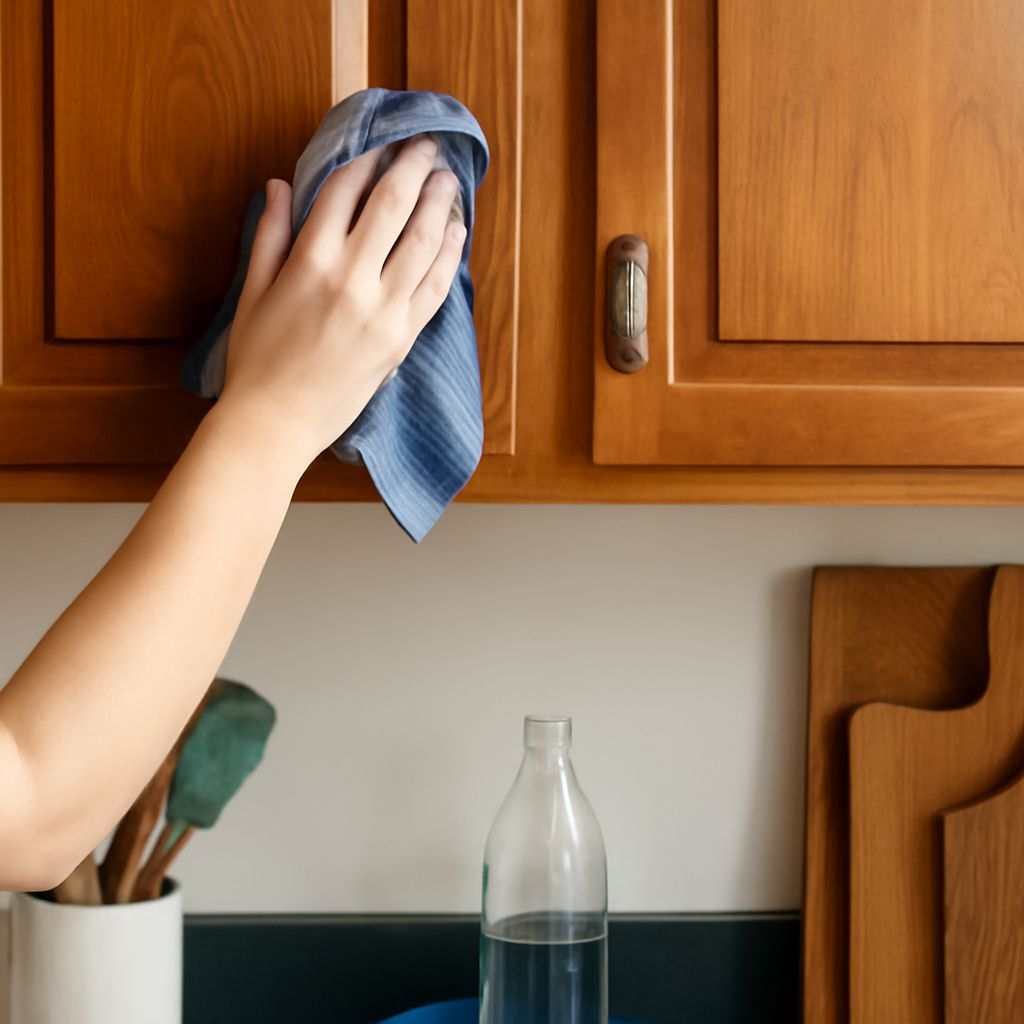
- Use a damp, not wet, cloth. Wring it until no water drips. Work from the top down in small sections, following the wood grain where visible.
- Allow limited dwell time. For grease, leave the cleaner in place only as long as the label directs, often around 30 to 60 seconds. Never let it dry on the surface.
- Agitate gently. Use a soft microfiber cloth or nonabrasive sponge. Do not scrub with steel wool, melamine foam, or a rough pad unless the finish manufacturer specifically permits it.
Rinse, Dry, and Inspect for Residue or Finish Damage
After cleaning, make a second pass with a clean cloth lightly dampened with plain water. This rinse-wipe removes detergent, degreaser, and loosened soil that would otherwise dry into a film. Wring the cloth frequently and replace cloudy rinse water.
Dry each section immediately with a soft towel, especially around door edges, seams, hardware, and lower corners. Leave doors open briefly if moisture reached the cabinet frame, but do not use high heat.
Inspect the dry surface under normal light. A clean finish should feel smooth rather than sticky and should have an even sheen. Streaks usually indicate excess product, inadequate rinsing, or over-wet cleaning. Swelling, peeling, whitening, or a persistent dull spot indicates finish damage rather than remaining soil; stop using the cleaner on that area.