
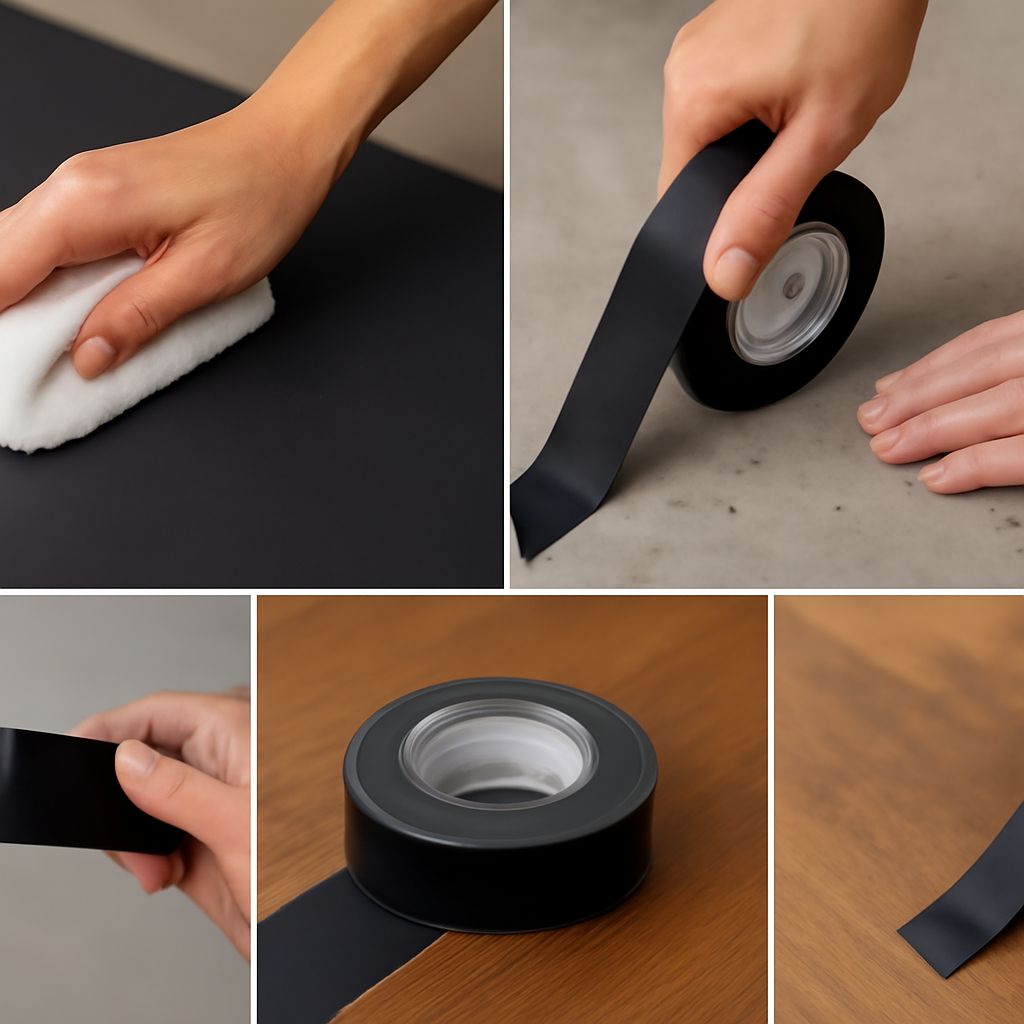
What is gaffer tape? Gaffer tape is a strong, cloth-backed pressure-sensitive tape made for temporary fastening, marking, and cable management in stage, film, broadcast, event, and production work. Its woven cotton or synthetic backing gives it flexibility and hand tear, while its matte surface reduces glare under lights.
A rubber-based adhesive grips many common surfaces yet often releases with less residue than duct tape. The phrase what is gaffer’s tape refers to the same product, even though manufacturers offer different grades. Tack, removal cleanliness, water resistance, and temperature tolerance vary by backing, adhesive, and intended use.
What Is Gaffer Tape? Backing, Adhesive, and Tear
Most gaffer tape uses a woven cloth backing laminated to a pressure-sensitive adhesive. The fabric supplies tensile strength without making the tape rigid. You can tear many grades cleanly across the roll by hand, which is useful when working quickly around cables or scenery.
Gaffer tape can stretch slightly and conform to curved edges, bundles, and uneven surfaces, but it is not intended to bear structural loads. Its matte finish suppresses reflections and makes labels or floor marks easier to read on camera. Rubber adhesive provides quick initial grab and usually peels away more cleanly than aggressive construction tapes.
Residue can still remain if tape stays on dusty, porous, painted, or hot surfaces. Gaffer tape generally tolerates brief moisture exposure, but its cloth backing is not fully waterproof. Water can weaken the fabric or adhesive edge. Heat limits also vary by grade, so standard rolls should not cover hot lamps, heaters, or ventilation openings. Remove the tape after the temporary job rather than assuming clean removal after prolonged exposure.
What Is Gaffer’s Tape Used For? Cables, Stages, and Sets
Gaffer tape is primarily used when you need a secure, conformable, temporary hold that can be removed without heavily marking the surface.
- Cable management: Use it to bundle audio, power, and data cables, or to hold them flat across a stage or event floor. This reduces trip hazards and keeps cable runs orderly.
- Stage-floor marks: Mark actor positions, microphone locations, camera spots, set pieces, and equipment locations. Bright colors make marks easy to identify during a fast changeover.
- Temporary light control: Black tape can block small gaps, mask unwanted spill, hold light-control material, or secure flags on cool, suitable surfaces. Do not cover a fixture’s vents or hot components.
- Labels: Write channel names, equipment notes, case contents, or setup instructions directly on light-colored tape. It removes more conveniently than permanent labels in many production settings.
- Set and prop repair: Use it for short-term repairs to trim, backdrops, scenery, signs, and props when appearance and quick removal matter.
It is a poor choice for permanent bonding, heavy structural repair, submerged applications, or electrical splicing. Those jobs need a tape designed for the relevant load, insulation, water exposure, or temperature.
Gaffer Tape vs. Duct and Electrical Tape
Gaffer tape and duct tape may both have cloth reinforcement, but they are not interchangeable. Gaffer tape normally has a low-reflective finish, a more conformable backing, and an adhesive selected for temporary production use. Duct tape commonly has a plastic-coated, often glossy surface and a more aggressive adhesive. It may resist water better and hold longer, but it can leave more residue or damage painted finishes.
Electrical tape is usually a stretchy PVC tape designed to insulate and protect electrical connections. Its flexibility suits wire wrapping, but it is not a substitute for gaffer tape when securing cable runs to a floor or labeling equipment. Gaffer tape is also not a certified electrical insulator. Use electrical tape for electrical insulation, duct or weatherproof tape for suitable outdoor sealing, and gaffer tape for removable production fastening.
Choose Width, Color, and Adhesive Behavior
Choose the width according to the task. Narrow rolls suit labels, small repairs, and precise marks. A roughly two-inch roll is a practical general-purpose size for cable runs and stage floors. Wider tape covers scenery seams, larger labels, or light-control areas more quickly.
Color affects visibility and light control. Black is discreet on sets and useful for reducing stray reflections. White, gray, and other neutral colors work well for visible labels. Bright or fluorescent colors help crews find cable paths, equipment marks, and hazards quickly. Fluorescent gaffer tape is intended for high visibility, while spike tape is a related narrow marking format commonly used for precise floor-position marks.
Match adhesive strength to the surface and the time required. Standard grades suit many short production tasks; low-tack versions are safer for delicate paint, finished floors, paper, or short-duration labels. High-tack grades can hold more firmly but may leave residue. Test an inconspicuous area before taping painted walls, polished floors, fabric, or aged surfaces. For prolonged outdoor moisture, high heat, electrical insulation, or permanent repair, choose a purpose-built tape instead.