
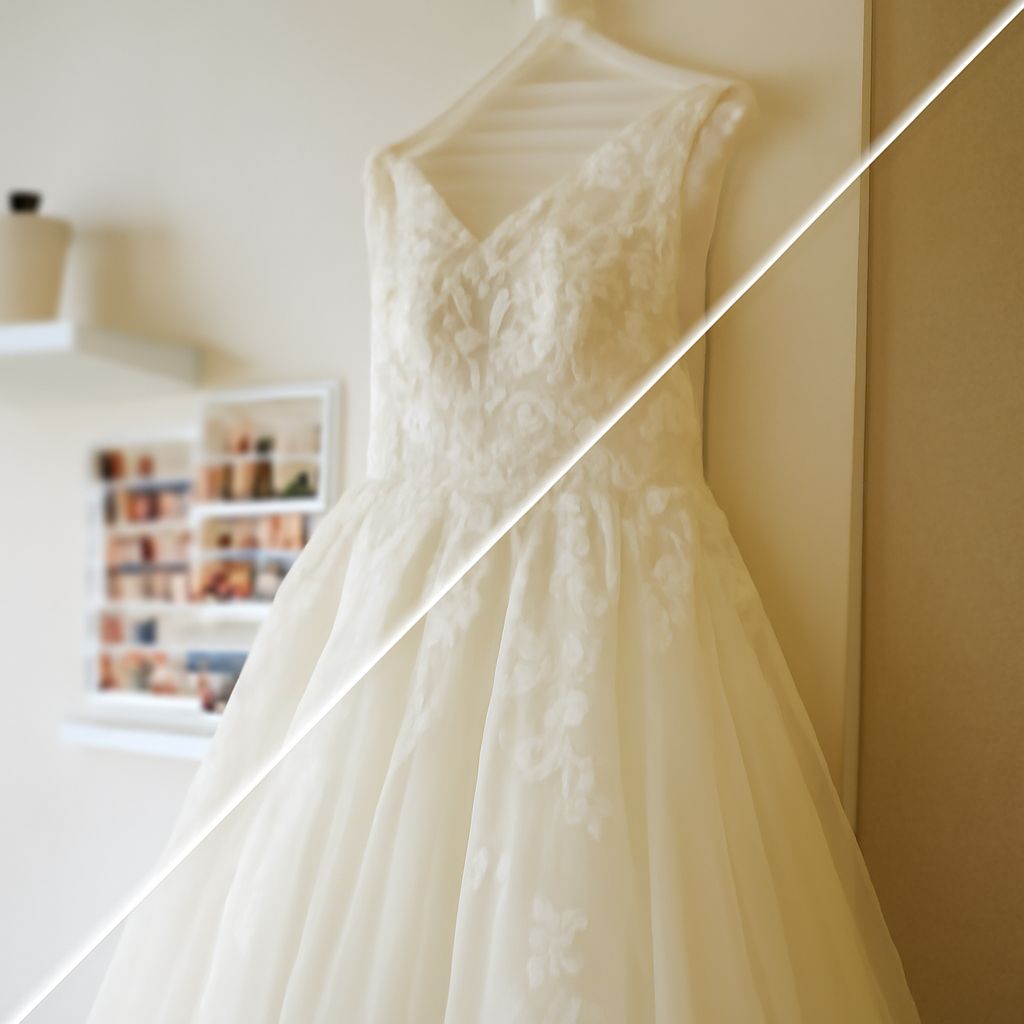
Dress preservation begins with a careful post-wear inspection, followed by appropriate cleaning, protective packing, and controlled storage. Do not assume a gown looks clean enough to store: sugar, wine, perspiration, makeup, and body oils can remain invisible until they darken or weaken the fabric.
Arrange wedding gown cleaning soon after the event, especially if the dress has a long train, embellished areas, or noticeable stains. A professional cleaner can match the method to the fabric, dye, lining, trim, and structure instead of treating every gown the same way.
Dress Preservation Starts with a Post-Wear Inspection
Inspect the entire gown in bright, indirect light before selecting a cleaner. Begin at the hem and train, then check the bodice, underarms, neckline, lining, sleeves, seams, and closures. Record anything that needs attention and photograph difficult areas for your service provider.
- Look for hidden sugar and beverage stains. Champagne, cocktails, soda, and cake frosting may dry clear. Their sugars can attract moisture and insects, then leave yellow or brown marks over time.
- Check hem soil. Dirt, grass, makeup, and street residue often collect along the hem and train. A visibly clean upper skirt does not mean the gown is ready for storage.
- Identify the fabric and dye. Silk, satin, rayon, lace, polyester, tulle, and blended fabrics respond differently to moisture, solvents, heat, and agitation. Note any color blocking, ombré, metallic thread, or unstable dye.
- Inspect embellishments and adhesives. Beads, sequins, crystals, pearls, decorative stones, glued trims, and appliqués may loosen during cleaning. Look for missing pieces, lifted edges, discoloration, or sticky residue.
- Check the structure. Note boning, corset panels, foam cups, padding, built-in bustles, heavy trains, covered buttons, and delicate fasteners. These components affect both cleaning and folding.
- Read the labels. Photograph the care label, fiber-content label, designer label, and any alteration notes. Keep these records with the gown and service paperwork.
Do not rub a stain, apply household bleach, or spray a general-purpose cleaner. Friction can spread soil, while water or chemicals can cause rings, dye bleeding, shrinkage, or permanent damage. If a gown must wait briefly, let it air in a clean, dry room away from sunlight, pets, food, and smoking. Avoid sealing a damp dress.
Choose Wedding Gown Cleaning and Preservation Services
For most wedding gowns, professional cleaning is safer than home treatment. Choose a cleaner who regularly handles bridal fabrics and can explain the proposed process before accepting the dress. Ask whether the gown will be cleaned on-site, sent elsewhere, wet-cleaned, solvent-cleaned, or treated with a combination of methods.
The method should reflect the gown rather than a standard package. A sturdy polyester dress with limited trim may tolerate a different process from a silk gown with fragile lace, dark dye, glued crystals, or extensive boning. Ask how the cleaner will test for dye transfer, protect embellishments, support the train, and manage stains that cannot be safely removed.
Limited home care is appropriate only for minor, clearly identified issues when the care label permits it. You may gently remove loose surface debris with a soft brush, but do not spot-clean an unknown stain on silk, satin, lace, or an embellished bodice. Home steaming can also mark some fabrics, loosen adhesives, flatten texture, or set creases.
Before authorizing work, request a written service description. It should identify:
- The gown’s fiber content, color, construction, and notable trim
- Existing stains, discoloration, tears, loose beads, missing sequins, or weakened seams
- Planned cleaning and stain-treatment methods
- Risks involving dyes, adhesives, boning, pearls, crystals, or other decorations
- Whether the veil, sash, gloves, detachable train, or other accessories are included
- The packaging materials, folding method, and storage box supplied after cleaning
Ask how the gown will be inspected after cleaning and what happens if a stain remains. A responsible service will not promise that every mark can be removed without risk. It should document the condition before treatment, communicate any change in plan, and provide service documentation when the gown is returned.
Choose a Gown Preservation Package
A gown preservation package should be more than a clean dress placed in a decorative box. Confirm exactly what is included and whether the package protects the gown for long-term storage. The box should be made from acid-free or archival-quality material, with no exposed wood, newspaper, dyed tissue, or chemically unstable inserts touching the fabric.
Acid-free tissue should separate layers and cushion folds. It should be unbuffered or selected appropriately for the gown’s materials; some protein fibers and delicate dyed fabrics need specialized advice. Tissue must be clean, colorfast, and free of printed ink. Ask whether additional support is included for sleeves, cups, the bodice, and a heavy train.
Useful package features include:
- An archival box large enough to avoid crushing the gown
- Plenty of acid-free tissue for interleaving and padded folds
- Separate protection for detachable accessories and fragile trim
- A condition report, cleaning record, and photographs or notes of existing damage
- Care instructions covering storage temperature, humidity, light, and inspection
- A closure that protects the contents without compressing the box
Ask whether the packaging permits later inspection. A preservation box should protect the gown while allowing you to open it carefully for periodic checks. Avoid a package that permanently seals the dress or makes the condition impossible to verify.
How to Preserve a Wedding Dress: Pack It Correctly
Clean your hands and clear a large, clean work surface before handling the gown. Do not use scented lotion, jewelry, food, or drinks near the fabric. If the preservation service packs the dress, confirm that the gown is fully dry and that the box contains enough tissue to prevent sharp creases.
- Lay out the tissue. Cover the work surface with clean acid-free tissue. Place additional loose sheets inside sleeves, the bodice, and deep folds to support the shape.
- Support the bodice. Fill the bust area lightly so cups and structured panels do not collapse. Do not force boning, corsetry, covered buttons, or closures into a different shape.
- Make padded folds. Fold the skirt and train gradually, placing generous tissue between layers. Avoid narrow, hard creases, pressure on beads and sequins, and folds directly across bulky appliqués or glued trim.
- Protect heavy areas. Position a decorated bodice, dense lace, or heavy train so its weight does not pull on a fragile seam. Use tissue to cushion raised embellishments from adjacent fabric.
- Place accessories separately. Wrap veils, belts, gloves, removable sleeves, and jewelry individually when possible. Keep metal components from rubbing against the gown.
- Close without compression. Place the folded gown in the archival box and add tissue only where it provides support. The lid should close easily; forcing it down can flatten trim and create permanent folds.
Do not use an ordinary plastic garment bag as a universal long-term preservation enclosure. Plastic can trap moisture, encourage mildew, and allow condensation against the fabric. A breathable temporary cover may protect a dry gown during short transport, but it is not a substitute for archival packing.
Store and Inspect the Gown Over Time
Store the boxed gown in a dark, stable room rather than an attic, basement, garage, or exterior closet. Choose a location with moderate, consistent temperature and humidity. Keep the box off the floor and away from plumbing, exterior walls, heating vents, direct sunlight, strong odors, and areas vulnerable to leaks.
Moisture is the main storage threat. Do not add loose desiccant packets unless the preservation professional specifically recommends them; overly dry conditions can also stress some materials. Never store the gown beside damp laundry, cleaning chemicals, cedar products, or cardboard that is not archival quality.
Inspect the gown periodically, following the cleaner’s instructions. At each check, use clean, dry hands and look for yellowing, brown spots, mildew odor, insect activity, crushed trim, adhesive changes, or moisture. Review the hem, folds, lining, underarm area, boning, and embellished sections, not only the top layer.
If tissue has shifted or a fold is sharply compressed, refold the gown with fresh acid-free tissue and different padded fold lines. Do not repeatedly handle fragile fabric or attempt stain removal during an inspection. If you find moisture, new discoloration, brittle fabric, loose embellishments, or mold, stop handling the gown and contact a textile conservation professional. Keep the original labels and service documentation with the box so future inspections or treatment decisions have an accurate history.