
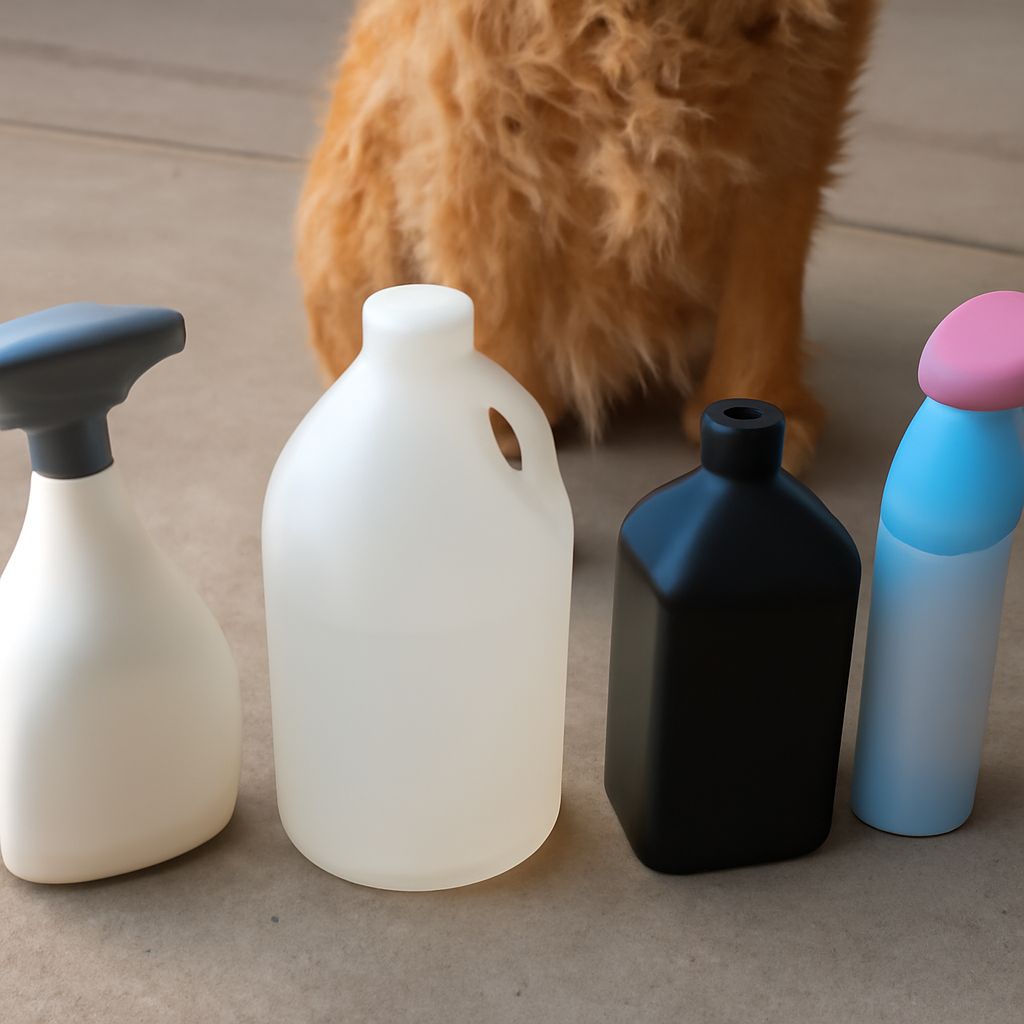
When skunk smell in the house appears suddenly, first determine whether odor entered from outside or came indoors on a sprayed pet, person, or object. Cleaning without finding the source often leaves the smell behind.
Start with the strongest-smelling area, contain the odor, then ventilate and clean materials that absorbed it. The right treatment depends on whether the source is air, a washable item, upholstery, wood, drywall, or an animal.
Woke Up and the House Smells Like Skunk? Check Entrances, Garages, Crawlspaces, and HVAC
If you woke up and the house smells like skunk, do not assume an animal is inside. A skunk may have sprayed near a door, window, foundation vent, or outdoor HVAC intake. Outdoor odor can enter through small gaps and become concentrated overnight when the house is closed.
- Walk the perimeter. Check doors, windows, pet doors, foundation vents, attic vents, and crawlspace openings. Look for disturbed soil, tracks, or a strong odor near one entry point.
- Inspect the garage. Check vehicles, trash containers, stored rugs, shoes, and garage-to-house doors. A sprayed object can transfer odor indoors even when the animal never entered the home.
- Check the crawlspace and basement. A skunk may shelter beneath a porch, deck, shed, or addition. Do not corner or handle the animal. If you find a live skunk, contact local wildlife professionals.
- Review the HVAC path. Smell near outdoor air intakes, return vents, filters, and supply registers. If the odor is strongest at several vents, the system may be distributing contaminated air.
- Look for direct transfer. Check pets, shoes, clothing, blankets, entryway rugs, furniture, and vehicle interiors. A sprayed pet usually smells strongest around the face, neck, chest, and tail.
Close the entry point temporarily if you can do so safely. If the smell is strongest outside, keep windows on that side shut until the outdoor odor fades. If it is strongest around one indoor item, isolate that item instead of treating the whole house.
Get Skunk Smell Out of the House: Contain the Source and Ventilate
Containment prevents skunk residue from spreading. Keep pets and children away from the suspected source, and place contaminated clothing, towels, and small objects in sealed bags or a lidded container. Do not carry them through multiple rooms unnecessarily.
For a direct indoor spray, open windows and doors on the clean-air side of the house. Use a box fan in a window facing outdoors to exhaust air, while another opening supplies replacement air. Avoid blowing air from the contaminated room into the rest of the house.
For odor entering from outside, use the opposite approach. Keep windows and doors nearest the odor closed, and ventilate from the cleanest side when wind conditions allow. Turn off systems that pull outdoor air through the affected intake until the source is gone or the intake has been checked.
Run bathroom and kitchen exhaust fans if they vent outdoors. Do not rely on a ceiling fan alone; it moves odor without removing it. Ventilate for several hours, then close the house briefly and check whether the smell returns. A returning odor usually indicates an untreated source, contaminated filter, or porous material still releasing residue.
Never mix cleaning chemicals. In particular, do not combine bleach, ammonia, vinegar, or peroxide products. Use gloves when handling sprayed fabrics or surfaces, and provide ventilation while cleaning.
Clean People, Pets, Textiles, Furniture, and Porous Surfaces
Cleaning must match the material. Fragrance sprays may hide the smell temporarily, but they do not remove skunk residue from the source material.
People: Wash exposed skin with soap and warm water, then shampoo hair thoroughly. Change clothing and wash it separately. If spray entered the eyes, rinse with clean water for at least 15 minutes and seek medical advice if irritation continues. Do not apply household cleaning mixtures to skin or eyes.
Pets: Keep the animal outdoors or in an easily cleaned area until it is washed. A commonly used fresh treatment for dogs is one quart of 3% hydrogen peroxide, one-quarter cup of baking soda, and one teaspoon of liquid dish soap. Apply immediately to the coat, avoiding the eyes, mouth, nose, and open skin. Leave it on briefly, then rinse thoroughly and repeat if needed.
Mix this treatment only when needed. Do not store it in a closed container, and remember that peroxide can lighten fur or fabric. Cats, animals with skin conditions, and pets with eye exposure should be handled with veterinary guidance. Commercial skunk-odor shampoo is another suitable option when its label allows use on the animal.
Washable clothing and linens: Take items outside, remove solid debris, and check the care label. Wash them separately with regular detergent and the hottest permitted water. An oxygen-based laundry additive can help if the fabric label allows it. Air-dry first and smell the item before using a dryer; heat can make a remaining odor harder to remove. Repeat the wash if the smell remains.
Rugs, upholstery, and furniture: Blot liquid residue rather than rubbing it deeper. Test any cleaner on a hidden area first, especially on wool, leather, wood finishes, painted surfaces, and colored fabric. Use an upholstery or carpet cleaner designed for odor and organic residue, following its dilution and drying instructions.
Remove cushions, curtains, and washable covers for separate treatment. For mattresses, fabric chairs, and large rugs, apply only enough approved cleaner to reach the affected area. Saturation can drive residue into padding and create a moisture problem. Use fans to dry the material completely.
Hard and porous surfaces: Wash sealed floors, walls, doors, crates, and baseboards with a compatible household cleaner, then rinse or wipe as directed. Pay attention to thresholds, grout, unfinished wood, cardboard, drywall, insulation, and subflooring. These porous materials can retain odor after the surrounding air seems clear.
For heavily contaminated drywall, insulation, carpet padding, or unfinished wood, surface wiping may not be enough. Remove and replace the affected section only after the source is gone and the material is dry. Avoid sealing odor beneath paint or flooring until cleaning and drying have been completed.
Refresh the Air After Skunk Odor in the House and Reassess
After cleaning the source, replace or inspect the HVAC filter. If it smells when removed, install a new filter of the correct size and rating. Check return grilles, filter housings, and nearby duct surfaces for residue. A filter change cannot remove contamination inside a duct, so persistent odor from supply vents may require professional duct inspection.
Use an air cleaner with activated carbon for gaseous odors. A HEPA filter can capture particles, but HEPA alone does not remove skunk odor efficiently. Keep the unit running in the affected room with doors closed while cleaned materials dry. Follow the manufacturer’s replacement schedule; saturated carbon stops working.
Wash or replace soft items that may have been overlooked, including entry mats, pet bedding, throw pillows, curtains, shoes, and car floor mats. Inspect closets and baskets near the entrance because clothing can absorb odor without appearing visibly contaminated.
Reassess in stages:
- After ventilation: Close windows for 30 to 60 minutes. If the smell quickly returns, continue source hunting.
- After washing: Smell fabrics only when fully dry. Damp materials can seem cleaner or can develop a separate musty odor.
- After the filter change: Run the HVAC briefly and check each register. A strong odor at one register points to a local duct or nearby material.
- The next day: Recheck crawlspaces, garages, entryways, upholstery, and pet bedding. Odor often becomes noticeable again after the house warms.
If the smell is fading each day, repeat cleaning only where odor remains. If it stays equally strong, returns after every ventilation cycle, or comes from insulation, ductwork, drywall, or an inaccessible crawlspace, stop adding fragrance and arrange a targeted professional inspection.