
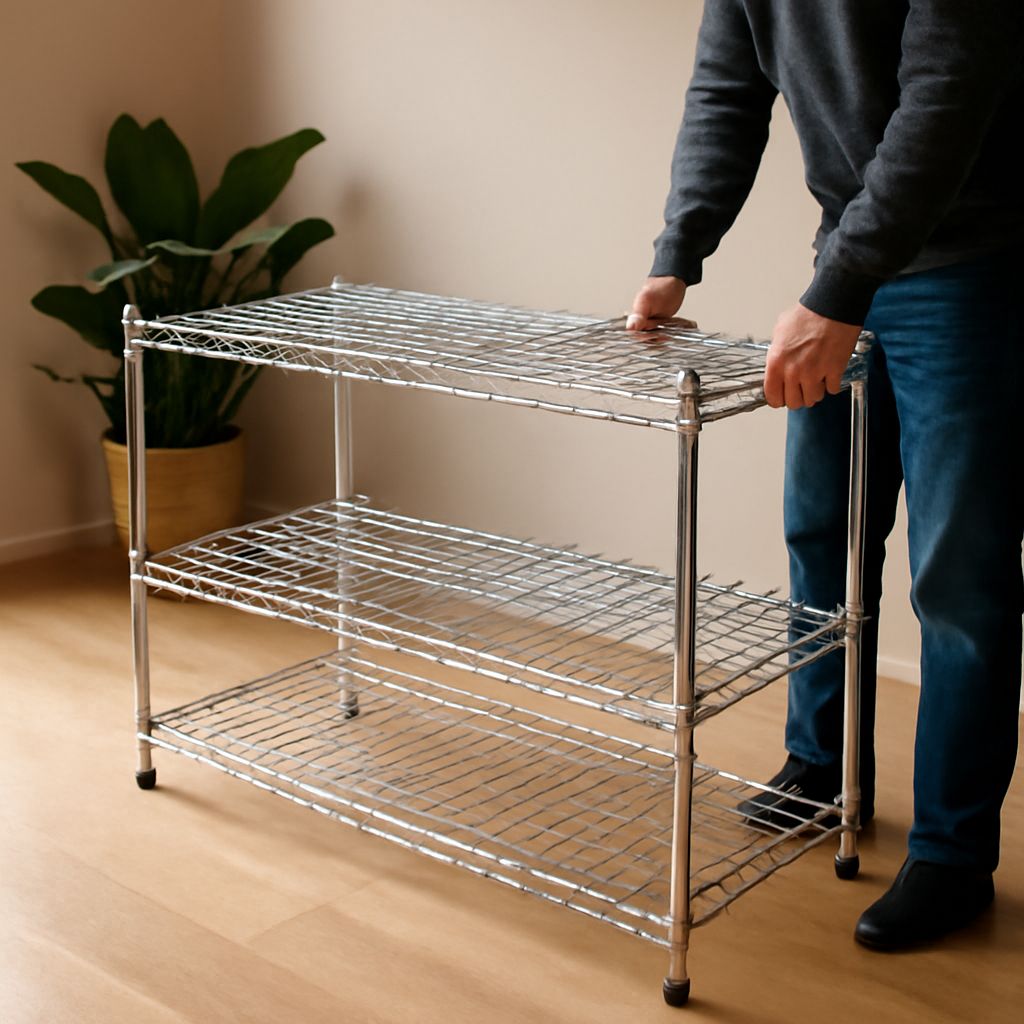
Wire rack shelving is specified by more than shelf width and depth. For commercial or utility storage, match post height, shelf dimensions, finish, load rating, airflow needs, and mobility to the room and stored products.
Most systems use adjustable wire shelves, upright posts, split sleeves, and leveling feet. Casters, ledges, shelf liners, and other accessories extend the system, but they also change capacity and stability. Use the following checklist before ordering or assembling your unit.
Commercial Wire Shelving Components: Marked Posts, Split Sleeves, Feet, Ledges, and Ratings
A typical commercial wire shelving system has four core components: wire shelves, upright posts, plastic split sleeves, and feet or casters. Shelves rest on tapered collars formed by the sleeves. The taper locks each shelf in place as weight is applied, while the open grid provides airflow and visibility.
Posts usually have regular vertical markings, often spaced at one-inch intervals. These marks help you repeat shelf positions across multiple units. They also make height planning easier. Install the lowest shelf high enough to clear the floor, then place upper shelves according to product height, handling space, and required clearance.
- Split sleeves: Fit the two sleeve halves around the post at the chosen marking. Keep both halves aligned before lowering the shelf.
- Feet: Threaded leveling feet compensate for uneven floors and protect the post ends. They suit stationary installations.
- Casters: Replace feet when the unit must move. Use locking casters and confirm their combined capacity before loading.
- Ledges: Front, back, or side ledges help retain loose containers and prevent products from sliding off.
Check two ratings before loading. A shelf rating normally describes the maximum evenly distributed load on one shelf. A unit rating describes the allowable total load for the complete rack, often assuming a specific number of shelves and a stationary installation. The lower applicable limit governs. Uneven, concentrated, or overhanging loads may require a lower working capacity.
Do not apply a stationary unit rating unchanged to a mobile unit on casters. Casters introduce rolling forces, floor transitions, turning forces, and a higher center of gravity. Use the manufacturer’s mobile rating, reduce the load when required, and keep heavy products on the lowest shelves.
Choose Steel Wire Shelving Size, Finish, and Capacity: Height, Airflow, and Chrome, Epoxy, Stainless, or Antimicrobial Finishes
Choose shelf dimensions from the stored item, not the available wall alone. Measure the product’s footprint, allow room for hands or equipment, and leave enough clearance for removal. Common shelf depths serve different purposes: shallow shelves suit bins and supplies, while deeper shelves accommodate cartons, stock pots, or larger containers. Confirm actual shelf dimensions because nominal sizes can vary by manufacturer.
Post height should support the required number of shelves without creating an unstable or inconveniently tall rack. A practical layout places the first shelf above floor moisture and cleaning equipment, then assigns shelf heights around product groups. Keep frequently accessed items between waist and shoulder height. Reserve taller spaces for bulky items and avoid leaving unnecessary gaps that reduce useful capacity.
Open wire construction improves air circulation, drainage, and visibility. It works well in storerooms, coolers, kitchens, laundry areas, and clean utility rooms. It is less suitable for very small loose items unless you add liners, bins, or a retaining ledge. A liner also creates a more stable surface for containers with narrow feet.
Select the finish according to exposure and cleaning demands:
- Chrome: A cost-effective choice for dry storage, retail back rooms, offices, and general utility areas. Keep it dry and inspect it if the coating becomes damaged.
- Epoxy: A coated finish suited to humid rooms, coolers, freezers, and areas where added corrosion resistance is useful. Verify the specified temperature range before freezer use.
- Stainless: The preferred option for frequent washdown, food preparation, medical environments, and demanding corrosion conditions. Match the stainless grade to chemical exposure.
- Antimicrobial finish: Useful where the manufacturer’s tested finish is intended to help inhibit microbial growth on the coated surface. It does not replace routine cleaning or sanitation.
For steel wire shelving, compare both shelf capacity and complete-unit capacity at the exact shelf spacing you plan to use. Ask whether ratings assume evenly distributed loads, fixed feet, or a particular caster set. If stored products are dense, place them over the shelf supports rather than concentrating weight at one point.
Configure Commercial Shelving Units: Casters, Ledges, Accessories, and Mobile-Load Planning
Configure commercial shelving units around how staff will use them. Stationary racks generally provide the highest capacity and simplest leveling. Mobile racks save floor space and can support cleaning or replenishment, but they need wider clearance, secure locking, and a lower practical load when moved.
Choose casters with the correct stem or plate connection, wheel material, diameter, brake style, and capacity. Four locking casters may suit a compact rack. Larger or taller units may need a fifth caster or a manufacturer-approved caster arrangement. Lock every wheel before loading or accessing products, and unlock them only when the rack is ready to move.
- Add shelf liners for small parts, unstable containers, or products that need a nearly solid surface.
- Use dividers, bins, and label holders to separate stock and reduce searching time.
- Install ledges where bottles, trays, or loose packages could slide during use.
- Use an overshelf, hanger rail, or post accessory only when it is approved for that system.
- Plan aisle width and door clearance for the rack’s loaded dimensions, not its empty footprint.
For a mobile configuration, place the heaviest items low, distribute weight across the shelf, and keep the top shelf light. Do not move a loaded rack across thresholds, ramps, or damaged flooring unless the system is designed for that condition. Recheck the mobile load rating after adding liners, accessories, or extra shelves.
Wire Rack Shelving: Assemble, Level, and Load With Corner Seating, Diagonal Checks, and Cleaning
Assemble the rack in a clear area with all parts available. Follow this order:
- Install leveling feet or approved casters in the post ends. If using casters, confirm that brakes are released during assembly.
- Set the first pair of split sleeves at the selected bottom-shelf marking on each post. Align every sleeve at the same height.
- Lower the bottom shelf over the posts. Press down evenly until each tapered collar seats fully in the shelf’s corner socket.
- Fit the next sleeves and shelf, working upward. Keep the shelf level before applying force.
- Seat each corner completely. A partially engaged corner can make the rack wobble and reduce its effective capacity.
- Install any ledges, liners, dividers, or other accessories after the basic frame is stable.
Check the frame before loading. Measure diagonally from one top corner to the opposite bottom corner, then compare that measurement with the other diagonal. Similar measurements indicate a square frame. If they differ, unload the rack, loosen the affected connection if the system allows it, reseat the shelves, and repeat the check.
Level stationary units by adjusting the threaded feet while checking both shelf direction and front-to-back stability. On sloped floors, do not compensate with loose shims or stacked objects. For mobile units, set the rack on a flat surface, engage all caster brakes, and confirm that it does not rock before loading.
Load from the bottom upward. Keep each shelf within its distributed shelf rating, keep the complete rack within its applicable unit rating, and place dense products near the posts. Avoid climbing on shelves, using them as ladders, or placing loads where they project into walkways.
For cleaning, remove products and loose debris first. Wash the finish with a mild detergent and clean water, then rinse where necessary and dry the shelves, posts, sleeves, and feet. Use chemicals approved for the selected finish; avoid abrasive pads that can damage chrome, epoxy, or antimicrobial coatings. Inspect for rust, bent wires, loose sleeves, damaged welds, and worn casters before returning the rack to service.