
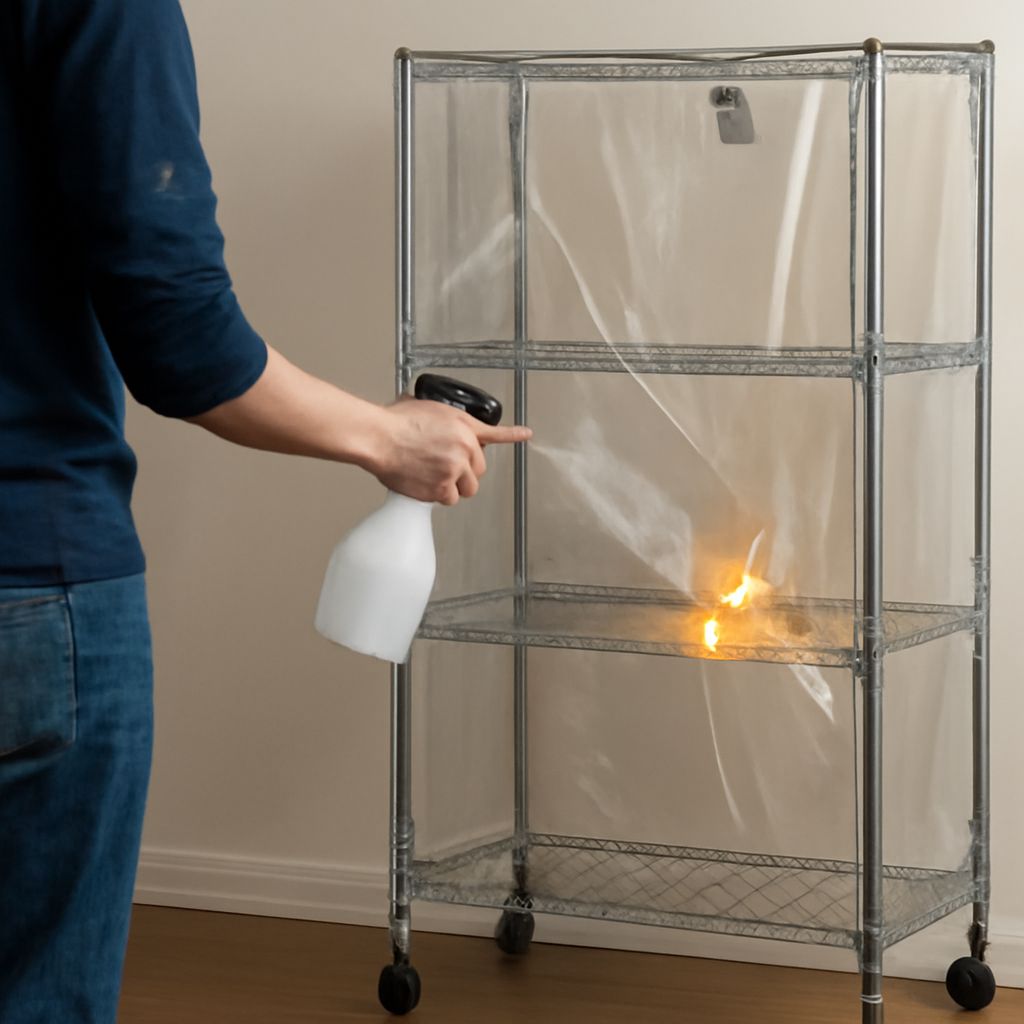
Wire shelf covers create a flat, stable surface over open wire shelving. The right liner keeps small items from tipping, prevents fabric from catching on the grid, and makes cleaning easier.
Choose based on the stored items first. Rigid covers suit pantry goods and small containers, while fabric covers work well for clothing and towels. Measure the shelf width, depth, support bars, and front edge before cutting.
Why Use Wire Shelf Covers?
Open wire shelves are strong and ventilated, but their gaps can create problems. Jars may wobble, cans can sit unevenly, and narrow containers may fall through. Clothing and towels can also snag on exposed wires.
A cover provides a continuous surface for folded goods, baskets, plants, and utility supplies. It can also protect items from dust that collects below each shelf. In a pantry, a smooth liner makes spills easier to wipe up. In a closet, it prevents pulls and marks in knitted clothing.
Use a cover that still suits the shelf’s environment. A solid liner reduces airflow beneath stored items, so leave clearance around damp plants, wet cleaning supplies, or anything that needs ventilation. Never allow water to remain trapped between the liner and the shelf.
Choose Shelf Covers for Pantry Goods, Clothing, Towels, Plants, and Utility Storage
- Pantry goods: Choose a rigid, washable cover with a smooth, nonporous surface. It should support jars, cans, and small containers without flexing. A raised front edge can help stop items from sliding, but it must not interfere with the shelf frame.
- Clothing: Fabric shelf covers or thin foam-backed liners protect garments from wire marks and snags. Select a breathable, washable material, and avoid loose edges that can catch on hangers or baskets.
- Towels and linens: Use fabric or a soft roll liner with enough grip to keep stacks from shifting. Washability matters more than maximum rigidity, especially in bathrooms or laundry areas.
- Plants: A rigid, moisture-resistant cover gives pots a level base. Choose a surface that wipes clean and add a tray beneath each pot. Preserve airflow around the plants, and remove standing water promptly.
- Utility storage: Rigid plastic works for tools, hardware, bottles, and cleaning supplies. For lightweight bins, a roll liner with a grippy underside may be sufficient and easier to remove.
Check the cover’s edge treatment as well. Bound fabric edges resist fraying, molded plastic edges stay smooth, and raw cut foam may curl or crumble. If two pieces meet, place the seam over a shelf support bar rather than across an unsupported wire span.
Compare Wire Shelving Covers: Rigid, Roll, Fabric, or Snap-On
These wire shelving covers differ in support, airflow, edge fit, moisture handling, cleaning, and removability.
- Rigid covers: Corrugated plastic, solid PVC, and similar panels provide the best support for small or heavy items. They block most airflow beneath the shelf but resist moisture and wipe clean quickly. They can be cut for posts and brackets, although thick panels require more careful trimming. A rigid panel is removable if it is not permanently glued down.
- Roll liners: Foam, rubber, and thin plastic rolls are economical and easy to cut. They provide moderate grip and can follow minor wire irregularities. Their flexibility preserves some airflow at the shelf edges, but unsupported areas may sag under heavy loads. Roll liners may curl after storage and usually need weights, clips, or time to flatten.
- Fabric covers: Fabric is comfortable for clothing, towels, and delicate items. It is breathable and often machine washable, but it provides less support for narrow containers. Moisture can soak through, and unbound seams may fray or snag. Choose a fitted cover with elastic, hook-and-loop fasteners, or sturdy edge binding.
- Snap-on covers: These fitted panels use clips, tabs, or molded edges to attach directly to the shelf. They offer the cleanest edge fit and resist shifting without separate fasteners. They are convenient to remove for cleaning, but only work when the shelf’s width, depth, wire pattern, and front rail match the cover.
For maximum airflow, use a breathable fabric or a partial liner that leaves the shelf edges open. For the most stable surface, use a rigid panel with correctly placed notches. Avoid overlapping seams, exposed fastener heads, and sharp cut edges because each can snag stored items.
Measure for a Wire Shelf Cover That Fits
- Empty the shelf. Remove baskets and brackets that are not part of the permanent frame. Check whether the shelf has a raised front edge, rear rail, corner posts, or cross supports.
- Measure the width. Measure between the inside faces of the posts or end brackets, not simply from one outside edge to the other. Take measurements at the front, middle, and back. Use the smallest measurement if the frame is uneven.
- Measure the depth. Measure from the rear support to the inside of the front edge. If the front rail slopes or curves, measure the usable flat depth instead of the maximum projection.
- Map the wire pattern. Record the positions of raised support bars, vertical posts, brackets, and any unusual gaps. A cover should lie flat on the main support wires, not rock on a crossbar.
- Make a template. Cut cardboard to the measured width and depth. Place it on the shelf, push it into the corners, and mark every notch needed for posts or brackets. Test the front edge before cutting the actual material.
For a rigid or roll liner, allow roughly 3 millimeters, or 1/8 inch, of clearance on each side so the panel can be removed and does not buckle. Do not add clearance where it would expose a gap large enough for small containers to fall through. A custom wire shelf cover should sit flat, with its front edge aligned and its corners fully supported.
Cut, Secure, Clean, or Replace the Cover
Transfer the cardboard template to the liner. Mark the back, front, and notch locations clearly. Cut outside the line first, then test the piece on the shelf and trim gradually. Scissors work for fabric and thin roll material; a sharp utility knife and straightedge work better for rigid plastic. Make several light passes instead of forcing one deep cut.
Cut U-shaped notches around posts, brackets, or raised support bars. Keep each notch only as large as necessary. Oversized cutouts reduce support and expose the wire below. Smooth rigid edges with fine sandpaper or edge trim. Bind or hem fabric edges, and turn the finished seam downward so it cannot catch clothing.
Prevent shifting with the least permanent method that works:
- Use the cover’s molded tabs or snap clips when available.
- Add small nonslip dots or strips beneath the front corners for light loads.
- Use compatible shelf clips or hook-and-loop fasteners for a roll liner.
- Place seams over support bars and keep them flush; never leave a raised overlap in a walking or pulling direction.
- For fabric, use elastic edging or ties that attach underneath the shelf rather than loose cords on top.
To stop a curled roll liner, unroll it opposite the curl, warm it in a safe indoor space, and weigh the corners flat. Trim it if the edges continue pushing against the shelf frame. Replace a cover when it cracks, warps, becomes permanently stained, develops persistent odor, or has frayed edges that can snag.
Wipe rigid shelf covers with mild soap and water, then dry both surfaces before replacing them. Wash fabric covers according to their care labels and dry them fully. Lift removable liners periodically to clean spilled food, dust, or trapped moisture from the wire shelf underneath.