
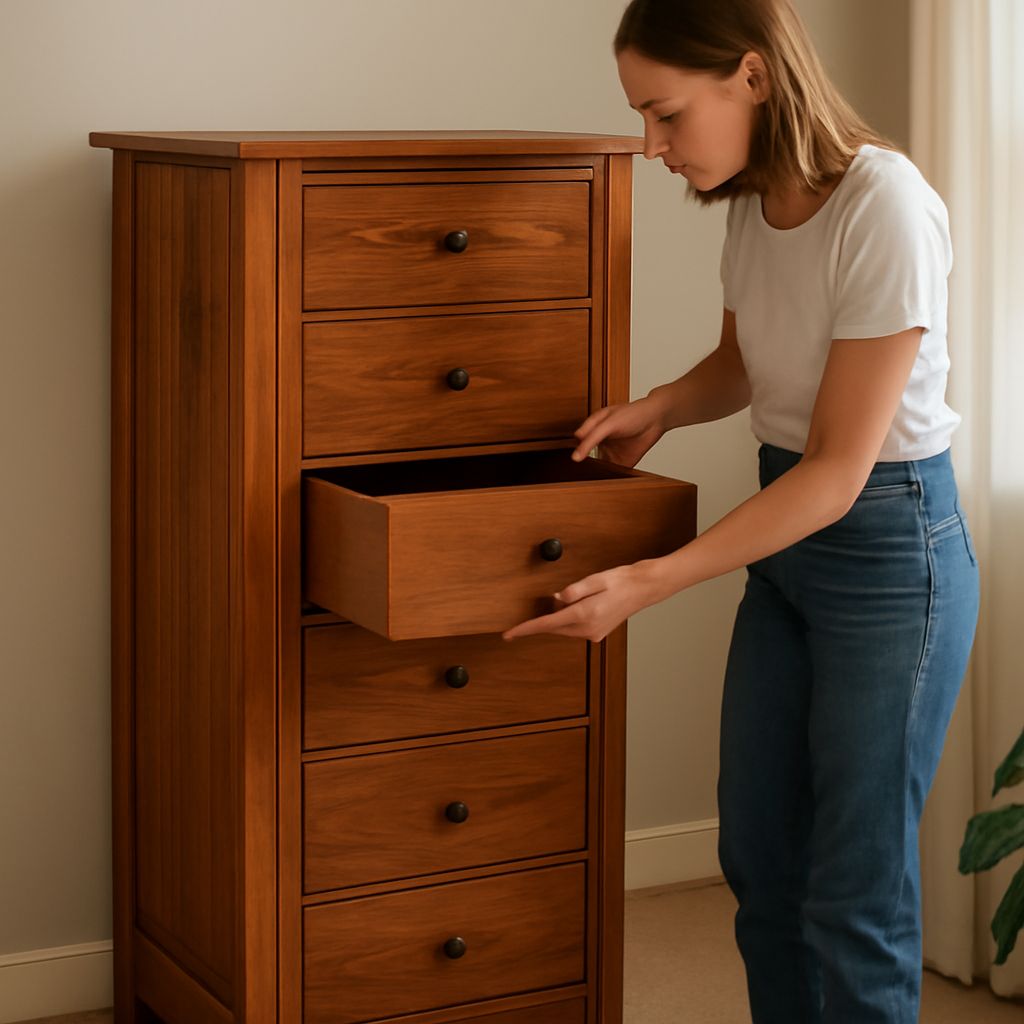
A lingerie chest is a tall, narrow drawer unit designed for folded lingerie, hosiery, scarves, jewelry, and other small wardrobe items. Its vertical shape provides useful storage without taking the floor space required by a wide dresser.
The best choice depends on whether you need a movable furniture piece, built-in closet storage, or a cabinet with specialized trays. Compare the usable drawer size, stability, access, materials, and room footprint rather than exterior appearance alone.
What Is a Lingerie Chest? Definition, Proportions, and Uses
A lingerie chest usually has five to seven drawers arranged in a narrow vertical frame. Typical exterior dimensions are about 45 to 60 inches high, 18 to 30 inches wide, and 14 to 20 inches deep. Exact proportions vary, but the narrow footprint is its defining feature.
Unlike a standard dresser, this chest is intended for small items that benefit from separation. Shallow drawers keep garments visible and prevent delicate pieces from forming a compressed pile. They also make it easier to place similar items together without using large, empty drawers inefficiently.
- Top drawers: Everyday bras, underwear, camisoles, or items used most often.
- Middle drawers: Folded lingerie sets, swimwear, tights, and lightweight scarves.
- Lower drawers: Hosiery, seasonal accessories, or less frequently used garments.
- Top surface: A small jewelry tray, perfume bottle, watch box, or valet dish.
A chest works particularly well beside a wardrobe, near a dressing area, or in a bedroom corner. It is less suitable when every drawer must hold bulky sweaters, towels, or large folded garments. Those items need greater width and height than most lingerie drawers provide.
Lingerie Chests: Dimensions, Materials, Lining, and Hardware
Exterior measurements do not tell you how much storage a drawer provides. Drawer boxes lose space to side panels, runners, and the frame. A chest that is 24 inches wide may offer only 18 to 20 inches of usable interior width. Check the inside dimensions before buying.
For folded lingerie and hosiery, useful drawer interiors are often about 12 to 20 inches wide, 12 to 16 inches deep, and 2 to 5 inches high. A shallow drawer around 2 to 3 inches high is usually easier to organize than a deep drawer. Deep drawers encourage stacking, which hides smaller garments and can snag delicate fabrics during retrieval.
Choose dimensions according to the items you actually own:
- Allow enough width for bras to lie flat without crushing molded cups.
- Choose greater depth for folded scarves or long hosiery packages.
- Reserve one taller drawer, if available, for jewelry boxes, belts, or small bags.
- Measure the room clearance so drawers can open fully without hitting a bed or door.
Stability is essential. A tall, narrow chest has a higher center of gravity than a wide dresser. Look for a solid back, a broad or weighted base, strong drawer guides, and an included anti-tip kit. Secure the unit to the wall, particularly in a home with children, pets, or uneven flooring. Open one drawer at a time if the design does not include an interlock mechanism.
Materials affect durability and the feel of daily use. Solid wood offers repairability and weight, while plywood drawers generally resist warping better than thin particleboard. Veneered panels can provide an attractive finish at a lower weight. Inspect drawer bottoms, corner joints, and runner attachments; these areas reveal construction quality more clearly than the exterior finish.
Use smooth, snag-resistant interiors for delicate garments. A removable felt, cotton, or microfiber lining can protect silk and lace while making cleaning easier. Avoid rough unfinished wood, exposed staples, and heavily scented lining materials. Full lining is useful for jewelry or silk, but washable drawer mats may be more practical for everyday underwear.
Hardware should support controlled access. Full-extension runners let you see the back of a drawer, while soft-close guides reduce slamming. Recessed pulls save space in a narrow walkway; rounded knobs are comfortable when several drawers are opened in succession. Test that the hardware does not catch on loose threads or protrude into the drawer opening.
Lingerie Closet or Freestanding Chest? Compare Access and Footprint
A lingerie closet usually means a built-in or fitted drawer tower inside a wardrobe or walk-in closet. Choose it when you want storage integrated with hanging clothes and do not need to move the unit. Choose a freestanding chest when you need flexible placement, easier replacement, or access from the bedroom itself.
- Freestanding chest: Installs without remodeling, can move with you, and adds finished furniture to the room. Its main drawback is the floor space and wall anchoring it requires.
- Closet drawer tower: Uses vertical closet space efficiently and keeps small garments near other clothing. Installation may reduce hanging space and makes future layout changes more difficult.
- Wide dresser: Offers more surface area and larger drawers, but occupies more floor width and may leave small items mixed together.
- Open cubby system: Provides quick visual access, but garments collect dust and require baskets or boxes to prevent a cluttered appearance.
Compare access as carefully as capacity. A closet tower may be convenient if you dress inside the closet, but awkward if the closet door or nearby hanging clothes block the drawers. A freestanding unit should have enough clearance for the drawer to extend fully, with approximately 30 to 36 inches of working space in front when possible.
Measure the complete footprint, including baseboards, door swings, drawer extension, and nearby furniture. In a small bedroom, a chest can use vertical wall space while leaving a walkway open. In a narrow closet, however, even a 16-inch-deep unit may make standing and turning uncomfortable.
Freestanding storage also offers better access for cleaning and relocation. Built-in drawers provide a neater visual line and may be customized to the available height. The practical choice is the one that keeps frequently used garments within reach without sacrificing necessary hanging or walking space.
Choosing a Lingerie Cabinet for Trays and Small Accessories
A lingerie cabinet may use drawers, doors, shelves, or a combination of all three. It is the strongest option when your storage needs extend beyond folded fabric. Cabinets can include shallow jewelry trays, divided compartments, removable inserts, and a lockable top drawer.
Choose drawers for soft garments and items that need quick sorting. Choose doors with adjustable shelves for boxes, handbags, or packaged hosiery. A cabinet with one or two specialized trays can keep jewelry, watches, hair accessories, and delicate fasteners separate from clothing.
Inspect the tray dimensions before purchase. Small compartments should hold your largest earrings, bracelets, or watch without forcing the lid closed. Felt or fabric surfaces protect metal and prevent movement, while dividers stop necklaces from tangling. If the tray is removable, you can use the drawer for another purpose later.
For valuable jewelry, look for a lock, concealed hinges, and a cabinet that can be secured to the wall. A lock does not replace sensible placement, but it can prevent casual access. Avoid storing damp swimwear or unwashed garments in an enclosed cabinet; limited airflow can create odors and damage finishes.
Organize Folded Garments, Hosiery, and Scarves
Assign each drawer one category and keep the most-used categories at waist or chest height. This simple system makes shallow storage faster to maintain than a drawer filled with mixed accessories.
- Measure before folding. Check the drawer’s usable width and height, then fold garments to fit without forcing them against the sides.
- Use dividers. Adjustable acrylic, bamboo, fabric, or felt dividers separate bras, briefs, socks, and hosiery. Select low dividers for shallow drawers so they do not interfere with closing.
- Fold delicate pieces loosely. Stack molded bras with cups nested together, or lay them flat when the drawer allows. Avoid turning one cup inside out, which can deform its shape.
- Roll flexible items. Rolled tights, camisoles, and scarves are easy to identify, provided the rolls are not compressed tightly.
- Keep pairs together. Store matching sets, tights, and gloves in small fabric pouches or divided sections to prevent one piece from migrating.
- Leave a little space. A drawer that is about three-quarters full is easier to search and less likely to snag delicate fabric.
Line drawers with smooth, washable material and replace it when it becomes dusty or rough. Review seasonal items twice a year, remove damaged pieces, and move rarely used accessories to the lowest drawer. If a drawer begins sticking, check for overloading, misaligned runners, or a divider pressing against the sides before adding more storage products.