
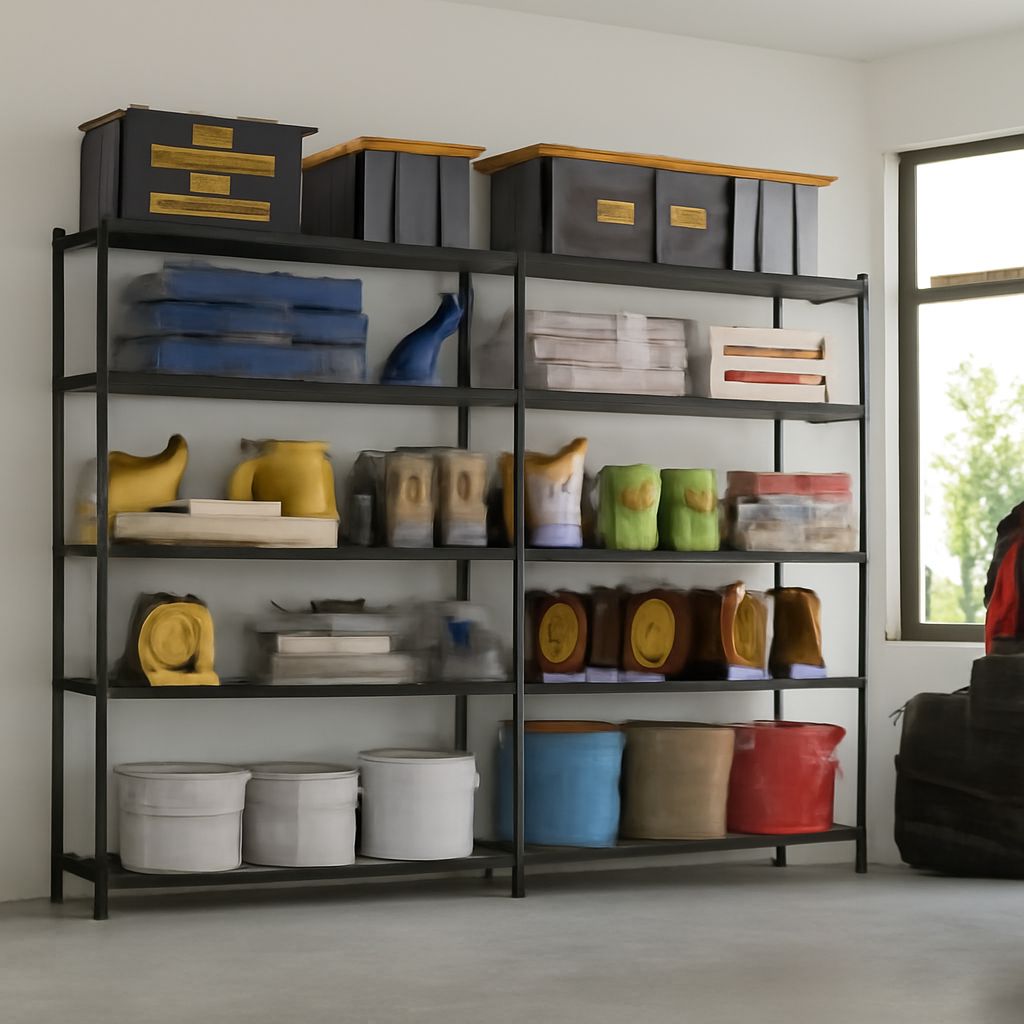
Choose heavy-duty metal shelving by matching its frame, deck, dimensions, and rated capacity to the items you will store. Totes, hand tools, and small parts usually need adjustable shelves and easy picking access; palletized goods and long materials need rack-style beams, greater clearance, or specialized supports.
Before comparing products, confirm whether each capacity is rated per shelf, per bay, or for a specific point load. Those measurements are not interchangeable. The right heavy-duty shelving unit is the one that supports your actual load pattern while remaining stable on your floor.
Heavy-Duty Metal Shelving Constructions: Decks, Frames, and Adjustable Beams
Heavy-duty shelving typically uses steel uprights, horizontal supports, and shelves that connect with bolts, clips, or beams. The connection method affects assembly time, adjustability, and resistance to movement. A braced frame provides better stability than a tall, lightly connected frame, especially when shelves are loaded unevenly.
Evaluate the deck as carefully as the frame. Common options include:
- Steel panels: Durable and resistant to impacts, spills, and abrasion. They suit workshops, stockrooms, and heavier equipment.
- Wire decking: Allows light and air to pass through and helps prevent dust or water from collecting. It is useful where visibility and ventilation matter.
- Particleboard or laminated panels: Provide a solid, economical surface for cartons, totes, and small parts. Protect them from persistent moisture and chemical exposure.
Adjustable beams let you change shelf height as inventory changes. Look for positive beam locks, secure clips, and uprights with regular adjustment holes. A shelf should remain level after adjustment, with no loose connection that can disengage during loading.
Check the clear opening between uprights, not only the overall width. The opening must accommodate the item and leave enough hand clearance for loading and removal. Also verify the unit’s depth against the available aisle and the depth of the stored goods.
Heavy-Duty Storage Shelves for Totes, Tools, Parts, and Frequently Accessed Stock
Heavy-duty storage shelves are usually the better choice for hand-loaded inventory. They provide individual shelf levels for organizing plastic totes, boxed parts, tools, maintenance supplies, and frequently accessed stock. Adjustable levels reduce wasted vertical space when containers vary in height.
For totes, measure the outside width, depth, and height of the loaded container. Allow clearance for labels, handles, and fingers. A shelf that fits the tote exactly may slow picking and make removal unsafe. For small parts, a solid deck or removable bin system prevents pieces from falling through wire openings.
Workshops often benefit from steel panels or a reinforced solid deck. These surfaces tolerate toolboxes, motors, compressors, and irregular equipment better than lightly supported boards. If tools are removed often, place them between waist and shoulder height, keeping the heaviest items lower.
Choose a shelf depth that supports the load without creating an inaccessible rear area. Deep shelves can increase capacity, but they may encourage double-stacking and make inventory harder to see. For manual handling, prioritize clear labels, reachable levels, and unobstructed aisles over maximum storage volume.
Heavy-Duty Storage Racks for Bulk Goods and Long Items
Heavy-duty storage racks suit larger, denser, or palletized goods that need wider bays and greater vertical clearance. Beam-style pallet racks are designed for forklift handling, while heavier long-span racks can support cartons, bulk containers, or equipment loaded by hand or machine.
For bulk goods, confirm the pallet or container footprint, loaded height, and handling equipment before selecting a bay. Leave clearance around each load so a forklift or pallet jack does not strike the frame. Beam height should also account for the lifting path, sprinkler clearance, lighting, and any overhead obstructions.
Long items such as pipe, timber, conduit, or metal stock may need cantilever arms rather than ordinary shelves. Cantilever storage keeps long materials accessible without front uprights blocking the load. Use arms and stops rated for the item’s length, weight distribution, and handling method.
Do not use a rack simply because it has a higher advertised capacity. A rack designed for pallets may be awkward or unsafe for loose hand tools, while a narrow shelving frame may not handle concentrated bulk goods. Match the format to the load and the way people place and retrieve it.
Heavy-Duty Shelving Unit Ratings: Distributed Shelf, Bay, and Point Loads
Capacity labels require careful interpretation. A distributed shelf load is the total weight spread reasonably evenly across one shelf deck. It does not mean the shelf can safely support the same weight concentrated in one small area.
- Shelf load: The allowable weight on one shelf, usually assuming an evenly distributed load and a specified shelf span.
- Bay load: The combined allowable weight for the complete section between two uprights. The manufacturer may require the load to be spread across several shelf levels.
- Point load: Weight concentrated at one contact area, such as a machine foot, narrow wheel, or stacked steel component. This can exceed the deck’s local strength even when the total shelf weight is within its distributed rating.
Ask how the rating was tested and what assumptions apply. Confirm the number of shelf levels, beam spacing, deck type, shelf span, and whether the rating includes a safety factor. A rating for a short shelf with steel decking cannot automatically be applied to a longer shelf with particleboard.
Calculate the real load pattern. Add the weight of the container and its contents, then identify whether the weight sits across the deck or on a few concentrated contact points. Place the densest items on lower levels. If a machine, drum, or narrow-footed item creates a point load, use a reinforced deck or a load-spreading plate approved for the unit.
Never add the ratings of individual shelves unless the manufacturer also provides a compatible bay rating. The frame, posts, braces, and connections may limit the complete unit before any single shelf reaches its stated capacity.
Heavy-Duty Steel Shelving: Corrosion-Resistant Finish, Anchoring, and Floor Leveling
Heavy-duty steel shelving works well in garages, workshops, stockrooms, and utility areas, but the finish should match the environment. Powder-coated steel suits most dry indoor spaces and resists ordinary scuffs. Galvanized finishes are more appropriate where humidity or occasional moisture is expected. Persistent condensation, salt, acids, solvents, and washdown conditions may require a specialized coating or stainless construction.
Inspect the floor before installation. A shelving frame must sit on a firm, reasonably level surface. Use the manufacturer’s approved leveling feet or shims to correct minor unevenness; do not twist the frame into position or leave a leg unsupported. Recheck level after loading because uneven weight can expose a weak or unstable setup.
Anchor tall units when required by the manufacturer, local conditions, or the risk of impact. Secure the frame to a suitable floor or wall structure using compatible hardware. Anchoring is especially important for narrow, tall units, seismic areas, forklift zones, and shelving accessible to children or the public. Do not rely on loaded shelves alone to prevent tipping.
Use a practical specification checklist before ordering:
- Item type, container size, total weight, and likely point-load locations.
- Required bay width, shelf depth, clear height, and aisle clearance.
- Deck material and whether it supports spills, impacts, ventilation, or small parts.
- Per-shelf and per-bay ratings, including the assumed load distribution.
- Frame bracing, beam locks, shelf adjustability, and expansion requirements.
- Finish suited to humidity, chemicals, temperature, and cleaning methods.
- Floor condition, leveling hardware, anchoring points, and handling equipment.