
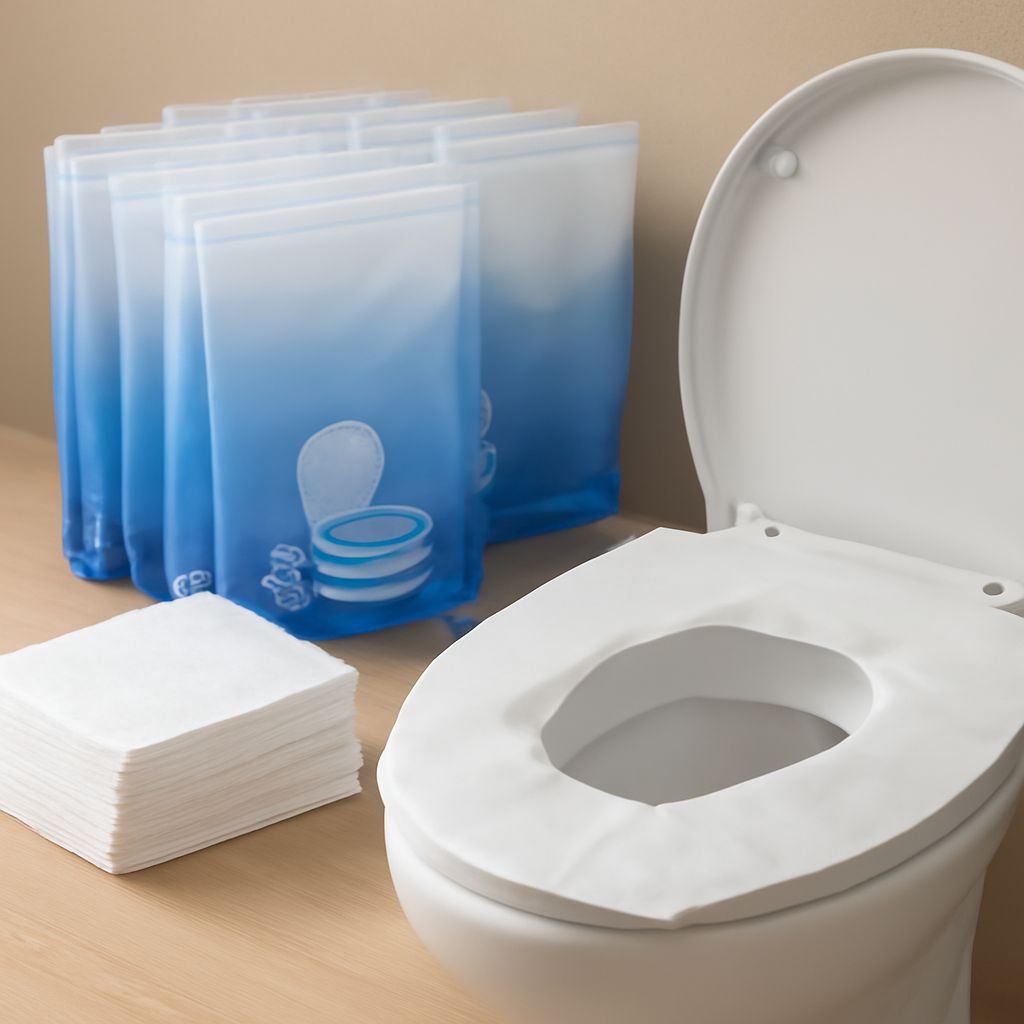
Paper toilet seat covers provide a temporary barrier between skin and a public restroom seat. To use one, unfold it over the seat, place the center flap toward the bowl opening, and let that flap hang inside the bowl.
Choose the cover by checking its shape, folded size, moisture resistance, and disposal instructions. A paper cover is not automatically flushable, and a wet seat can exceed what a thin sheet is designed to handle.
Paper Toilet Seat Covers: Types, Shapes, and Fit
Most paper toilet seat covers use a ring-shaped sheet with a removable or fold-down center flap. The ring rests on the seating surface, while the flap extends into the bowl. This design helps keep the cover in place and allows it to move into the bowl when the toilet is flushed, if the product is specifically labeled for flushing.
Common shapes include:
- Standard elongated covers: These fit many commercial restroom toilets and provide coverage along the front and sides.
- Round-seat covers: These have a shorter front profile and may fit better on compact or older toilets.
- Large commercial covers: These offer more surface coverage and are usually supplied in bulk dispenser packs.
- Travel covers: These are folded into small individual packets for handbags, luggage, cars, or emergency kits.
A suitable cover should lie flat across the seat without bunching, sliding excessively, or leaving large exposed areas where your skin will rest. Paper that is too small may shift when you sit down. Paper that extends far beyond the seat can fold into the bowl or catch against clothing.
Some products are made from lightweight tissue-like material. Others use thicker paper or a moisture-resistant coating. These differences affect comfort and handling, but they also affect disposal. Read the package before flushing a thicker cover, especially if it feels stiff, coated, or backed with another material.
How to Place Paper Covers for Toilet Seats
- Inspect the seat first. Remove visible debris and blot small amounts of moisture with toilet paper. A paper cover is not intended to absorb a heavily wet or flooded seat.
- Unfold the cover carefully. Hold it by the outer edges and open it without tearing the center flap.
- Find the flap. The center flap belongs over the bowl opening, not on top of the seat or behind the hinge.
- Position the ring. Align the front of the cover with the front of the toilet and smooth the sides over the seat.
- Lower the flap. Let it hang into the bowl. Do not tuck it under the seat or fold it upward toward the tank.
Many restroom dispensers release covers in a folded orientation. Pull the leading cover from the opening, then unfold it so the center flap points toward the bowl. If the dispenser shows an arrow or loading diagram, follow that direction rather than forcing the stack. An incorrectly loaded dispenser can dispense covers upside down, folded unevenly, or with the flap caught inside the pack.
After positioning, check that the paper is flat and that the flap is clear of the seat. If the cover tears, becomes saturated, or slides away from the seating area, replace it. Do not layer several covers unless the product instructions specifically recommend that use; extra layers can bunch and create a less stable surface.
Flushable Toilet Seat Covers: Claims and Disposal
Manufacturer-Labeled Flushable Paper
Only treat a product as flushable when its packaging or dispenser label specifically says so. Manufacturer-labeled flushable toilet seat covers are generally made from paper designed to break apart more readily in water than conventional coated or backed materials. “Paper” alone is not a flushing instruction.
For a labeled flushable cover, let the center flap remain inside the bowl and flush according to the package directions. Flush one cover at a time, especially in a low-flow toilet or a restroom with slow drainage. Never flush the individual wrapper, dispenser packaging, adhesive labels, or other waste with the cover.
Local restroom signs and plumbing instructions also matter. If a facility says not to flush seat covers, place the used cover in the provided waste bin, even when the product label describes it as flushable. When the label is missing, damaged, or unclear, use the bin instead of guessing.
Thicker or Plastic-Backed Covers
Thicker disposable covers may resist moisture longer, but that does not make them suitable for toilet disposal. A plastic-backed disposable toilet seat cover, waterproof cover, laminated sheet, or heavily coated product should go into a waste bin unless the manufacturer clearly provides different instructions.
Do not flush:
- Plastic-backed or waterproof covers
- Thick covers without a flushability statement
- Used wrappers and individual packets
- Multiple covers at once
- Any cover that a restroom sign identifies as non-flushable
If a paper cover becomes wet before use, remove it and discard it. Waterlogged material can tear during placement and may leave parts of the sheet on the seat. Use toilet paper to blot the surface, or choose a thicker, moisture-resistant product when the setting regularly has damp seats. A moisture-resistant layer improves handling; it does not prove that the cover belongs in the toilet.
Choosing a Disposable Toilet Seat Cover for Restrooms or Travel
Restroom Dispensers and Pack Size
For offices, restaurants, schools, and other high-traffic facilities, select covers that match the dispenser’s dimensions and feed design. Commercial packs often contain dozens or hundreds of folded sheets, reducing the need for frequent refilling. Check the cover count, folded dimensions, sheet size, and loading instructions before buying replacement stock.
Large covers with a broad ring can suit different toilet shapes, but they consume more storage space. Compact covers conserve dispenser capacity and may work well where most toilets have similar seats. If users frequently report tearing or poor coverage, move to a heavier sheet or a larger shape rather than simply adding more covers.
Dispenser orientation affects reliable use. The stack should sit in the housing exactly as shown by the dispenser manufacturer, with the leading cover able to slide through the opening without catching. A cover that feeds sideways or releases with its flap trapped may be difficult for users to orient correctly.
Portable Covers and Wet-Seat Limits
For travel, choose individually wrapped paper toilet seat covers or a small resealable pack. Individual packaging keeps unused sheets clean and makes it easier to carry one or two in a pocket or bag. Compare the folded packet size with the storage space available, and check whether the cover unfolds to fit a standard round or elongated seat.
Travel covers are convenient, but many are thin to keep the package small. They work best on dry seats with ordinary surface contact. For a visibly wet seat, use a product whose packaging describes moisture resistance, blot the seat first, and follow its disposal directions. If the cover has a plastic backing or no clear flushability label, place it in a waste bin rather than flushing it.