
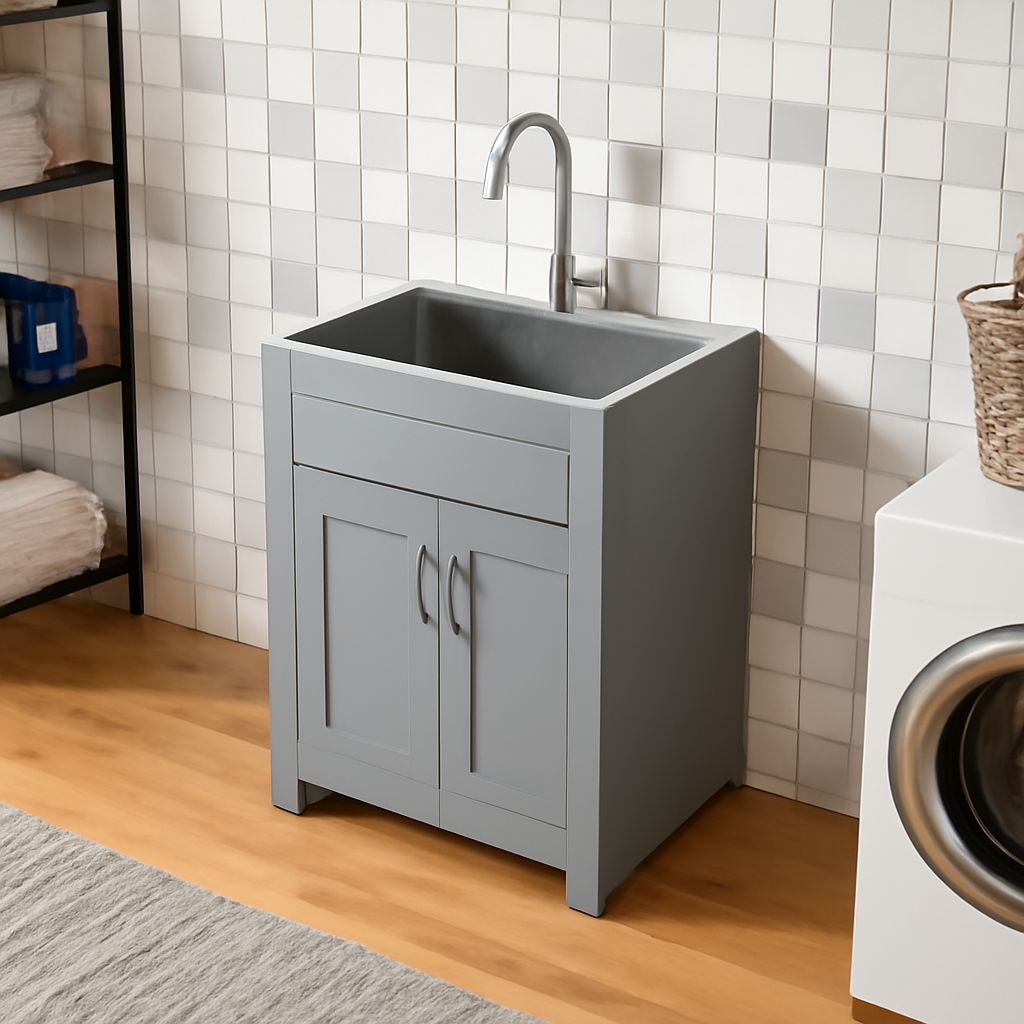
Choose a large utility sink when soaking, scrubbing, muddy cleanup, and bucket filling matter most. Choose an enclosed laundry vanity when storage, a finished appearance, and everyday handwashing matter more. A hybrid setup can work well, but only if the cabinet and floor are built for repeated moisture.
The best choice depends on basin depth, splash control, material, faucet clearance, cabinet durability, drain access, and cleaning effort. Use those criteria for bulky items, pets, laundry, and routine washing rather than choosing by appearance alone.
Large Utility Sink or Enclosed Storage? Choose by Task
An open utility tub offers the most practical capacity. Its deep basin usually handles soaked clothing, muddy boots, paint tools, mop heads, and filled buckets without worrying about damaging a cabinet finish. The trade-off is a more utilitarian appearance and less concealed storage.
An enclosed sink setup resembles standard cabinetry. It can provide shelves for detergent, stain removers, towels, and pet supplies while making a laundry room feel more finished. However, a furniture-style cabinet is not automatically suitable for repeated splashes or wet-floor exposure. The sink, countertop, doors, and base must all tolerate water.
- Soaking bulky items: Choose the deepest, widest basin available. An open utility tub usually provides the best working room.
- Muddy cleanup: A mud sink with a tough, easy-clean surface is preferable to a delicate vanity finish.
- Pet washing: Prioritize basin width, comfortable standing access, a pull-down sprayer, and a secure pet-washing area.
- Bucket filling: Look for clear space beneath the spout and enough basin depth to position a large pail.
- Handwashing: A vanity-height sink is more comfortable, especially when the room is also used as a regular wash station.
- Routine laundry: Select the vanity when storage and a tidy appearance are valuable; select the tub when messy work dominates.
For many homes, the deciding question is simple: will this sink mainly contain water and mess, or mainly support storage and daily handwashing? That answer should guide the layout before the style.
Match Basin Size and Depth to the Work
Measure the largest item you expect to wash, not just the available wall. A useful large basin is often about 20 to 25 inches wide, 16 to 22 inches front to back, and 10 to 16 inches deep. Exact dimensions vary, but the working capacity matters more than the label.
A 10- to 12-inch basin suits handwashing, stain treatment, and ordinary laundry tasks. A 12- to 16-inch basin gives more room for soaking blankets, rinsing muddy footwear, and washing small pets. Very deep basins reduce splashing but can be uncomfortable for shorter users and harder to reach into.
Allow room around the sink for movement and drying. A narrow passage can make pet washing awkward, while a crowded counter leaves no place for a wet garment or bucket. Check the cabinet interior as well. The outside width may look generous, but plumbing, drawers, and structural supports can reduce usable basin space.
Faucet height changes the effective basin size. A low spout may not clear a mop bucket, while an excessively tall faucet can increase splashing. Confirm the spout reach, swivel range, and handle position against the rear wall and any shelf above it.
Compare Materials, Faucet Clearance, and Protection
Material affects noise, staining, impact resistance, and cleaning effort.
- Polypropylene or molded plastic: Lightweight, affordable, and forgiving during messy work. It cleans easily but can scratch and may show discoloration over time.
- Stainless steel: Durable and hygienic, with strong resistance to impact. It can sound loud without insulation and may show water spots or fine scratches.
- Acrylic or composite: Available in more finished colors and shapes. These surfaces are comfortable to clean but should be checked for heat and chemical resistance.
- Fireclay or porcelain: Attractive for a finished room and resistant to many stains. These sinks are heavy, can chip at the edges, and need substantial support.
A single-handle faucet is convenient when your hands are dirty. A high-arc or commercial-style faucet improves bucket filling, but its reach must stay inside the basin. Add a pull-out or pull-down sprayer for rinsing muddy shoes, pet coats, and stained fabric. A separate wall-mounted drying rail can keep wet items from resting on the counter.
Protect the wall behind any deep sink with a waterproof backsplash or a sealed, cleanable wall panel. Extend protection beyond the faucet sides if users will spray freely. On the floor, use water-resistant flooring with sealed transitions. A small curb, tray, or carefully sloped surface can limit damage when a bucket spills.
Keep the drain accessible. Avoid permanently sealing the trap behind fixed cabinetry unless a removable panel provides service access. A removable strainer helps catch pet hair and debris, while a smooth basin with rounded corners reduces scrubbing around seams.
When a Mud Sink Makes Sense
A mud sink is designed for the tasks that bring grit, soil, and outdoor debris indoors. Place it near an exterior door, garage entry, or dog-washing area when possible. Its value comes from containment: a deep basin, durable surround, and nearby floor protection keep dirty work away from kitchen or bathroom fixtures.
Choose a mudroom sink with a broad rim, easy-clean walls, and a faucet sprayer. A deep basin helps rinse boots and tools, but the surrounding counter should not absorb water. Open shelving can be practical for towels and cleaning supplies, provided the shelves are sealed and positioned away from direct spray.
Pet washing requires additional planning. Leave enough standing room in front of the basin, place controls where you can reach them without releasing a wet animal, and use a drain cover that catches hair. For frequent large-dog washing, a dedicated elevated pet tub may be safer and more comfortable than a standard sink.
Because muddy cleanup creates heavy debris, avoid delicate finishes and hard-to-reach cabinet corners. Rinse grit from the basin before wiping it, and keep a handheld brush nearby. This reduces scratching and prevents sediment from collecting around the drain.
Is a Wash Tub Sink Right for You?
A wash tub sink is the middle ground between a basic laundry tub and a finished sink cabinet. It usually provides a deep, generous basin for soaking, handwashing, rinsing, and bucket filling without requiring a full furniture-style installation.
It suits households that want raw utility but need better proportions or appearance than a basic freestanding tub. A wash tub works well for routine laundry, paint cleanup, gardening tasks, and occasional pet washing when the basin is wide enough.
Check the tub’s underside and support system before buying. A water-filled basin is heavy, especially when holding wet blankets. Confirm that the floor can support the load and that the drain connection remains reachable. Freestanding models may leave exposed plumbing, so use a neat, durable finish rather than treating the open area as storage.
Cleaning effort depends on the corners and surface texture. Smooth molded basins are fast to rinse, while textured or sharply jointed designs collect lint and soil. If the sink will handle muddy items, select a finish that tolerates frequent scrubbing without needing special cleaners.
Plan a Durable Laundry Room Vanity
A laundry room vanity is the strongest choice when concealed storage and a coordinated room design are priorities. Use it for detergent storage, handwashing, stain treatment, and light rinsing. Specify a countertop and basin combination that can withstand standing water rather than adapting a decorative bathroom cabinet without changes.
Choose moisture-resistant cabinet boxes, sealed edges, durable hinges, and a toe-kick that will not swell after a spill. Solid wood is not automatically waterproof; exposed end grain and unsealed joints can still absorb water. Thermofoil, laminate, sealed plywood, and well-finished hardwood may all work when their seams are protected.
Keep plumbing leaks visible and serviceable. A removable back panel or open section beneath the basin allows access to the shutoff valves, trap, and supply lines. Avoid storing paper products directly under the drain, where a small leak can go unnoticed.
For a vanity used near muddy shoes or pets, add a waterproof backsplash, sealed countertop seams, and a floor that tolerates wet traffic. Use a deep enough basin for the intended work, but do not sacrifice comfortable counter height or faucet clearance just to gain a few extra inches. The result should support laundry every day while surviving the occasional bucket, boot, or muddy paw.